Since 1995 astronomers have found over 1000 planets around other stars. This lesson plan will use observations from a global network of telescopes to identify and characterise exoplanets, using real data from LCOGT's network of telescopes. Students will use apps to simulate the transit of planets and explore how changing the planet variables directly affects what telescopes can detect. They will also learn about the electromagnetic (EM) spectrum and how different wavelengths allows us to detect
A ~50 minute lesson plan with high interactivity using simple experiments aimed at A-level. Students learn about the various wavelength in which Astronomers observe and how these affect the way we can see the Universe. They then go on to apply this knowledge using the Multiwavelength Universe app. Students then learn about the Cosmic Microwave Background and its implications for the make up of the Universe.. Finally, students get to apply this knowledge by designing a space telescope using an
A UK community for the Eratosthenes Experiment. Eratosthenes was the first person to measure the diameter of the Earth accurately, in the 3rd Centruy BC, using the length of shadows at different positions. That same experiment is straightforward to reproduce, and uses simple measurements of shadow lengths and basic trigonometry. The lesson can be run at any time, but by registering online for the Eratosthenes Experiment, you can enter contests and prize draws, and even collaborate with other
Welcome to the Community for the Eratosthenes Experiment 2015-19 for the Measurement of the Earth's Circumference! For details on the event and the latest photo contest, please see here and here. Guidelines for participation STEPS TO FOLLOW Find the time of your local noon at your location. Please use the web-based NOAA Solar Calculator or Solar Calculator or the Stellarium software (a short guide for using the Stellarium software to calculate your local noon at your location can be found here)
A community to accompany the Hands on Astronomy conference held in Cardiff in April 2015. Conference Programme More information and links Updated delegate information
To participate in the ISE 2016 Observing Challenge, use the demonstrator below with your class before 30 June 2016. The scenario involves using Messier Bingo to become familar with astronomical objects, and then observe one of them with the LCOGT telescope. Teachers who successfully complete the scenario with their class (using the demonstrator with more than 10 students) will receive a poster of their observation. You can either: Join this ISE community, clone the demonstrator, and deliver it
The scope of this community is to create a central point for all authors of the ISE Demonstrators, in order to train them in the use of the ISE Authoring Tool.
This community will enable teachers, students and researchers involved in extended collaborative activities. It introducesthem to the field of science through the use of resources and tools bringing together a network of educational communities, eLearning tools and resources and relevant partners of the field. Through the Inspiring Science Education website and the activities organised by the partners, teachers can help students make their own scientific discoveries, witness and understand
In this community all digital ISE-Demonstrators are available: Demonstrators show you how the the ISE pedagogical approach can be implemented in practice. You can use Demonstrators as they are or clone it and adapt it to your own requirements.
This is a community for UK teachers within the Inspiring Science Education community. Here you can find ready-made lesson plans or share some of your own. If you're not already registered, then please register here. Lesson plans aim to effectively support all stages of the UK curricula. They provide an engaging and interactive atmosphere using interactive tools and web-based content. As a teacher you will be able to closely monitor the performance of your class as well as set homework or tasks
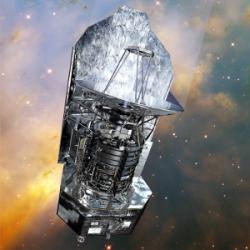
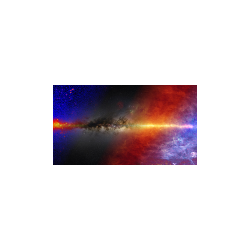
The "Multiwavelength Universe" lesson plans allows you to explore the electromagnetic (EM) spectrum in the context of astronomical objects in a highly interactive environment. Students will learn how the appearance of objects changes with various wavelengths and the resulting different technologies that are used to cover these wavelengths. Depending on the time available, students will learn about the opacity of the atmosphere and can then proceed to design their own space telescope. Lesson
A ~50 minute lesson plan with high interactivity using simple experiments available for 2 seperate education levels; year 5 & 6 or GCSE. Primary level shows how long it can take to travel in the solar system, the size of the solary sytem and the kind of wondrous objects which can be found in the wider Universe. It introduces the concepts of star clusters, nebulae and galaxies and solidifies this knowledge with a fun game of Messier Bingo. It aims to support the Year 5 and Year 6 curriculum. The
An ODS community dedicated to schools that already have or aspire to establishing an astronomical observatory at their school. Whether you have been using an observatory for years, or are in the process on setting-up one up, we would love to hear about the challenges you faced and the specification of the equipment you eventually decided on. So, please use this community to share ideas and offer advice to those teachers thinking of following in your footsteps.
Winning entries of the Eratosthenes Experiment Photo Contest Dear participants in the 2015 Eratosthenes Experiment Photo Contest organized by Ellinogermaniki Agogi’s (EA) Research and Development Department as part of the Open Discovery Space (ODS) and Inspiring Science Education (ISE) projects. We are happy to announce the winners of this exciting world science educational event. Before proceeding with the results, I would like to remind you the background to all related contests and events