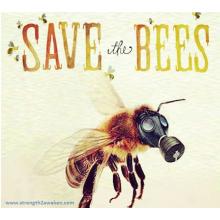
Hosted by OSOS , contributed by Fernanda Freitas on 25 February 2019

Do you like bees? Do you think they are important? What would happen if bees disappeared?
Well, fellow explorer, today you are going to become a scientist researching on one of the most important contemporary science research problems. Although we are used to seeing people run away from bees or associate them with the sweet tasting wonderful food we call honey, bees are so much more than that. Do you know why? Embark on this journey, play a fun game, enrol in an interactive research platform, collaborate with your community and with colleagues from different countries and you will become an expert and a very important change maker in the world. Bees will thank you … and humanity as well!
Let's start the adventure?
Information for the teacher:
This accelerator was created in the framework of the project - IDiverSE (Islands Diversity for Science Education - 2017-1-PT01-KA201-035919), co-financed by the Erasmus+ agency of the European Union).

The texts are writen direcly for the students and in a language that students will understand. Teachers are invited to explore it, copy it and edit whatever they feel necessary before they share it with their students. Specific guidelines were added to the four phases, where teachers can read the full content of the accelerator. For any aditional info on this accelerator, please contact info@idiverse.eu.
Learning objectives
Students will contact the scientific method in an Inquiry-Based activity that will lead them to learn important concepts such as sustainability, ecosystems, Biodiversity and protection of the web-of-life. From there, they will dive deep into the contemporary problem around bees, discovering the causes of the problem as well as solutions that can be implemented in their communities.
While going through this project, students will develop fundamental skills such as problem solving, critical thinking, communication, creativity and collaboration. They will also develop other important skills such as tolerance and respect since they will be collaborating with students from different cultures and different environments.
Furthermore, students will be called into gaining awareness for very important environmental issues of this century.
Opportunities to collaborate with stakeholders
Students will be challenged to interview, discuss and collaborate with different experts on the field such as beekeepers, farmers, scientists, environmental experts, etc. Teachers should allow students to invite experts to their school, to collaborate in their creations as well as family members and any other important stakeholders.
More specificaly:
1 - In the Feel phase, students will use a collaborative platform to collect data from their community and compare it with data from other communities. For this, they will go out in their towns and interview community members but also choose some important experts on the field to interview them as well about the problem at hands.
2 - In the Imagine phase, students will be advised into bringing the problem to their families and have important discussions about the causes and solutions to the problem at hands. Teachers will be advised to allow students to choose a field trip to an expert (stakeholder) of their choice such as a University working on the field, a beekepeer facility or any other important stakeholder of their choice. In this same phase, students will be encouraged to invite important stakeholders to their schools, to discuss about solutions for the problem.
3- In the Create phase, students will be encouraged to collaborate with their families, community members and important stakeholders in their creations, making them more effective and a co-creation product.
4 - In the Share phase, students will reach out to the whole community to share their work, including important stakeholder entities who can reinforce the change-making progress.
Responsible Research and Innovation
One of the key aspects of OSOS is the inclusion of RRI - Responsible Research and Innovation - principles (RRI-Tools.eu). This is how this accelerator fits in the RRI model:
|
Governance |
This accelerator is based on a fundamental key point which is to teach students what science is and how to make a valid and respectful science research. It highlights the fact that science needs to be shared in order to be valid, it needs to be transparent and collaborative so as to contribute to the development of our society. In this project, students reflect with the community on the problem and will co-create possible solutions sharing, in the end, all their work, including their research process. Furthermore, students will share their results and conclusions with other communities in islands worldwide, through a platform called globallab and through the collaboration between their teachers. |
|
Public engagement |
Students will interview their communities as well as important stakeholders, i.e., experts in the problem they are working on. After collecting their data, students will discuss with their parents, other family members, friends, community, etc, about possible effective and applicable solutions to the problem in their islands. The whole activity will focus on the engagement of students with their community so as to take into account their real needs when solving a problem. |
|
Gender Equality
|
The problematic involved in this project is transversal for all humans in the world, regardless of their gender. At no moment, the gender of the students will be asked or relevant. On the resources created for the teachers advise is given in order to provide equal opportunities, not only for both genders but also among all the different personalities. In the guidelines given to the students an effort is made to use both male and female role models as inspiration, as well as male and female icons and individuals in pictures. Teacher are also advised to find experts of all genders and invite them to work with their students. |
|
Science Education |
Students will be engaged in Inquiry-Based activities that will lead them through the scientific method and reasoning. It is expected that after creating their projects, students will have understood what science is and how scientific knowledge can be obtained and communicated. In addition, this project focuses on one important contemporary science topic which is the protection of bees and the maintenance of ecosystems and biodiversity. By working with the community and sharing their work in the end, students will bring science education to their community as well as awareness for important scientific questions. |
|
Ethics |
In this project it is emphasized that we are responsible for our actions and for the world that surrounds us. The concept of ecosystem is not only important in a Biology class but as well as in any other class. We are an integrating part of any ecosystem, including our family, community, country (or in this case, island). As such, during the project students will understand that cooperating and collaborating is a much more valuable effort than competing, and that knowledge and good ideas should be used in an ethical way and shared with others. When in collaboration, Scientists can overcome nearly any obstacle and provide what is necessary for a safe, developing and growing society |
|
Open Access |
After finishing their research, students will share all their work with the community, providing a fully open access to their data and conclusions. |
Осетити
1
1.As abelhas, para além do mel e dos produtos derivados deste, são uma grande ajuda na polinização. Cerca de 30% dos alimentos consumidos pelos seres humanos provêm desta.
2.Atualmente muitos apicultores, agricultures e a população em geral têm ajudado as abelhas ao reduzir a sua utilização de químicos. Para além disto, os seres humanos oferecem as condições de vida necessárias para a produção de abelhas, como campos de flores e colmeias artificiais.
2.
1. Na ilha da Madeira o número de abelhas tem vindo a diminuir pois existiu uma redução de flores e áreas de produção e sobrevivência destas, devido aos incêndios.
2. A comunidade madeirense tem evitado a extinção desta espécie através do apoio na reprodução destas em colmeias artificiais, atribuição de prémios aos apicultores e fornecimento de remédios contra as doenças que afetam as colmeias.
3. As pessoas informadas tentam combater este problema que nos dias de hoje nos afeta, embora grande parte da população não está ciente da situação.
Funny pics
Замислити
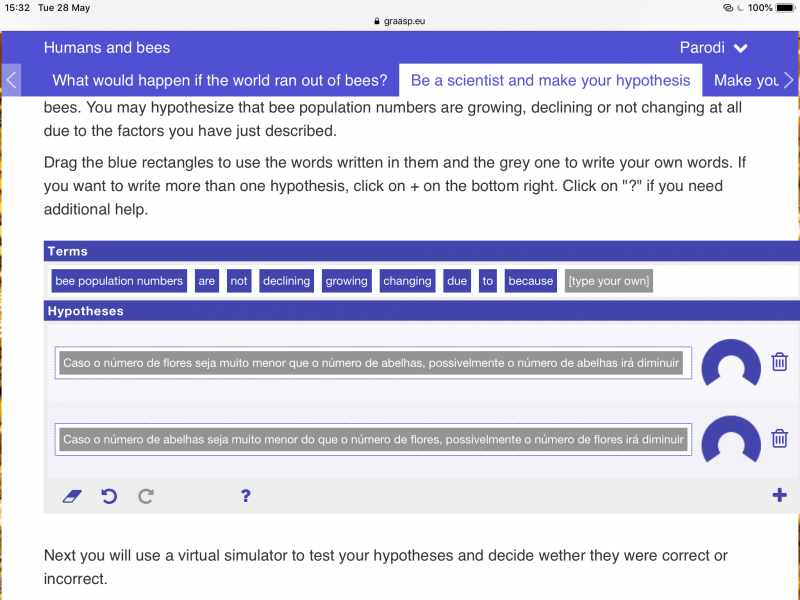
Hipóteses formuladas:
1 - Caso o número de flores seja muito menor que o número de abelhas, possivelmente o número de abelhas irá diminuir;
2 - Caso o número de abelhas seja muito menor que o número de flores, possivelmente o número de flores irá diminuir;
Gráficos
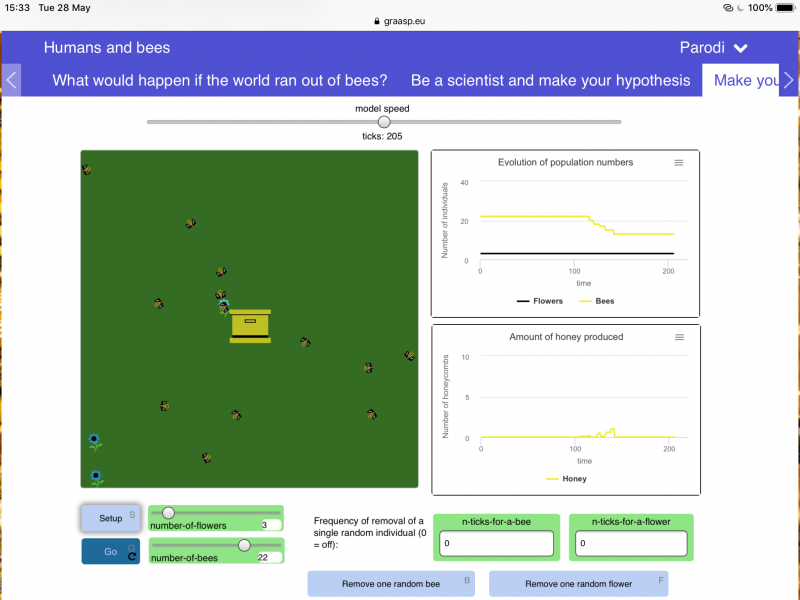
Gráfico 1
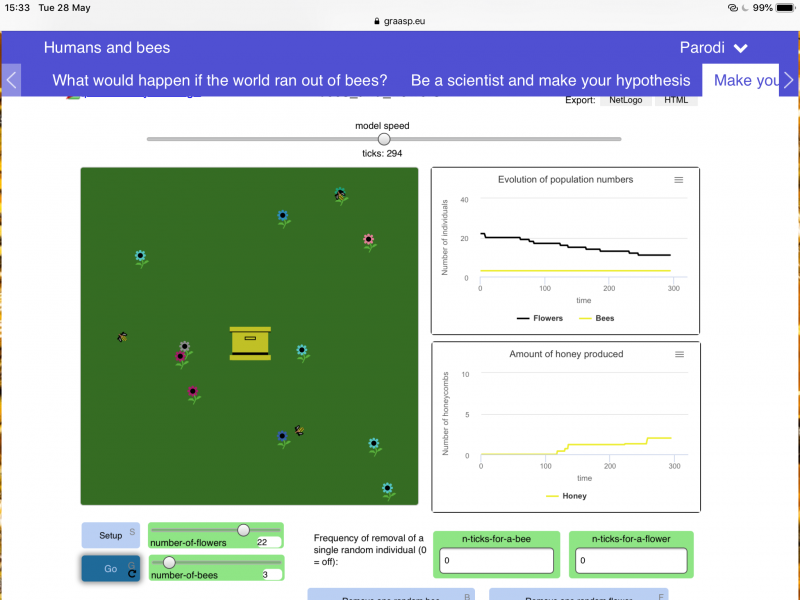
Gráfico 2
Креирај
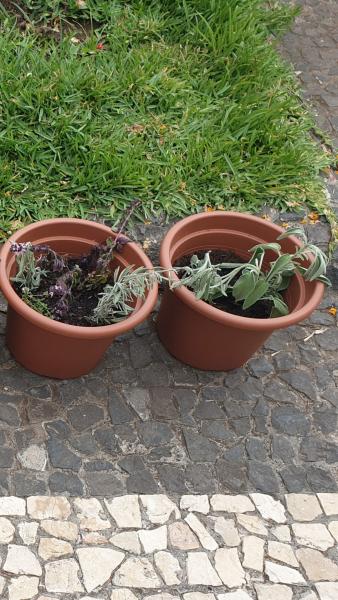
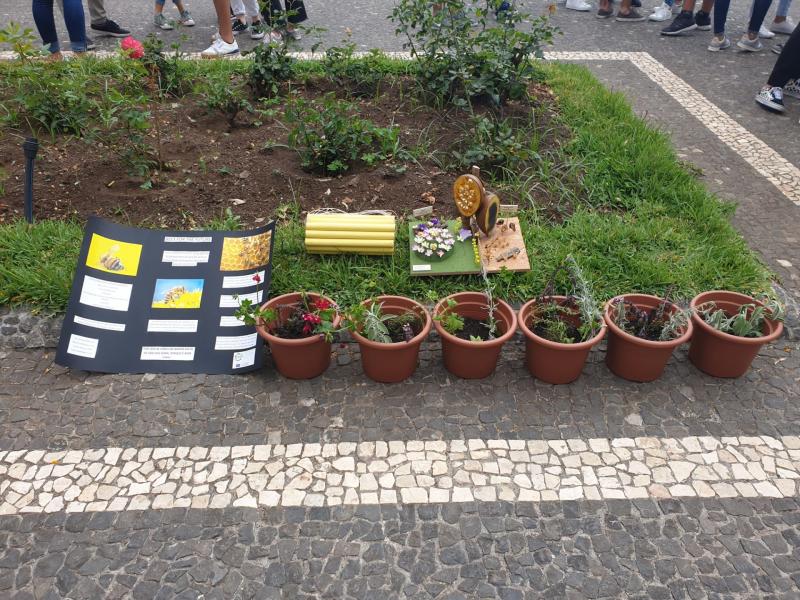
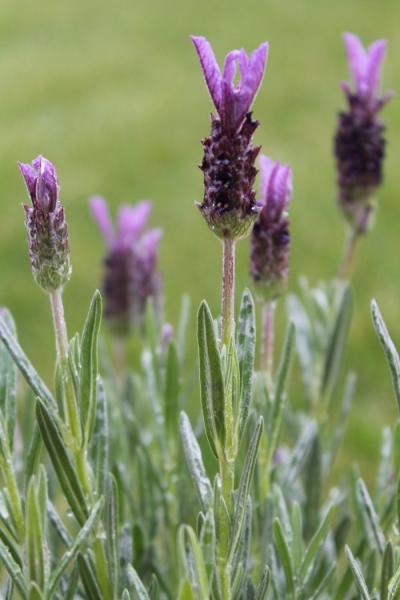
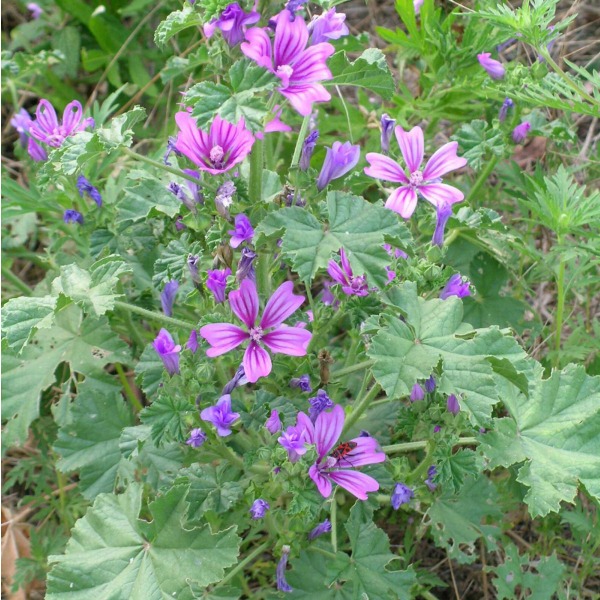
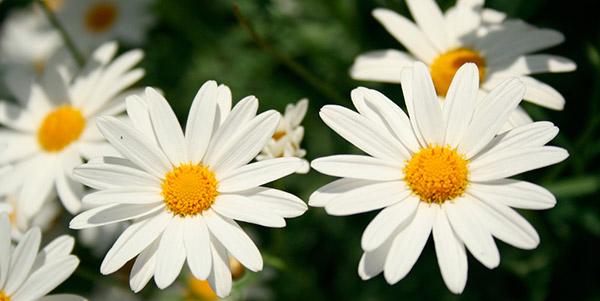
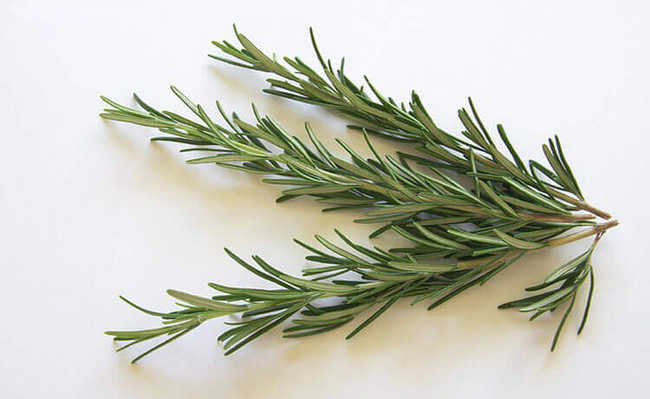
No nosso projeto vamos plantar em alguns vasos na escola as seguintes plantas: margaridas, alfazema, malvas e alecrim. O nosso objetivo é facilitar a polinização das flores com a ajuda das abelhas, dai termos escolhido as plantas mencionadas, pois são facilmente polinizadas.
Објави
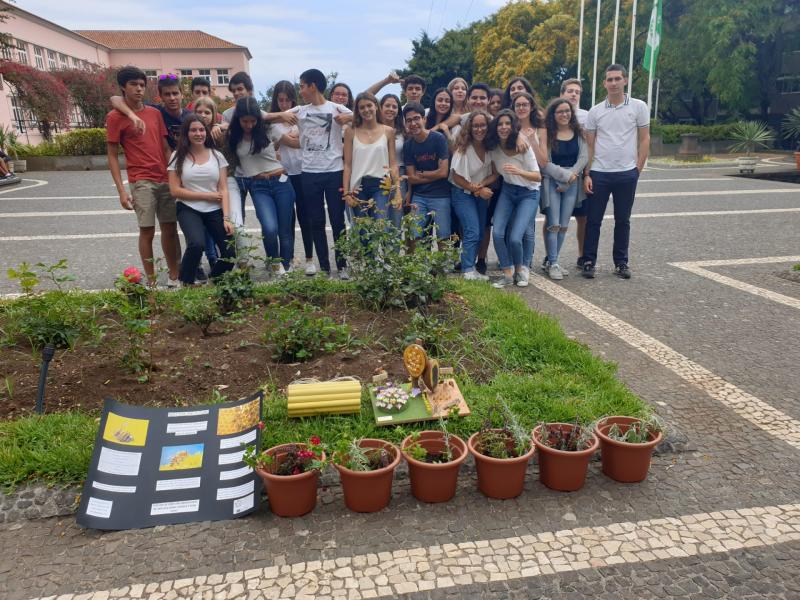
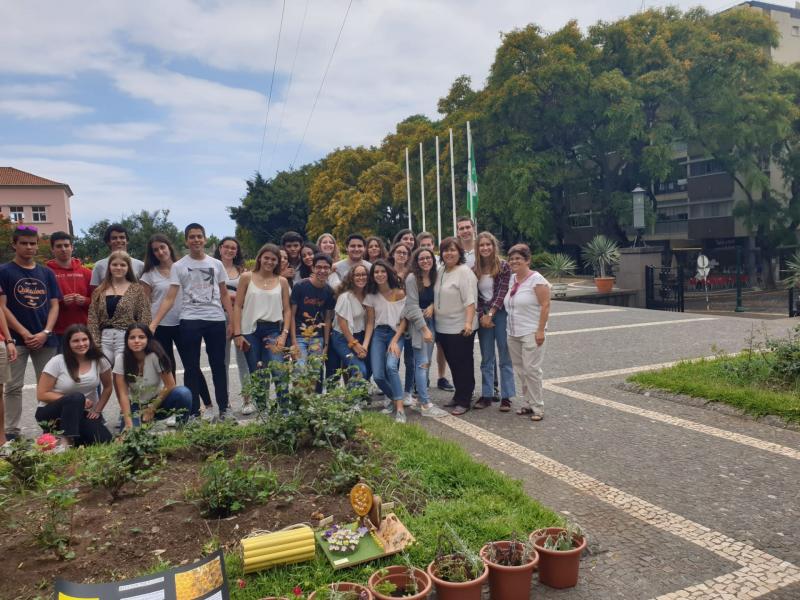
Produto final