


Hosted by OSOS , contributed by maria.zambrotta on 17 May 2021
Students explore agenda 2030 goals and knows about the different topic. The project is focused on the resolution of a challenge creating a working team in the class aong students.
The students:
- improve awareness of the origins and impacts of social, economic, and environmental aspects of the world
- develope the awareness, knowledge, skills, values and motivation to live sustainably
- realize what it means to be an active citizen, with responsibilities in local and wider contexts
- value the role and contribution of science and technology to society, and their personal, social and global importance
- explore options and alternatives by engaging in scientific enquiry where she/he generates and seeks answers to their own questions and evaluate the process to determine the optimum outcome
- conduct research relevant to a scientific issue, evaluates different sources of information including secondary data, understanding that a source may lack detail or show bias
- organize and communicate the research findings in a way fit for purpose and audience, using relevant scientific terminology and representations
- evaluate media-based arguments concerning science and technology
- understand how humans influence the Earth’s climate, evaluate the effects of climate change and initiatives that attempt to address those effects
- evaluate how humans can successfully conserve ecological biodiversity and contribute to global food production while appreciating the benefits that people obtain from ecosystems
- adopt a systems-thinking approach to understand complex processes
AVAILABLE PARTNERSHIP OPPORTUNITIES:
|
Families |
Family choices about food consumption drive local economics. By first discussing how the availability of food types has changed over the years with older relatives and friends of the family a context for the project is set. Comparisons of town and country living, and experiences from other countries, provides a rich basis for discussion and brings learning out of the classroom. It is hoped that an appreciation of the carbon footprint of fruit and vegetables by students will impact the purchasing behaviour of their parents by encouraging the support of locally sourced produce. |
|
Supermarkets |
Student discussions with supermarket managers, or purchasers, are encouraged to drive retail of locally sourced produce |
|
Educational centre |
Università degli studi di Torino, |
|
Productors and industry |
Invento, Fondazione CRT, |
RESOURCES NEEDED:
Internet access
teacher Maria Zambrotta
IIS Santorre di Santarora
Sentir
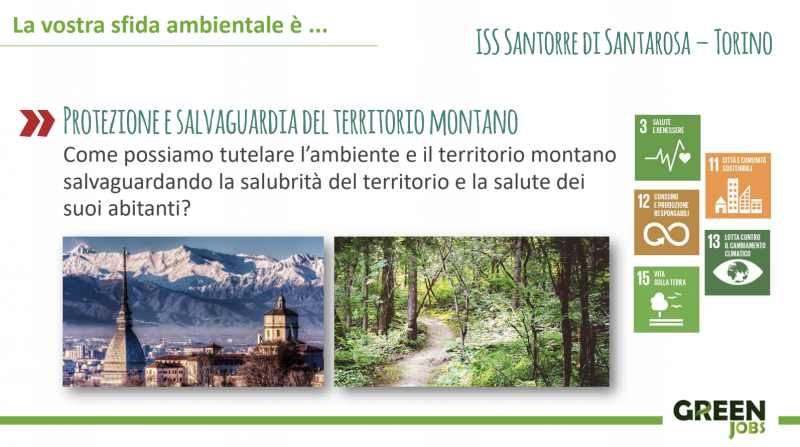
Addressed challenge: Safeguard and protection of the environment and the mountain area.
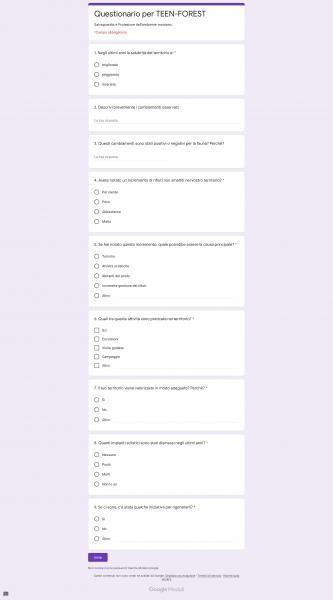
The first activity to reflect on the challenge was to create a Survey
Imaginar
IDEA
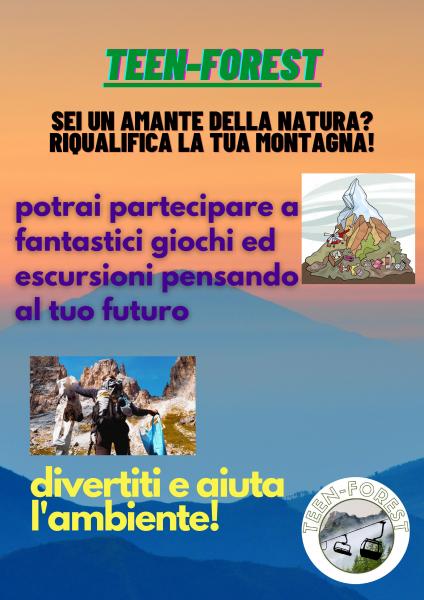
We redevelop disused ski slopes by proposing innovative and engaging ideas that raise the awareness of young and old on the importance of safeguarding our mountains, such as, for example:
- School trips;
- Nature excursions;
- Competitions for artists;
Target
- People of any age;
- Interested in environmental issues;
- Enterprising and sensitive to the human impact on the environment
- Anyone who wants to get involved to help nature;
- School groups;
- Families;
|
Istituto e classe: Santorre 4 L |
Tutor:
|
Docente coordinatore:
|
|
|
SFIDA Descrivete sinteticamente la sfida proposta, articolando le analisi fatte durante l’Hackathon e nelle sessioni successive. Salvaguardia e tutela dell’ambiente e del territorio montano. |
SOLUZIONE PROPOSTA Presentate sinteticamente il modo in cui risolverete il problema o coglierete l’opportunità individuata. Qual è la soluzione che proponete? Riqualificazione degli impianti sciistici dismessi. |
||
|
ANALISI DI MERCATO Descrivete sinteticamente lo scenario di mercato in cui si colloca il vostro business, indicando, se possibile, alcuni dati a supporto: qual è la dimensione di mercato? Il suo tasso di crescita? (sostenibilità economica) |
COMPETITORS E VANTAGGIO COMPETITIVO Presentate una sintetica analisi della concorrenza (attuale o futura). Quali sono i vostri competitors? Come vi posizionate rispetto a loro e qual è il vostro vantaggio competitivo? Cosa vi distingue? I competitors sono privati che sono interessati allo stesso territorio. La nostra proposta porta benefici per l’ambiente e per la collettività |
||
|
Impostate un sintetico piano d’azione per il raggiungimento dei vostri obiettivi. In che modo ciascuno studente può contribuire alla realizzazione dell’impresa? Quali sono le principali attività da svolgere e i prossimi passi? 1.Individuare l’area da rigenerare MATTIA - FABIOLA - REBECCA - ALESSIA - LUCA 2. Definire attività delle scolaresche GIULIA - VANESSA - FLAVIA - LETIZIA - CRISTINA 3. Organizzare attività artistiche a tema AGNESE - AURORA - ALESSIO - CARLOTTA - ANITA
4. Attività di giardinaggio e abbellimento CHIARA - ALESSIA - LORENZO - DANILO - ALESSIA - SILVIA |
Presentate sinteticamente il vostro prodotto/servizio e i suoi elementi di innovazione. Di preciso cosa offrirete? Descrivete le caratteristiche che rendono desiderabile il vostro prodotto/servizio: quali bisogni o desideri soddisferete? Quali saranno i benefici per il cliente? ripulire la zona da rifiuti; attività di piantumazione; attività sociali di coinvolgimento; costruire parchi avventura sulle infrastrutture dismesse; organizzare attività artistiche a tema; attività di giardinaggio e abbellimento; |
Presentate sinteticamente il profilo dei vostri clienti-tipo: chi acquisterà il vostro prodotto/servizio? Qual è il vostro target? Abitanti del territorio:
Escursionisti Persone sensibili ai temi dell’ambiente Scuole |
|
|
Elencate gli elementi necessari alla realizzazione del vostro prodotto/servizio: risorse umane, competenze, materiali e attrezzature, spazi, risorse economiche, autorizzazioni… Di cosa avreste bisogno per entrare in possesso di questi elementi (fattibilità tecnica)? |
|||


Crear
Students presentation of their findings in a variety of formats.
Students finish their project and prepare short presentations to be given to school colleagues and local managers
Activities proposed to the other schools or families
School trip
organization (4th / 5th grade)
Elementary school: Carlo Casalegno - Turin
Participating classes: 4/5 A-B-C-D
At your place:
Wednesday 28 April classes 4A and 4B
Friday 30 April classes 4C and 4D
Wednesday 5th May classes 5A and 5B
Friday 7 May classes 5C and 5D
Materials to bring:
Packed lunch
2 Snacks
Sportswear (onion-shaped)
Exchange
Program:
Departure at 7.45 am from the school
Estimated arrival 8.45 / 9.00
Upon arrival, the children will find a guide / manager, they will be divided into groups and a walk lasting about 1.30 hours will start, the groups will be given a tool and a bag in which to collect all the waste they find during the walk.
At the end of the walk there will be a small break (about 10.30) in which the children can have a snack (until 11)
Immediately after the snack, the children will divide again into the previous groups and will have to guess the waste found for a product and a material, the group that has found and guessed the most wins (a prize to be defined).
Then there will be a lunch break and the children can have their packed lunch in the picnic areas, after eating they will have a moment of leisure (lunch break + leisure: from 12.30 to 15)
From 3 pm the tree planting activity will start (which will take place in pairs: 1 tree per couple), which will include the didactic part in which the characteristics of the different trees will be explained (until 4.30 pm)
From 4.30 pm the children will have to create with their creativity plates / drawings with the name they have decided (each tree will have a name decided by the couple). At the same time they can also have a snack. End scheduled for 17.30
After hanging the tags from their trees, the children will be able to return to the bus to return home (Departure at 6 pm, arrival expected: 7 pm / 7.15 pm)
Escursions
GUIDED OR FREE EXCURSION
GUIDED TOUR - Cost 10 euros per person DURATION 2 hours
define themes
FREE - Entry to subscription personal DURATION
RESTAURANT POINTS 3/4 one at the entrance (reception), the others on the route.
Classification of difficulty and length of routes with natural indications (signs made of wood, colored marks on rocks, etc.).
Itinerary notice board at reception.
PARTICIPATION IN ARTISTIC ACTIVITIES as public / active part for raising awareness thanks to activities.