Hosted by SALL , contributed by athzafei on 16 June 2022
This project is about breakfast and the snack that students have at school, the ways these are supplied, the packaging, the quantity, quality, and the geographical proximity of the materials, the selection of the appropriate foods for the energy needs and the health of the students.
Specifically, students are asked to:
1st Phase
- fill a questionnaire about their breakfast and school snack habits
- investigate, recording their daily breakfast and school snack practices, whether they are prepared at home or they supply them from a store or the school canteen, whether they carry it in a container or packaging, how they manage its packaging material, which foods they prefer
- record the results of their research in a collaborative document
- draw conclusions about their personal and their group's habits
- investigate the benefits of the habit of homemade breakfast and snacks, the selection of local products in their school lunch (and generally in all their meals), and proposals and benefits of reusable packaging
2nd phase
- students take breakfast and they bring to school homemade snacks
- they prepare these by themselves
- they carry their snacks in reusable packaging which will are suitable for the safe storage of meals and the health of students
- preferably select locally, if possible, organic products
- choose the right, nutritional, food combinations
- check if the amount of food supplied daily is what they need
- create and update their personal, electronic diary about their choices, their preferences, the difficulties they may encounter, solutions they found in the course of the action, photos of their favorite meals
- share, if they wish, notes or photos from their diary on the Action Blog or Padlet
- comment on the Blog or Padlet, in a polite way, other students' choices, try what they find interesting
- discuss their choices in the group, present their difficulties, share successful practices, and help their classmates.
- invite the cafes (shops) that are close to their school or the school canteen to apply the use of a reusable glass by the customer for serving coffee or other beverage with a discount on the price
3rd phase
- re-record their daily habits for school lunch
- note the results of their research in the existing excel collaborative document
- Compare recording data before and after the application of good practice and draw individual and group conclusions
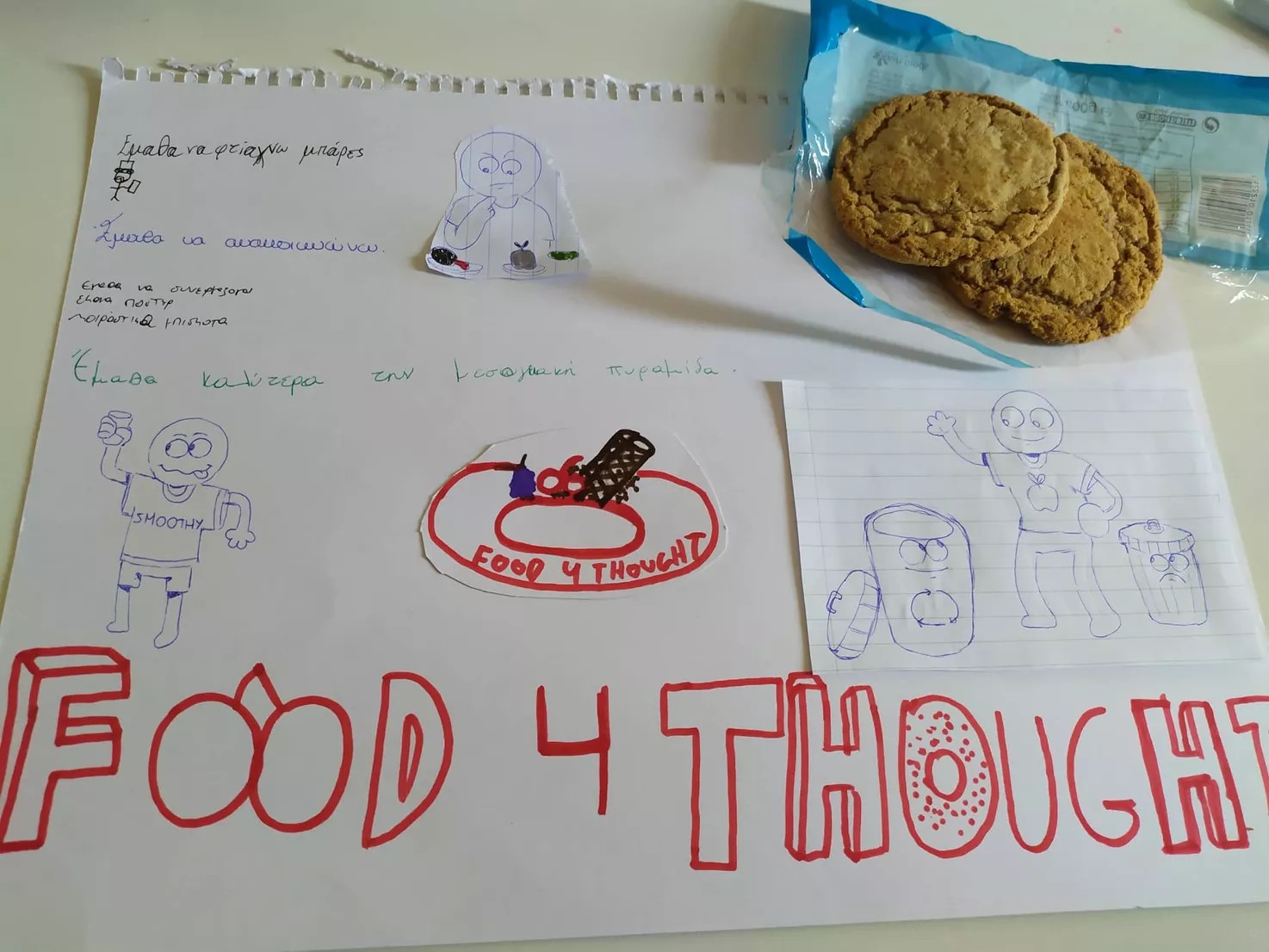
- create promoting materials of their Action and disseminate at school the good practice they have implemented
- promote their activities to the National Network's Blog
- invite the students of their school to apply ideas, tips, recipes, practices
- motivate members of their family and friends to adopt practices of homemade snacks that are portable to reusable packaging
- Adopt these practices beyond the project as a way of life
Background
15 Students of the B1 class participate in the School Action Network "Taperistas" (January-May 2022)
The project is implemented in three phases: Exploratory (phase II), Application (phase II), and Diffusion (phase II). Each phase of the Action is characterized by experiential individual or group activities, the interaction between team members and team members from different schools, and feedback. The main themes addressed were:
-Breakfast & school snacks and wellbeing
-Local products
-Safe food packaging
-Reduction of food waste
ACTION DESCRIPTION
The theme of the Action concerns breakfast and the school meal of the students (snack at 10:00), the way of its supply, its utensil or packaging, the quantity, quality, and the geographical proximity of the materials, the selection of the appropriate foods for the energy needs and the health of the students.
- fill a questionnaire about their breakfast and school snack habits
- investigate, recording their daily breakfast and school snack practices, whether they are prepared at home or they supply them from a store or the school canteen, whether they carry it in a container or packaging, how they manage its packaging material, which foods they prefer
- record the results of their research in a collaborative document
- draw conclusions about their personal and their group's habits
- investigate the benefits of the habit of homemade breakfast and snacks, the selection of local products in their school lunch (and generally in all their meals), and proposals and benefits of reusable packaging
2nd phase
- students take breakfast and they bring to school homemade snacks
- they prepare these by themselves
- they carry their snacks in reusable packaging which will are suitable for the safe storage of meals and the health of students
- preferably select locally, if possible, organic products
- choose the right, nutritional, food combinations
- check if the amount of food supplied daily is what they need
- create and update their personal, electronic diary about their choices, their preferences, the difficulties they may encounter, solutions they found in the course of the action, photos of their favorite meals
- share, if they wish, notes or photos from their diary on the Action Blog or Padlet
- comment on the Blog or Padlet, in a polite way, other students' choices, try what they find interesting
- discuss their choices in the group, present their difficulties, share successful practices, and help their classmates.
- invite the cafes (shops) that are close to their school or the school canteen to apply the use of a reusable glass by the customer for serving coffee or other beverage with a discount on the price
Communicate their activities to the national network and be inspired by other schools' practices
3rd phase
- re-record their daily habits for school lunch
- note the results of their research in the existing excel collaborative document
- Compare recording data before and after the application of good practice and draw individual and group conclusions
- create promoting materials of their Action and disseminate at school the good practice they have implemented
- promote their activities to the National Network's Blog
- invite the students of their school to apply ideas, tips, recipes, practices
- motivate members of their family and friends to adopt practices of homemade snacks that are portable to reusable packaging
- Adopt these practices beyond the project as a way of life