Hosted by OSOS , contributed by DeustoLearningLab on 21 November 2018
Descripción
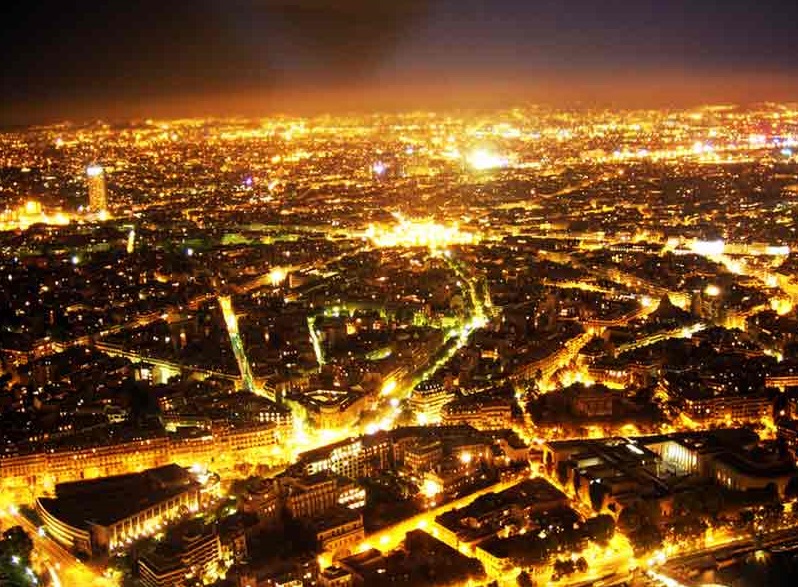
Aumento del gasto energético y económico, inseguridad vial, dificultad en el tráfico aéreo y marítimo o daño a los ecosistemas nocturnos son solo algunos de los efectos que causa uno de los tipos de contaminación menos conocidos de todos los que existen: la contaminación lumínica. Y es que, la luz artificial de las ciudades no solo impide disfrutar de las estrellas, sino que además afecta a la salud, a las plantas y a los animales nocturnos y microorganismos. (Fuente: https://www.compromisoempresarial.com/rsc/2018/04/la-contaminacion-luminica-un-problema-cada-vez-mas-visible/)
En este proyecto se van a analizar las causas que origina la contaminación lumínica y los efectos que tiene en el ser humano y en la naturaleza. Además, los estudiantes van a colaborar con agentes externos especialistas en el ámbito de la contaminación lumínica y van a poder realizar un trabajo de campo para analizar cómo es la iluminación en sus entornos.
Después de analizar el problema, los estudiantes realizarán una tarea creativa de resolución de problemas proponiendo un prototipo para reducir la contaminación lumínica en el entorno del colegio. Finalmente, los estudiantes implicaran a las familias, a los agentes locales y a toda la comunidad educativa en una campaña de concienciación para reducir la contaminación a mayor escala.

Iberian Peninsula as seen from space (source: NASA).
Learning objectives
-
Realise that the night sky is not always accessible for observations even when there are no clouds;
-
Understand the concepts of intensity of light and light pollution;
-
Realise that most of the outdoor lighting systems are not properly designed, producing bad lighting;
-
Understand the concept of acceptable and unacceptable outdoor lighting;
-
Understand the impact of outdoor lighting on energy resources, on public costs and on the local and national economy, on security, on the quality of living of people and wildlife, and on astronomical observations;
-
Investigate alternative outdoor lighting systems;
-
Development of 21st century skills, such as collaboration, communication, critical thinking and problem solving, creativity, tolerance, and global citizenship awareness;
The whole process will be student centred, with the integration of a STEAM approach.
RRI principles
One of the key aspects of OSOS is the inclusion of Responsible Research and Innovation (RRI) principles (more information at RRI-Tools.eu). This is how this Accelerator fits into the RRI model:
| Governance |
Students will share information and results with stakeholders, establishing a lasting, two-way relationship with the aim of ensuring better project results. That is, students will research about good quality lighting, and then will investigate how is illumination done in the environments they use on a daily basis, whether they are private or public. By exchanging information with stakeholders in their ommunity at various stages, such as local government and experts (chairman of the parish council, councillors, architects, researchers, just to name a few), they will debate with them on how to proceed in the project, tackle the issues they found, and thus improve the illumination of the place where they live. |
| Public engagement |
Students will be able to improve the lighting of several places. Doing so, they can involve different stakeholders in each of the phases of the project - such as their parents/guardians, local government, research institutes, and others - in a partnership aiming at finding innovative solutions for the problems addressed by this accelerator. That is, parents/guardians will help their children to investigate the public lighting of their neighborhoods, local experts can give guidance, support and feedback to students during their research, and local government can evaluate the progress made by students throughout the project. |
| Gender equality |
Students can work in gender-balanced teams when carrying out their research, and will be able to contact female stakeholders with a scientific career during the project. That is, experts involved can be both men and women, in order to show the female perspective of the scientific profession. Female models in science can be a reference for students. |
| Science Education |
Science will be used in this activity to solve real problems affecting the community, by improving the illumination of both public and private spaces, and therefore contribute positively to the community as a whole. This can help students become better citizens with the help of science. That is, science subjects, such as physics and mathematics, are used by students to learn about the types of lights, compare them, perform measurements, and to propose effective solutions to improve the lighting environment, according to the space, location, and its specifications. |
| Ethics |
Students will reflect on the impacts of our actions as a society on the planet. They will share responsibility while moving forward with the project, in compliance with the research integrity and the social values of science. That is, students will promote the installation or the improvement of the illumination of public and private spaces through a scientific process, so that the community will benefit directly from the impact of the project. They will reflect on the environmental and societal impact of their project, and they will use what they have learnt to disseminate the need to improve the lighting of areas occupied by humankind (specially urban areas), including both private and public spaces. |
| Open Access |
All materials will be shared open and freely on the Internet, so that they can be re-used by other people interested in the topic. Students can also use social media and/or other content platforms to disseminate their findings. That is, students can use or develop online platforms for the project, such as their own blog, where they can share publicly, openly, and freely their resources, materials, progress, and results. |
Available partnerships opportunities
General citizen-scientist
- Identify some constellations and their stars, measure the apparent brightnesses of the latter and compare them to reference values;
- Identify examples of good and bad outdoor lighting, measuring the illuminance of the neighbourhood and of special spots;
- Get appointments with policy makers (members of local government, etc.);
- Analyse the impact of light pollution in the local flora and fauna;
- Awareness about outdoor and indoor illumination malpractices.
Parents
- Assist their children in the outdoor activities;
- Assist their children in getting meetings with policy makers and other relevant stakeholders;
- Participate in the Science Café sessions organised by their children and teacher.
Industry
- Develop and advertise more efficient outdoor lighting systems;
- Create awareness of the impact of existing malpractices.
Feel
Trabajo de reflexión inicial:
- ¿Qué tipos de contaminación conocemos?
- ¿En qué consiste la contaminación lumínica?
- ¿A todos nos afecta por igual el exceso de luz?
- ¿Cómo afecta el exceso de luz artificial a los animales?
- ¿Todas las luces que se encienden de noche son necesarias?
- Y el cielo ¿las luces nos permiten ver las estrellas en las grandes ciudades?
Fíjate en el siguiente mapa donde se puede observar el impacto de la contaminación lumínica en diferentes áreas de España.
https://geogeeks.maps.arcgis.com/apps/Cascade/index.html?appid=b4bfaeecf9ef49508645bfd72facc47a
Hemos relaizado una busqueda de información profunda para comprender mejor el problema.
Imagine
Description
In the Imagine phase, the teacher will orient students to propose improvements to the lighting systems used in public sites (such as streets, side walks, parking lots, gardens, parks, sports fields, etc.), their school, and homes. The teacher should promote sessions with experts on the matter, so that students will have the opportunity to increase their knowledge and ask pertinent questions about the ideas they are developing. Examples of stakeholders are members of the local government, architects, and engineers/technicians specialised in lighting systems. Students can also interview their family members and neighbours, to get their impressions on the topic, or to conduct a survey among them and their colleagues at school. A record must be kept of all the persons interviewed, with their names, professions, departments, and positions. Whenever possible, the sessions will be recorded in video or audio, and photographs should be taken of the people involved.

As always, debate and sharing of knowledge should be fostered in the classroom, and answers must not be given immediately.
This phase will be typically carried out in the classroom, during three sessions of 50 minutes each (this may vary, in case the interviews or sessions with experts are carried out).
Resources needed
-
Computers with access to the Internet;
-
Paper and pen;
-
Websites to visit: International Dark‐sky Association, Need‐less.
Location
-
In the classroom.
Session 1
Estimated time: 50 minutes.
- Students discuss in the class their findings about outdoor lighting in their way home and in their neighbourhoods;
- Students search for acceptable and unacceptable lighting fixtures examples;
- Students search for examples of luminaires that minimize glare, reduce light trespass, and don’t pollute the night sky.
Session 2
Estimated time: 50 minutes.
- Students observe the impact of different types of outdoor lighting systems on the number of visible stars observed with the naked eye, using the Need‐less Interactive ‐ Light Pollution Simulator web app.
- Using
Stellarium(or similar software), students simulate the night sky for that day at the place where they live, varying the level of light pollution so that theapparent magnitude limit is about 5; - Students will compare their simulations with the actual sky that night, at their neighbourhoods.
Session 3
Estimated time: 50 minutes.
- Students find people with professions related to the theme: scientists (physicists, biologists, etc.), medical doctors, architects, civil engineers, interior designers, and so on and so forth;
- If possible, students engage in collaborations with local research centres;
- With the help of the teacher, students will invite experts for a talk at the school or at their working place, and will carry out interviews, taking the opportunity to ask all relevant questions to the project;
- As soon as all interviews and sessions with experts have been concluded (the number of which should be decided by students, according to their needs), students willcompile all the information they have gathered.
Students have interviewed their family members and neighbours, to get their impressions on the topic, and to conduct a survey among them and their colleagues at school.
Create
Description
In the Create phase, students will write a report with their findings and conclusions, and will prepare all the material to present their work to stakeholders and the community.
This phase will be carried out in the classroom, during two sessions of 50 minutes each.
Resources needed
-
Computers with access to the Internet;
-
Paper and pen;
-
Video: Francisco Pires, winner of the DSR competition in 2015.
Location
-
In the classroom.
Sessions 1 and 2
Estimated time: 50 + 50 minutes.
- Students prepare a written communication, a poster, a presentation or a video to present their findings to the local policy makers and other stakeholders, and to suggest improvements in the outdoor lighting systems adopted in their neighbourhoods and cities.

Credit: www.pomona.edu.
Students have prepared a poster to present their findings to the local policy makers and other stakeholders, and to suggest improvements in the outdoor lighting systems adopted in their neighbourhoods and cities.