Since 1995 astronomers have found over 1000 planets around other stars. This lesson plan will use observations from a global network of telescopes to identify and characterise exoplanets, using real data from LCOGT's network of telescopes. Students will use apps to simulate the transit of planets and explore how changing the planet variables directly affects what telescopes can detect. They will also learn about the electromagnetic (EM) spectrum and how different wavelengths allows us to detect
AMASE wants to bridge the gap between advanced technologies in the real world and STEM education in the classroom for students from 12-18 years old within the context of advanced materials. This way, AMASE wants to help tackle two of Europe’s many challenges: stimulating youngsters to choose a STEM-profession and taking care of the environment, including climate change. The connection between environment and Advanced Materials sciences and environment and climate change might not be
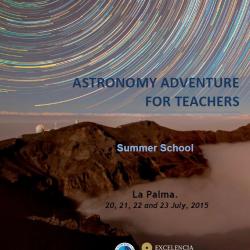
This community was created for the Astronomy Adventure Summer School organized in partnership with Instituto de Astrofísica das Canarias, the National Schools Observatory and NUCLIO/ GTTP. The community will be a hub for materials related to the Summer School and other tools and resources that might be useful for the participants.
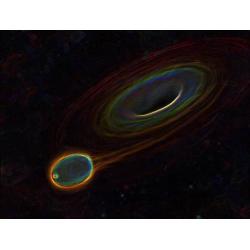
This community was created to be the meeting point of participants of the online / face-to-face training and demo activitiesunder the topic of Stellar Black Holes. This training will be coordinated by NUCLIO - Núcleo Interativo de Astronomia in the framework of Sonette project (http://www.sonette.org/)
As children, we’re taught to paint cold things blue and hot things red. In science we learn that blue things are actually far hotter than red things! In this lesson, we will learn how hot objects radiate energy as light of many colors following what is called a black body curve. This community is part of the ISE hangouts series devoted to Astronomy and Space Science. Each community has an associated hangout where Dr. Pamela Gay, renowed astronomer and educator interviews scientists involved in
Have you ever wondered how we can integrate Modern Physics in the school curriculum? Do you believe that exciting discoveries such as the Discovery of Gravitational Waves or the Discovery of the Higgs Boson can be brought in the classroom in a consistent and understandable fashion? The FRONTIERS Project brings together expertise from frontier scientific research and educational research in formal and informal science learning, along with user communities across Europe, in order to demonstrate
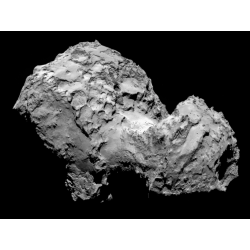
This subcommunity is dedicated to explore the topic of comets and their probable importance for life on Earth. This space will be populated with relevant tools and resources to help the construction of innovative and engaging scenarios related to comets and its exploration. This community is part of the ISE hangouts series devoted to Astronomy and Space Science. Each community has an associated hangout where Dr. Pamela Gay, renowed astronomer and educator interviews scientists involved in
The D.O.M.E. project (Design your Own Multimedia learning Environment) aims to empower students by involving them in building a low-cost planetarium system and developing presentations that will engage the local community and allow them to benefit from the planetarium and its associated resources. This DIY planetarium will provide for the students the opportunity to increase their competence profiles as well as the science capital of their community and the scientific reasoning and awareness of
A ~50 minute lesson plan with high interactivity using simple experiments aimed at A-level. Students learn about the various wavelength in which Astronomers observe and how these affect the way we can see the Universe. They then go on to apply this knowledge using the Multiwavelength Universe app. Students then learn about the Cosmic Microwave Background and its implications for the make up of the Universe.. Finally, students get to apply this knowledge by designing a space telescope using an
This community brings together teachers who are using resources, virtual experiments and online labs from the fields of Astronomy and High Energy Physics (HEP). Among other activities, it offers access training, resources and to a network of robotic telescopes and the major CERN experiments, ATLAS and CMS. Transit of Mercury 2016 Live at: http://ustre.am/1vYJ6 The organisers of the recent projects IYA2009 - Shape of the Earth, ERATOSTHENES experiment and IYA2009 - Distance to the Moon and
A UK community for the Eratosthenes Experiment. Eratosthenes was the first person to measure the diameter of the Earth accurately, in the 3rd Centruy BC, using the length of shadows at different positions. That same experiment is straightforward to reproduce, and uses simple measurements of shadow lengths and basic trigonometry. The lesson can be run at any time, but by registering online for the Eratosthenes Experiment, you can enter contests and prize draws, and even collaborate with other
Welcome to the Community for the Eratosthenes Photo Contest March 2023! Here you can post your photos and take part in the contest. Upload your photo in the Resources area and automatically take part in the contest. Please keep in mind that each teacher can submit ONLY one photo. Entries with more than one photo will not be considered for the winning prize(s). The winning prize*** is a seat to attend the AMASE Summer School 2023, in Marathon Greece from 8-14 July, 2023. For more info please
Welcome to the Community for the Eratosthenes Photo Contest March 2024! Here you can post your photos and take part in the contest. Upload your photo in the Resources area and automatically participate in the contest. Please keep in mind that each teacher can submit ONLY one photo. Entries with more than one photo will not be considered for the winning prize(s). The winning prize*** is a seat to attend the GEO - Academy Summer School 2024, in Marathon Greece from 7-12 July 2024. For more info
This is the eRBOBSON Hub! eROBSON stands for: Educational Robotics at Schools Online with Augmented Reality This project has received funding from the European Union’s Erasmus Plus programme, grant agreement 2020-1-NO01-KA226-SCH-094120. Click here for the eROBSON webiste. The ultimate goal of this Erasmus+ KA2 project is to develop a strategic partnership and later – a self-sustained professional community in the intersection of Educational Robotics and Augmented reality. All activities related