Hosted by SALL , contributed by kerasia@72 on 6 July 2023
Our kindergarten is placed in a rural area in Greece, Nea Anchialos.The pupils, aged 4-5 years old, have got much experience and know many things about planting and growing, since their parents are occupied with the olive trees and wine farms.
During the learning procedures in class, they describe the ways they help their parents and the ways their parents take care of the trees and the grapes and they communicate their knowledge to the other pupils. We tried to enforce this knowledge with collaborative hands-on activities by making our own garden using organic waste to make compost.
Pozadina zadatka
Our kindergarten is placed in a rural town of Volos in Greece, Nea Anchialos. The pupils, aged 4-5 years old, and their parents are occupied, basically, with the olive trees and grape plantation. The children have much experience about planting and growing and take much information from their parents.
The starting point for the living lab project is to involve the pupils in the process of making their own vegetable garden in the schoolyard using organic waste to make compost. This activity was mapped according to the pupils' experiences and the main objective was to engage them in nature - based practices. Additionally, the parents were actively involved so as they were accustomed to the procedure of making compost.
Cilj
The aim of the living lab project was to make a garden in our school yard with plants and have the pupils engaged in producing fertilizers friendly to nature, actually using waste that nature itself produces. This activity was relevant to pupilis' personal experience as they were experiencing the agricultural occupations along with their parents. Specifically, our aim was:
To cultivate environmental awareness and consciousness
To realise the negative effects to the environment of using chemicals
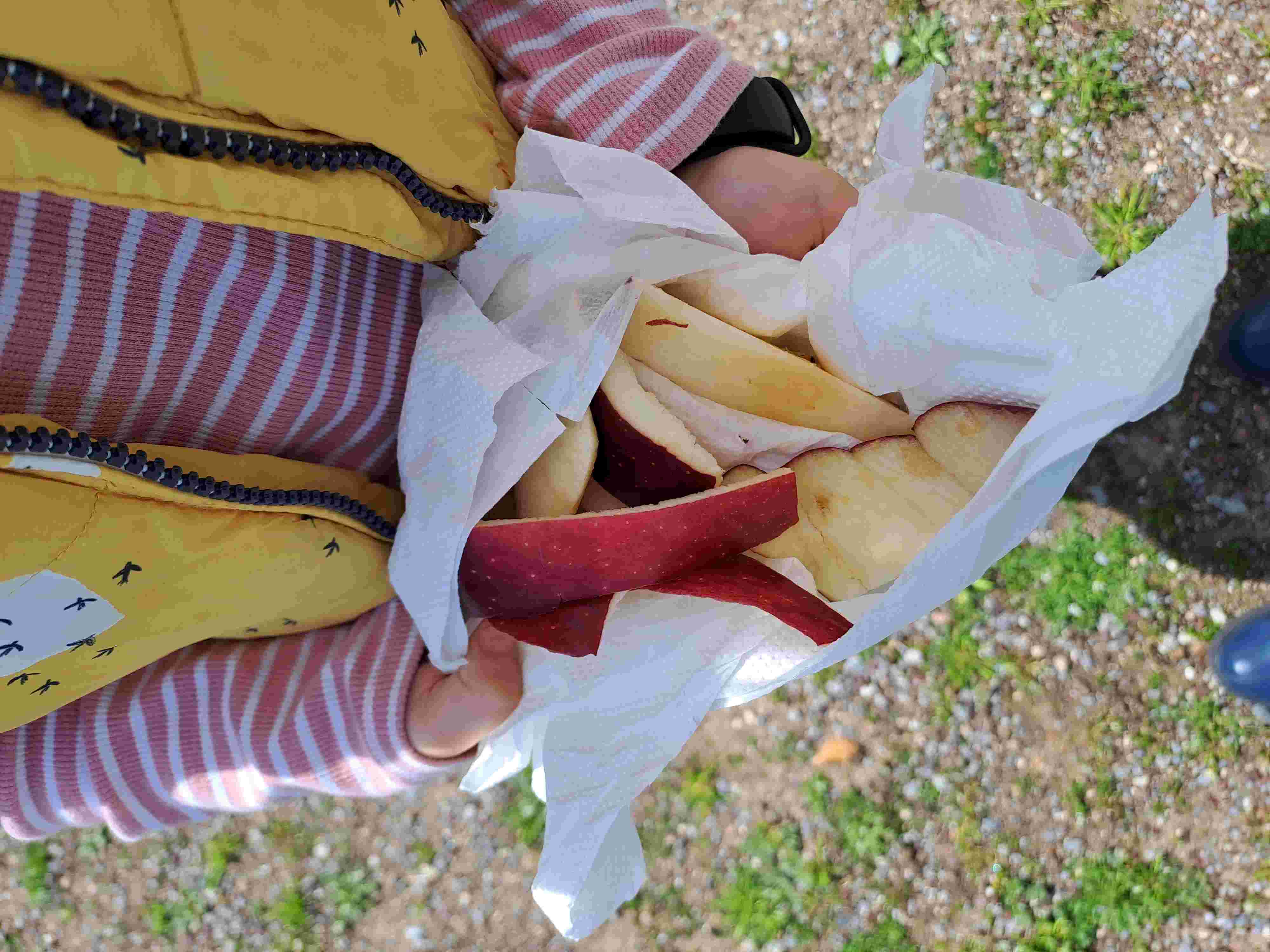
To make compost using the leftovers of the food
Zajedničko stvaranje s društvenim akterima
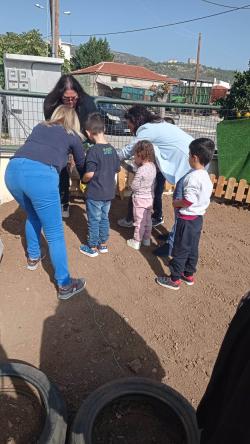
For this project we collaborated with an agronomist who gave us valuable information about the composting procedure. We made a list with the elements needed for making the compost and we were informed about how much time is needed for the preparation. Afterwards, we asked parents to cooperate with us by bringing soil from their field without chemical fertilizers and seeds.
Our collaboration with the community was a motivating force to communicate the benefits of making compost and the importance of changing attitudes towards nature.
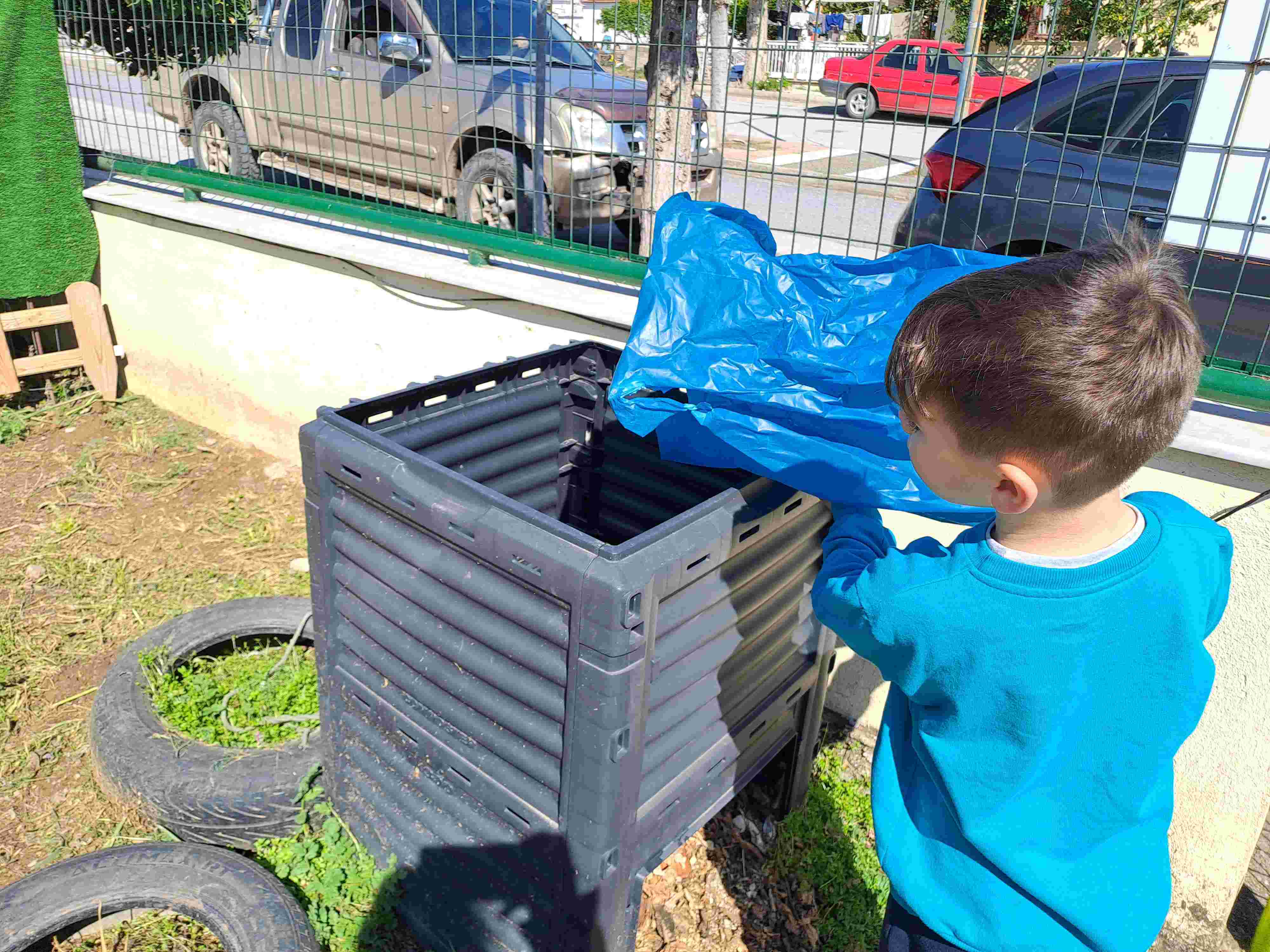
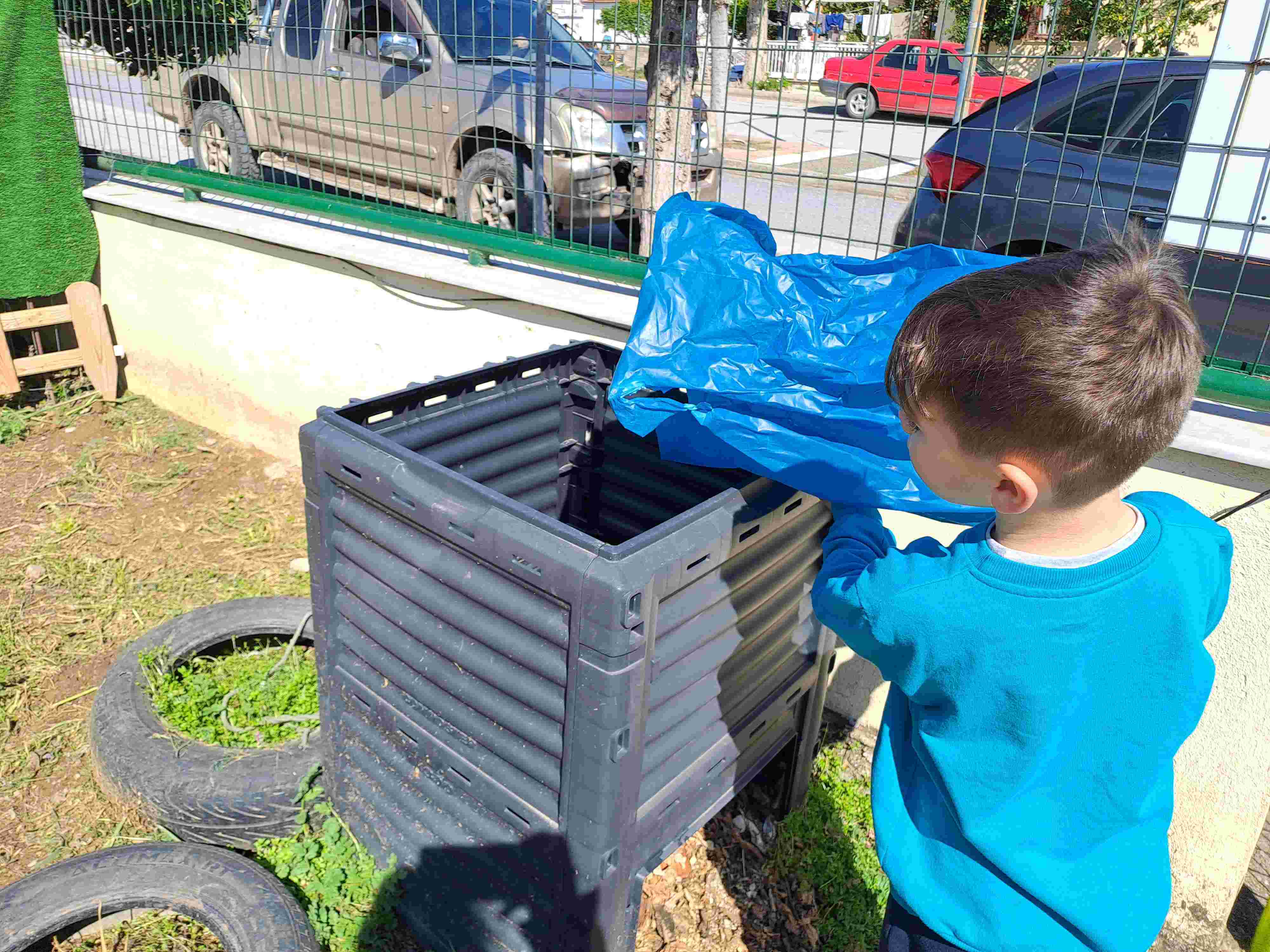
The Green Service of the Community provided us the compost bin.
Provedba
The attempted solution was chosen after a discussion with the children to learn more about the process of composting since they knew only the conventional ways of planting and growing trees and plants. They were particularly concerned when the Kindergarten teacher asked the children if there might be another way to help the trees and plants grow.
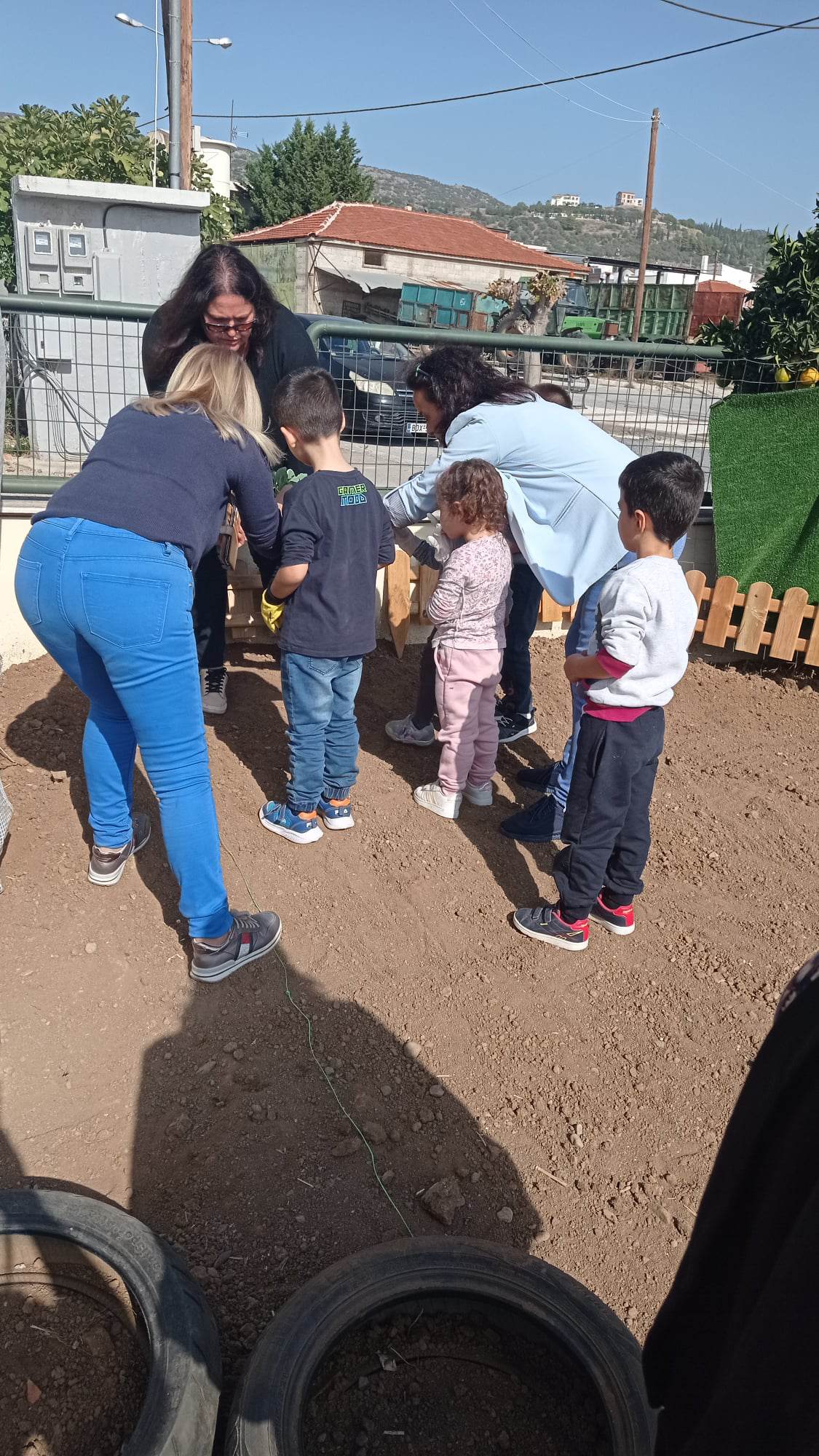
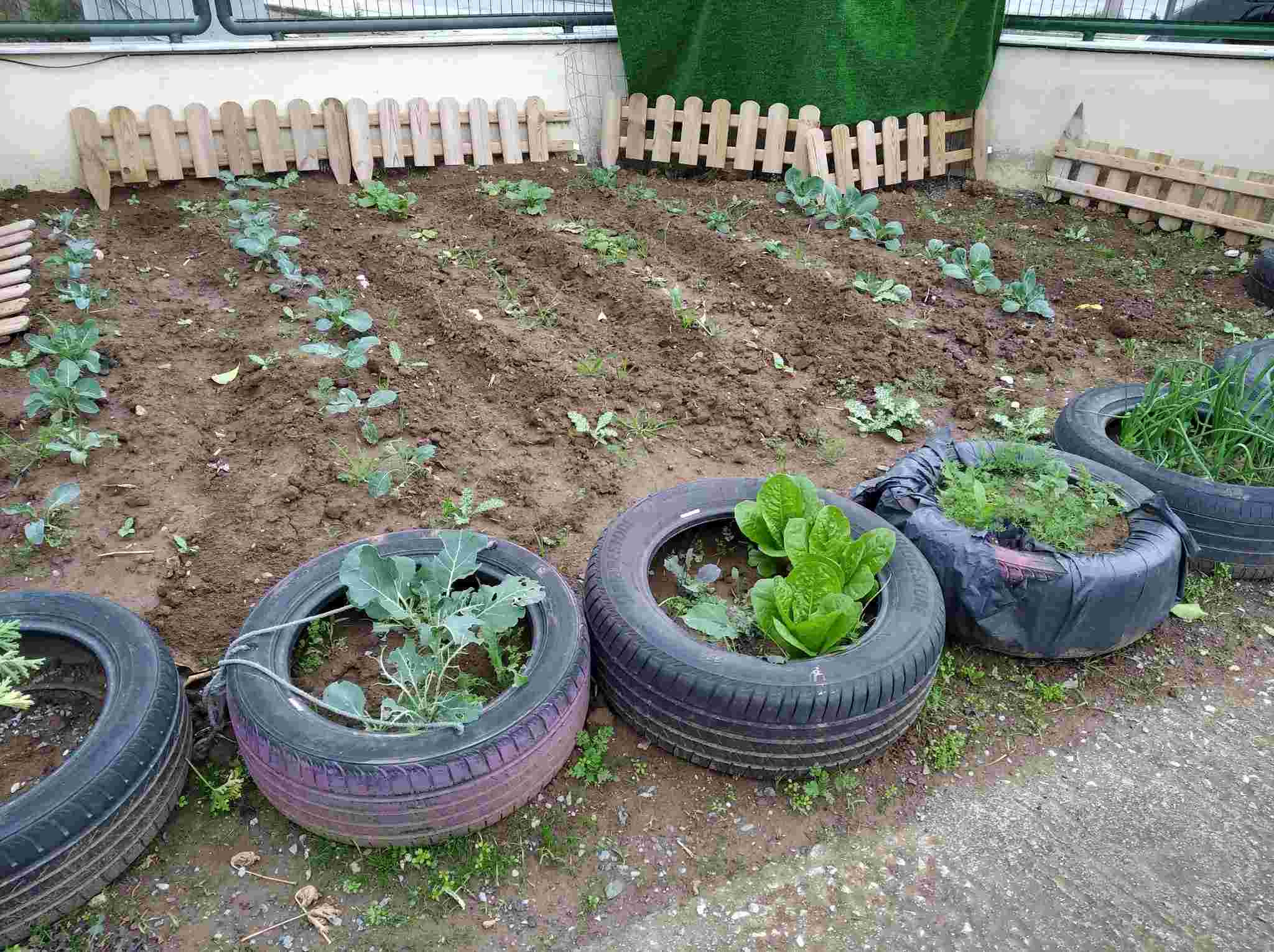
The activity started in autumn and was completed in spring. First, we learned from the agronomist about how composting is done and exactly what foods help create natural fertilizer. Then we used the car tyres we have in the school yard to create our improvised composters. Parents were informed about our activity and eagerly accepted the invitation to contribute to this effort. They brought in soil from the field, collected the useful "waste" we needed to create fertilizer every day, and together with the children they made the required layers inside the tyres. After the process was finished in late fall and while we were supervised by the agronomist, we moved on in spring to creating a vegetable garden with the natural compost. The children planted using the compost they had made themselves and were delighted to find that their efforts had paid off, as the first seeds had already sprouted in the tyres.
The tyres were replaced by a compost bin that was provided by the The Green Service Commitee.
Refleksija
The whole experience met the children's expectations when they found that they had contributed to the implementation of an action aimed at sustainable nutrition. Throughout the action, there was great interest from the parents who experienced the process and found that alternative ways of composting yield sustainable and healthy fruits. Composting is an activity that it will be continued in our Kindergarten and our ultimate goal is for the children to act responsibly, take initiative and think critically and sensitively about how they receive their food as future citizens.
Finally, our future goal is to contribute with good practices and to contribute to Citizen Science by working with institutions and scientists.
Futurel Plans
Our future plans is to collaborate with the community and environmental institutions in order to get more knowledge and practices that will evolve our ideas about making compost. Since now, we realised that practices that are close to nature promote the need to be more conscious and aware of the environment. The main idea of using elements friendly to the environment, helps small children to cultivate a more responsible attitude towards environment, an attitude that they, hopefully, support as adults.