Hosted by SALL , contributed by Gaio-Oliveira on 25 November 2022
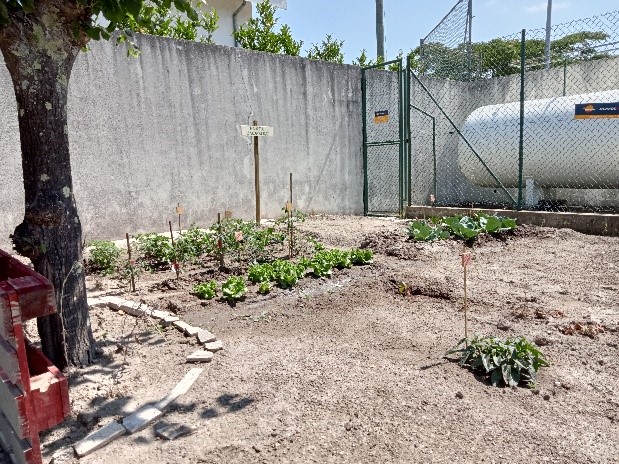
After analysing some problems, the 7ºC students considered it important for the School to have a pedagogical garden for “field lessons” and at the same time provide fresh fruit and vegetables for the buffet and aromatic herbs to improve the taste of the canteen food, without having to resort to to salt.
Background
This school is inserted in a regional context of small producers (family farming) and it will be important to transmit and perpetuate this knowledge/learning in the students.
This class has 4 students with an adapted curriculum, in which the preparation, maintenance and monitoring of the Horta could be integrated as a practical class, “in loco”.
Aim
After analysing some problems, the 7ºC students considered it important for the School to have a pedagogical garden for “field lessons” and at the same time provide fresh fruit and vegetables for the buffet and aromatic herbs to improve the taste of the canteen food, without having to resort to to salt.
Co-creation with societal actors
The municipal council provided the soil/earth and the machines to work the soil and put the earth in the space destined for the garden.
Students' parents provide the plants for the plantation.
Implementation
After identifying and describing the problem, the students projected their ideas into a problem tree, then problematized and built a “star burst” with: Where? Who does what? As? When? What to plant? Did they choose the location, who planted and cared for it? What to plant? We contacted the City Council partner and we are starting the construction of the vegetable garden.
Reflection
Although we are starting and the school is under construction, which has made the process difficult, the students were very receptive and interested in participating and implementing the garden.
They insisted on sharing their experience and we are working together to involve more students next year, namely from the 2nd cycle, in partnership with the Eco-Schools programme.
Futurel Plans
This project will effectively be developed in the next school year. We are thinking of building a composter to recycle the organic waste from the canteen and obtain compost to fertilize our garden.