Hosted by SALL , contributed by papel on 13 July 2023
This project was created to make students aware of the importance of collaboration and innovation and how crucial it is for the economy and environment together. We, as school staff, collaborated with local authorities and people from the agriculture world and we initiated a campaign through which students could learn the importance of agriculture in the regional economy and the problems that should be anticipated.
Background
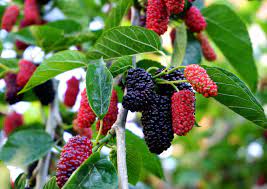
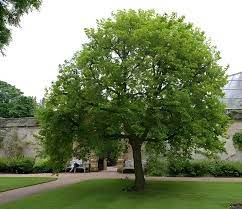
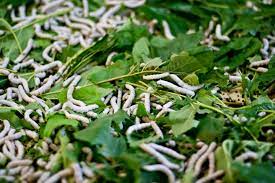
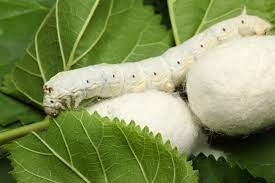
In the regional area of my hometown, there are a lot of mulberries. Mulberries are essential trees for the production of silk which is the most important income for the residents as the silkworms live and feed themselves with the leaves from these kinds of trees. Many silk producers own large areas and cultivate mulberries to host and breed big populations of silkworms and enhance their production. We have to add that this specific kind of silk is well-known across the fabric world and is also very expensive.
Aim
The problem is that all the berries rip and fall down without anyone taking advantage of them. With close care, they can become a good source of income for regional families. In other words, citizens can produce jams free of conservatives and sell them under a regional brand name.
The living lab project in a primary school aims to provide an innovative and interactive approach to teaching environmental sustainability and promoting positive behavior change in young students. But the most crucial part is the interconnection the school has with society and how can obtained school knowledge help the community to overcome barriers and problems so life can be improved.
The solution we have decided to work on involves several steps
- educate students and staff about the problem
- provide ideas to improve citizens’ well being
- build these ideas experiment with them and
- evaluate accordingly
- communicate the solution to the society in order to be implemented
This project is relevant to students' experiences because it addresses a problem they can relate to and provides an opportunity to learn about sustainability and make positive changes in their behavior. Additionally, this project is relevant to the community because it can serve as a model for synergies and families to follow, promoting a more sustainable approach and last but not least providing a noticeable source of income to the community.
All involved actors benefit from the solution or participate in the living lab project. Students benefit from the opportunity to learn about sustainability and take an active role in promoting positive behavior change and more specifically bringing solutions to some problems. Moreover, they obtain and improve entrepreneurial skills which are very important for their future life. Teachers benefit from the opportunity to teach environmental sustainability in an interactive and engaging way as well as entrepreneurship and enhance collaboration. The broader community benefits from the product line we presented and worked on for a more sustainable approach to living. Overall, the living lab project provides a collaborative and innovative approach to teaching sustainability that benefits all involved actors and promotes a healthier environment for the future as well as it can improve citizens’ well being specially in rural areas where opportunities for jobs are rare.
Co-creation with societal actors
Living lab projects typically involve collaboration with various organizations and individuals in the community, including local government, non-profit organizations, businesses, and community members.
In the beginning, we organized a campaign through which we would be able to inform the societal actors about our plans. Among our guests were parents, professionals of the field i.e. silkworm breeders, the mayor, some members of the town council board, and the local press. The campaign's success was enormous and unanimously everybody agreed to fund our project and give students all the necessary professional knowledge.
Implementation
Firstly, research was made in order for all the data to be recorded that concerned the mulberries’ population and the condition of the fruit.
After, a calculation was made to check the quantity of the berries jam according to the crops.
Finally, students concluded that it was financially sustainable to produce berries jam and sell it with a brand mane.
The only thing that was left unsolved was the product line. Students decided to get into the lab and work on a model to build a product line in order to make the enterprise viable.
Back to the lab, we used Spike tool kits and with the help of block code, students build the product line which helped the jam makers to make the product in big quantities.
Overall, a living lab project involves a collaborative and iteraψtive process that involves various stakeholders in identifying and addressing sustainability challenges in the community. The four phases of co-creation, exploration, experimentation, and evaluation are critical for achieving the aim of the project and ensuring its sustainability and impact.
All the above steps were taken for the realization of the project.
Reflection
Living lab projects are great because they bring students, teachers, and community members together to work on sustainability challenges. Everyone gets to be part of finding solutions, which makes them feel empowered and responsible for making positive changes.
These projects have many benefits. For students, they help develop important skills like critical thinking and leadership, and they also teach students to care about the environment. Teachers can use these projects to make learning more exciting and teach about sustainability. The community benefits too, because these projects can help the environment, economy, and people's well-being.
Futurel Plans
After finishing a living lab project, it's important to evaluate its success and find areas to improve. This evaluation helps decide whether to repeat the project, make changes for a new context, or create a new project altogether.
If the project went well, it might be worth repeating in other schools or communities. We can adjust it based on what we learned from the first one to fit the new situation better.
On the other hand, if the project didn't go as planned or needs improvement, we can use what we learned to create a new living lab project. For example, if the initial project aimed to increase recycling in schools but didn't work, we can develop a new project that tackles recycling barriers or tries a different approach.
In the end, the decision to repeat, continue, or create a new project depends on the outcomes, goals, team's capabilities, and resources. It's important to reflect on the experience and use what we learned to improve future projects and keep learning.