Hosted by SALL , contributed by koumisp_aradippou on 1 February 2023
Background
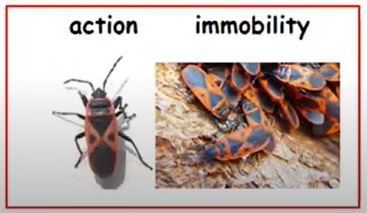
Scantius aegyptius, the Mediterranean red bug, is a species of red bug in the family Pyrrhocoridae. It is endemic to the Meditteranean but is invasive to areas that reach as far as North America. It forms groups in tree trunks. It is not entomologist favorite insect because it is not harmful to crops. Hence, it has not been studied extensively.
In 2016, students showed that insects form groups preferably at lower temperatures.

In 2015 another group of students showed that in artificial ecosystems the distribution of the insects changes depending on time and temperature.

Aim
Our aim was to prove our hypothesis that in the morning and at noon the insects (Scantius aegyptius) should run freely and later as temperature drops they should form groups. If this behavior is circadian, they should persist under free running conditions as well, where temperature is constant.


Co-creation with societal actors
The project was presented to many schools in Spain under the Erasmus+ program. The findings were presented to the scientific community as well e.g., in the sCYence Fair 2022 organized by the Cyprus Institute.
Implementation
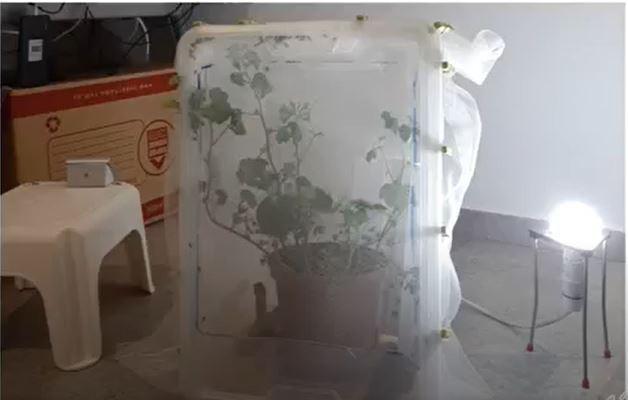
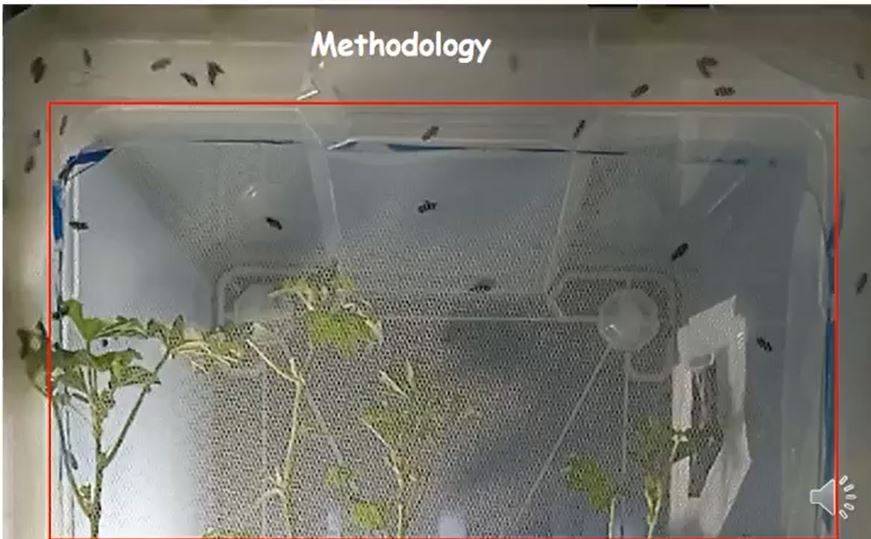
To test this hypothesis we placed the insects in artificial ecosystems. We used an app called Frame lapse to monitor the daily activity. First we entrain the insects with artificial light and timers. Then we released them in free running conditions of constant light and temperature. We took measurements during the experiment.

Reflection

Futurel Plans
It is worth investigating whether the circadian regulation is universal amongst cold blooded animals. This should have then a significant impact in climate-change related research.