Hosted by SALL , contributed by Gaio-Oliveira on 24 November 2022
The “AA: Aromatic Food” Project was carried out by the Young Health Promoters of Moimenta da Beira Secondary School, within the scope of the Portuguese League Against Cancer (Northern delegation). With this project, we intend to reduce the consumption of salt in our meals, namely in the school canteen, replacing it with aromatic herbs.
Background
The “AA: Aromatic Food” Project was carried out by Young Health Promoters (Class of the Professional Course of Auxiliary Health Technician – 2nd year) of the Secondary School of Moimenta da Beira, within the scope of the Portuguese League Against Cancer (delegation of the North). With this project, the aim is to reduce the consumption of salt in our meals, namely in school canteens, replacing it with aromatic herbs.
Aim
Excessive salt consumption is a public health problem recognized worldwide, being a risk factor for several health problems such as stomach cancer, hypertension and cardiovascular diseases. Taking this problem into account, schools, through an order from the Ministry of Education, were forced to reduce the use of salt in school canteens, which meant that, in our school in particular, there was a decrease in the number of students. who has lunch in the canteen, claiming “lack of flavor”. Thus, the Young Health Promoters thought of an alternative to make the school meal more attractive and tasty, trying to introduce aromatic herbs. Therefore, the objectives of this project are:
- Sensitize the Moimenta da Beira community on the importance of replacing salt with aromatic herbs;
- Promoting the replacement of salt by aromatic herbs and spices;
- Increase the knowledge of canteen professionals about aromatic herbs and their use.
Co-creation with societal actors
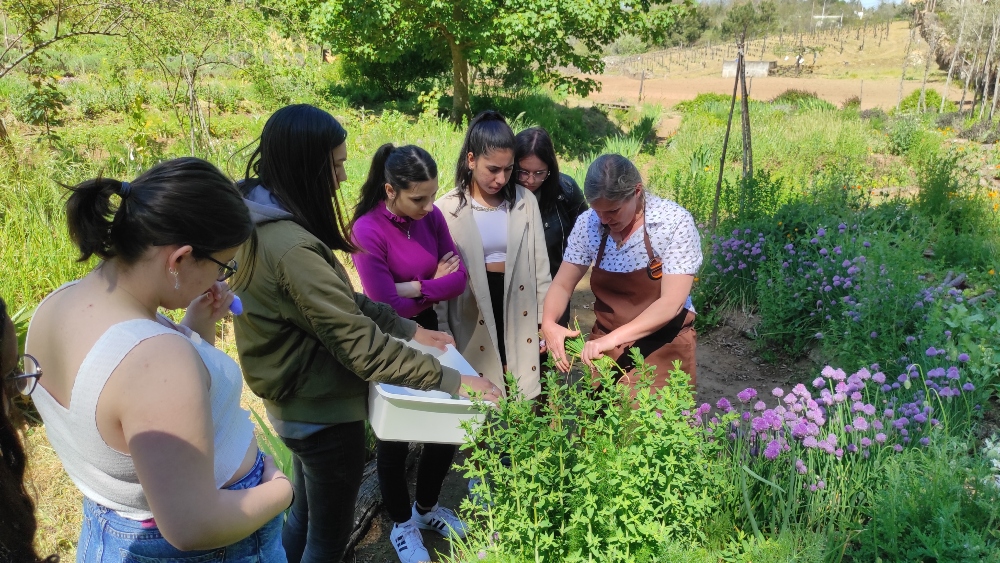
The “Moimenta a Inovar” team was a partner in our project, having financed a study visit to Quinta Ervas Finas, in Vila Real, with the aim of inspiring students to recognize the nutritional value of a vast array of plants, to understand the parts and their respective integration in space and time so that they can be used as food either in their fresh or preserved form, also enhancing their aesthetic and therapeutic potential.
Implementation
The problem was identified in a session of Young Health Promoters, at school, promoted by Psychologist Patrícia Pinto. Taking into account the European Code Against Cancer, what contribution could your school make to prevent cancerous diseases? Soon the answer came: “the food in the canteen has very little salt (it complies with regulations), but it has no flavor! In the bar, the offer is very limited…” Solution: let's make the food in the canteen more attractive and aromatic and try to introduce some variety of healthy foods in the school bar. Then there were some activities to develop:
- proposal for the acquisition of a natural orange juice machine (students' bar);
- elaboration of posters and book with the divulgation of aromatic herbs;
- mini-garden of aromatic herbs;
- aromatic herbs fair;
- study visit to the farm “Ervas Finas”, in Vila Real;
- workshop for the canteen cooks on aromatic herbs.
All these activities were carried out successfully, with great support from the students involved in the project, which is still in the experimental phase.
Reflection
With this project, it was intended to sensitize the educational community about the importance of replacing salt with aromatic herbs, which is believed to have actually happened. On the 1st of July, the project team will present it at the 20th Young Health Promoters Forum, at the Fernando Pessoa University, in Porto.
Futurel Plans
It is intended that this project be continued in the next academic year.