


Hosted by OSOS , contributed by mdunne on 7 February 2020
There is scientific evidence linking obesity amongst children with their consumption sugar sweetened soft drinks according to a study completed in 2018 by the Health Service Executive.
The class wanted to assess their consumption habtits of sugar sweetened soft drinks/fizzy drinks and promote a campaign to reduce consumption in school. In the home economics kitchen in the school there is a Health Clock and No. 3 targets the reduction of soft drinks.
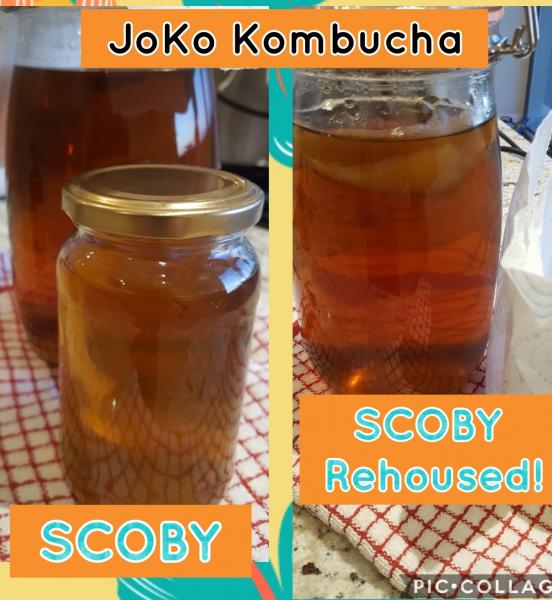
As an alternative to fizzy drinks students began to look at alternative drinks to fizzy drinks and set about brewing Kombucha. Kombucha is a fizzy drink prepared by completing fermentation of a sugar solution and aSCOBY.
Feel
Our teacher encouraged us to examine our dietary habit of consuming sugar sweetened fizzy drinks and encourage us to find out how a drink called Kombucha is made. We discovered that this has supposed health benefits associated with it.
We found information online from https://www.safefood.eu/Start/6-Healthy-Habits/Sugary-Drinks.aspx and this encouraged us to take the challenge reducing our consumption of soft drinks and explore the science and biotechnology of making Kombucha as a healthy alternative to sugar sweetened soft drinks
Imagine
Following discussion with our teacher Ms. Dunne we completed a taste test survey of three bottle of Kombucha. One was made in England and looked like a beer bottle. The other two bottles were made here in Ireland. The bottles had a cleaner design. Most students (86 %) had never tasted Kombucha. We were surprised with the balance between sweet and sharp fizz. We purchased green tea, a filter for coffee, sourced a SCOBY from Ko Kombucha and our own glass jars and set about fermenting in school. It was interesting to note it apparently has health benefits linked with the bacterial in our guts!
Create
Our teacher helped us set up our inital brew by booking the home economics Kitchen in our school. We brewed the green tea and added it to the sugar. This was allowed cool with our SCOBY added the next day. We studied the science behind fermentation. Yeast is a fungi and the bacteia were together seen as being beneficial. We were then encourage to explore what fruits we would add to flavour our Kombucha. The fruits should ideally be sourced locally and Ms. Dunne had started a school garden last year planting strawberries, raspberries and mint. Ideally we would reduce air miles using locally grown produce. Some of us went with ginger and lemon!!
We designed labels for our bottle of Kombucha.