Hosted by OSOS , contributed by zgalapitvany on 3 December 2024
The eSAT Project: Making the European Youth Strategy accessible and engaging for young people
The European Youth Strategy delivered through Advanced Technologies (eSAT) project is dedicated to fostering a stronger connection between young Europeans and the opportunities available to them within the European Union. Funded by the EU’s Erasmus+ program, eSAT focuses on raising awareness of the European Youth Strategy—a framework designed to empower, connect, and engage youth in shaping the future of Europe. The project translates the often complex language of EU initiatives into relatable, youth-focused narratives, making it easier for young people to understand and engage with European opportunities.
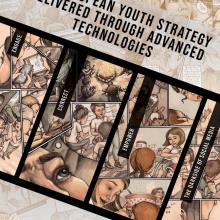
A highlight of the eSAT project is the creation of a multilingual comic book that brings the Strategy’s core themes to life. Designed by young volunteers from Romania, Bulgaria, Slovakia, and Hungary, the comic captures essential elements of the European Youth Strategy through vivid storytelling. In addition to the comic, eSAT has produced two scientific studies exploring how young people in different countries perceive their European citizenship and the impact of the Strategy on their identity as Europeans.
Study 1: Evaluating the European Youth Strategy’s Influence on Youth Citizenship
Published in *Insights into Regional Development*, the first study, titled *Impact of European Youth Strategy awareness and participation in EU activities on youth European citizenship: case studies of Bulgaria, Romania, and Slovakia*, evaluates how knowledge of the Strategy’s pillars and participation in EU activities influence young people’s European identity. Surveying 533 individuals aged 18-24, this study found notable differences in engagement levels across the three countries, with Slovak youth showing the least impact. These results underscore the importance of adjusting approaches to fit local contexts for effective youth engagement.
Interestingly, the study found that neither age nor gender had a substantial influence on participants’ perceptions of European citizenship, suggesting that impactful youth policies can resonate broadly across different demographics. For policymakers and educators, these findings offer direction on refining strategies to reach young people more effectively.
Study 2: Mixed Reactions Across Europe—A Deeper Dive into Youth Perceptions
The second study, *European Youth Strategy awareness and EU participation: Evaluating the intervention impact on young people's European citizenship in four countries*, extends the focus to include Hungary and provides a nuanced look at how the Strategy’s core themes resonate across different cultural contexts. Conducted through hands-on workshops and interactive events, the research sought to make the Strategy relatable by focusing on its key pillars—Engage, Connect, Empower—and a fourth area on mental health and well-being.
The results varied by country. In Slovakia, the workshops led to a noticeable increase in young people’s connection to Europe. In contrast, youth in Hungary and Romania showed minimal change in their sense of European identity, and Bulgarian participants who took part in the intervention reported feeling less connected to European citizenship than those in a control group. While unexpected, this finding suggests that introducing complex concepts of identity can sometimes lead youth to reevaluate their position within the EU framework. The study also found gender-specific responses, with young women in Slovakia and Hungary reacting more positively to the interventions.
Both studies from the eSAT project emphasize the need for tailored approaches in engaging youth with the European Youth Strategy. While the Strategy has had clear success in fostering a sense of European citizenship in some regions, other countries require more culturally specific interventions to resonate with young people. The eSAT partners will use these findings to guide future efforts to engage European youth, adapting its approach to better reflect the unique social and cultural landscapes of each country. This commitment to tailored engagement represents a significant step toward making young people feel like active participants in Europe’s future.
For those interested in learning more, the full studies and the comic book (in all languages) are freely available on the Klebelsberg Kuno Association's website.
https://klebelsberg.ro/en/
David Jankovszky, Foundation for Generation Z, Hungary. E-mail: zgalapitvany@aol.com