Hosted by SALL , contributed by teacher22 on 25 May 2023
Contexto
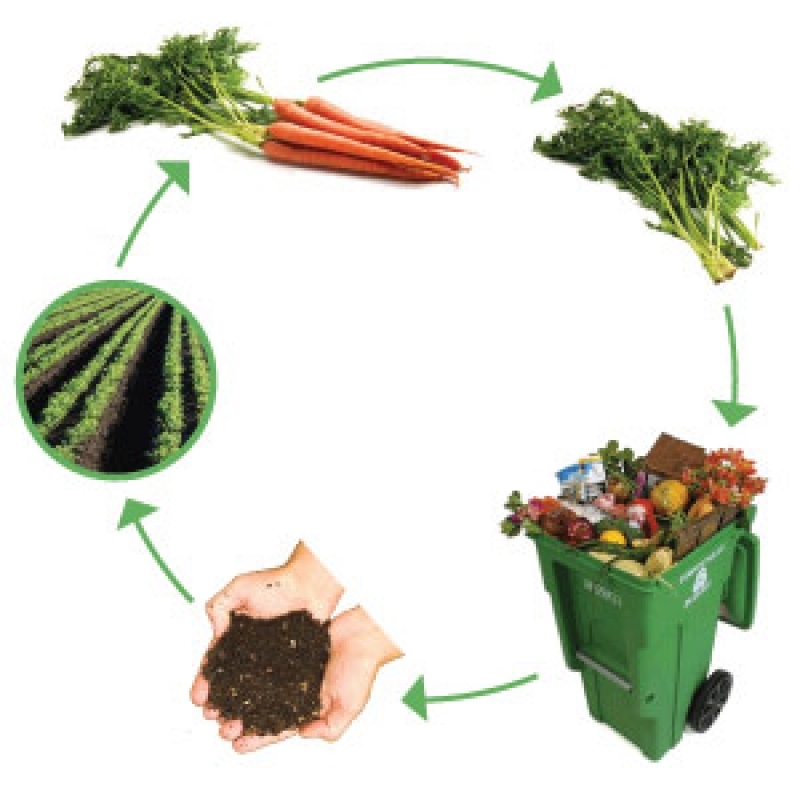
Our school community produces a large amount of food leftovers every day, most of which are thrown into the regular garbage bins and end up in landfills, contributing more to food waste and environmental pollution. There is currently a new trend to compost unnecessary food waste into organic fertilizers-especially in environmentally friendly companies and organisations, a product that would be of great use to our school garden. A living lab project is therefore proposed, where the biomaze derived from food waste could be used in order to produce organic fertilizers for our school garden.
Objetivo
The aim of this living lab is to restrict food waste that ends up in landfills, proposing environmentally friendly ways to deal with food waste. This organic recycling method contributes to better management of organic leftovers, contributing to fewer greenhouse gases emissions and thus environmental sustainability. It is also a money saving process, as it reduces the use of chemical fertilizers and pesticides that are offered in the market. What is more, organic fertilizers through composting have proved to be more efficient in terms of building healthier soil, prevention of soil erosion, conservation of water and improvement of plant growth.
Co-criação com os parceiros (atores sociais)
The municipality and the local community could contribute to our initiative by providing the suitable garbage bins for organic waste, the know how on how to implement the composting process, as well as raise awareness among students in order for the living lab to be implemented without disturbance.The municipality and the local community are the ones that deal with garbage management, so I really believe that they could provide solutions to our problems.
Implementação
The problem was selected among others because of the huge amount of food leftovers produced by our school community. I thought that among the other garbage management practices, the one that is more environmentally friend and easy to implement was composting. The option of the specific idea was given through an awareness seminar of environmental interest, where the process of composting was given in detail. I implemented the same practice at a farm and I realised that it was a quite easy process to implement.
Reflexão
I believe that this living lab project could be of great use to the whole local community, as it educates pupils towards the value of recycling and zero waste principles. Our school could be a green environmentally friendly organization that could as well inspire the local community in implementing the same processes in area level. Sustainability is a value that all schools of the 21st century should promote in everyday practices.
Futurel Plans
This project is an attainable target for our school community, as composting is a natural, relatively costless process that could contribute to minimalisation of food waste. If the steps towards the organizational part are followed, then it could be a functional and vital part of our school.