The use of self-reflection tools can be a way to support organisational change towards identifying goals of sustainable innovation, defining actions and achieving improved learning outcomes. These tools aim to capture the profiles, needs, contributions and relationships of all school-related actors and elements towards a sustainable innovation ecosystem that will operate under a holistic framework of organizational learning and promotion of educational innovations.
In Open Schools for Open Societies, as a crucial tool for assessing the openness level of a school, a self-evaluation instrument, the OSOS Self-Reflection Tool is offered to the participating schools head masters. It assesses the use level of the school openness of with an emphasis on the introduction of the RRI culture in six key areas: (1) leadership and vision, (2) curriculum and use of external resources, (3) open school culture, (4) professional development, (5) parental engagement and (6) resources and infrastructure. Based on the school’s reference data, actionable analytics will be provided, allowing head teachers and key stakeholders to monitor the school development and the impact of the proposed innovation process.
Learn more here: https://portal.opendiscoveryspace.eu/en/how-to-use-osos
The use of digital technologies in schools
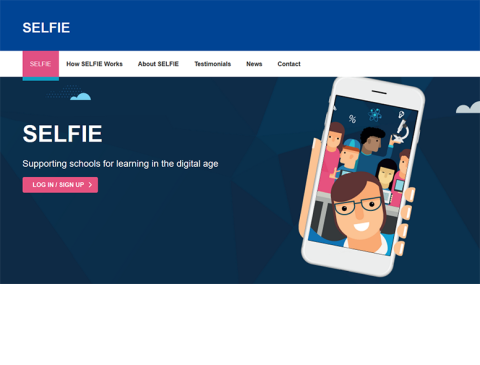
The SELFIE tool consists of a series of reflection questions and statements for students, teachers and school leaders on how digital technologies are used in their school.
SELFIE (Self-reflection on Effective Learning by Fostering the use of Innovative Educational Technologies) is a tool designed to help schools embed digital technologies into teaching, learning and student assessment. It can highlight what’s working well, where improvement is needed and what the priorities should be. The tool is currently available in the 24 official languages of the European Union with more languages to be added over time. SELFIE gathers – anonymously – the views of students, teachers and school leaders on how technology is used in their school. This is done using short statements and questions and a simple 1-5 agreement scale. The statements cover areas such as leadership, infrastructure, teacher training and students’ digital competence.
The assessment takes around 30 minutes. Questions are tailored to each group. For example, students get questions relating to their learning experience, teachers reflect on training and teaching practices and school leaders address planning and overall strategy.
Based on this input, the tool generates a report – a snapshot (‘SELFIE’ :-)) of a school‘s strengths and weaknesses in their use of digital technologies for teaching and learning. The more people in the school taking part, the more accurate the SELFIE of their school will be.
Learn more here: https://ec.europa.eu/education/schools-go-digital_en