
Hosted by OSOS , contributed by Milopoulos on 4 June 2018
This is the project that TEAM 4 of the E2 Class of EA Primary School created, as part of the the Students Visions on the Future of Space Exploration research and development project. In this project, we have selected as the main topic a major challenge for the humankind: The journey to Mars. The project is using the concept of storytelling a catalyst for the effective interaction between art and STEM disciplines which share in many ways similar values, similar themes and similar characteristics. Such a project introduces creative approaches in STEM education to generate alternative ideas and strategies within scientific enquiry as an individual or group, and reasoning critically between these.
The project introduced and tested a new vision for teaching and will lead to the development of strategies on how teachers’ roles and conditions can support and enable deeper learning for students. To do that, a storytelling platform has been interlinked with the OSOS infrastructure, which students used to develop and publish stories about a future Mars Mission with the aim to develop a sustainable community on Mars. A rich collection of resources is available for teachers and students: http://www.storiesoftomorrow.eu/?q=node/44
להרגיש
Our project was based on a MISSION Programme of 40 didactic hours in the class, while we and our teachers devoted also our personal time outside the classroom to do related homework and prepare the big event at the end where we presented our work, to their parents, teachers and fellow students, as an exhibtion at school premises.
The MISSION Programme was divided in 6 periods which follow the Phases of the OSOS Accelerator.
Period 1: Introduction: The Solar System and Mars - Where and Why"
At the first part, we were introduced to the contents of the Mission Programme and then the Teams were drawn.
The second part was very engaging because we used simpe 3D glasses to watch scientific animations and videos about the Planetary Motion and Planetary Scale. (click to watch them)
At the third part, our teacher has demonstrated how a Sundial works. As a homework, we were asked to create our own sundials:
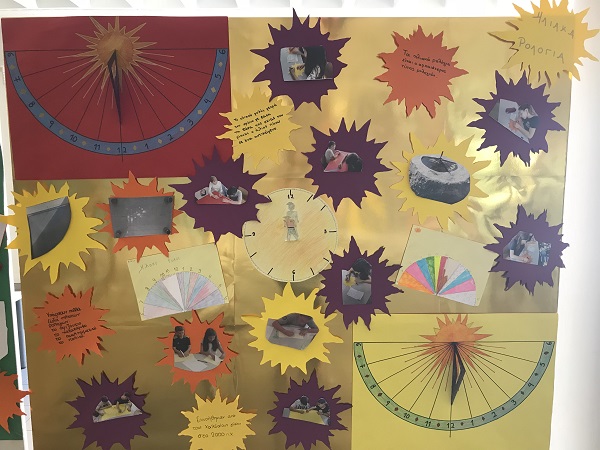
Sundials contructed by us
The time for the first game has come. The fourth part was entitled "Magnetic Planet Game". We tried to make a representation of the Solar System and we learned how planets are born.
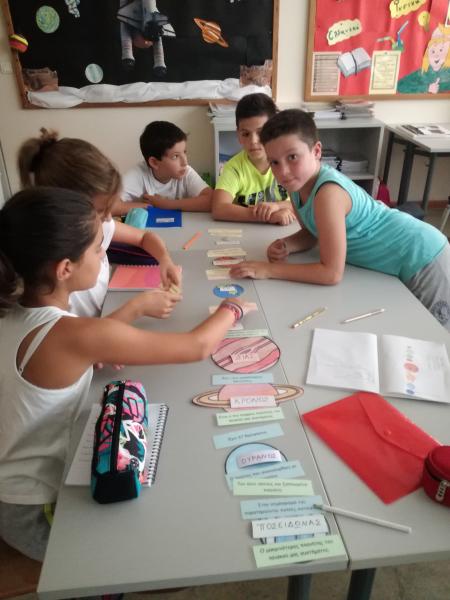
Here we are, playing the Magnetic Planet Game
Of course, after the game, some homework was given to us: "Create a Solar System"!
The next part (Part 5) focused on physics. To understand how gravity and planetary movement works, we learned about Foucault's Pendulum and we had the opportunity to visit the large scale pendulum located at EA's premises:
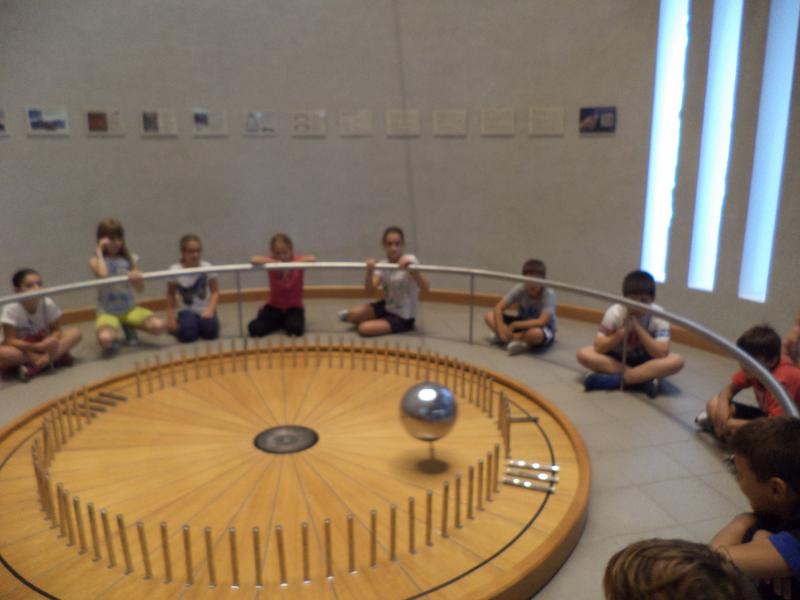
The Foucault's Pendulum in our school
At the sixth part of this introductory section, we had to present our homework abou the Solar System.
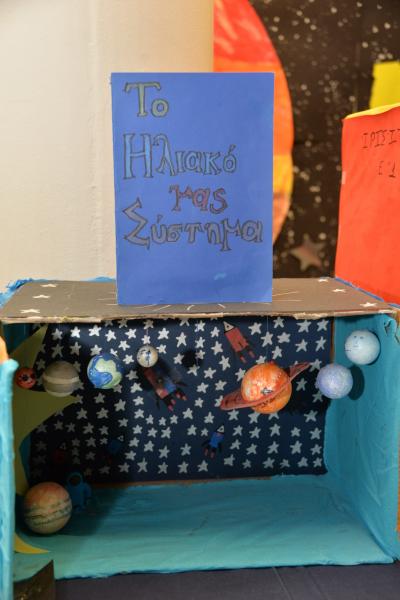
The outcome of our homework about the Solar System & Mars
לדמיין
The time to focus on Mars has come!
To learn about the conditions and characteristics of Mars, we:
- Played a game with images of Earth and Mars (http://www.marsquestonline.org/tour/welcome/earthormars/index.html)
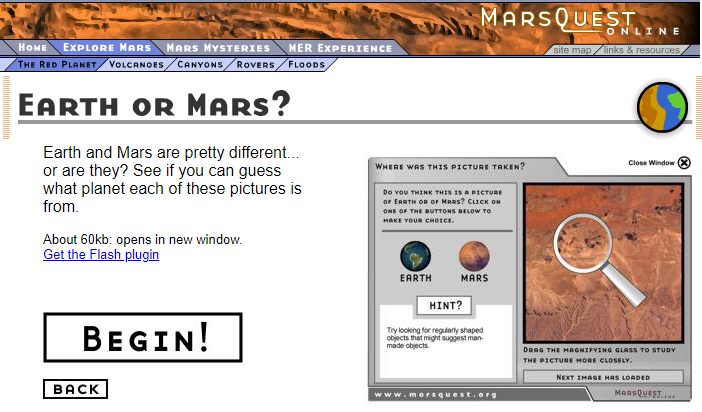
The homepage of the MarsQuest game
- Explored the NASA website about Mars (https://mars.nasa.gov/allaboutmars/)

NASA's webpage about Mars
- We did an experiment and learned about the colors of Mars
- We did an experiment and learned about the Gravity on Earth, Mars (1/3) and the Moon (1/6)
The next part was very interesting. All these technologies NASA is using for space missions, can also be used in Earth, in our country, in our town or in our homes. We have learned that NASA has a special section on their webpage which is called: "Spin-Offs" and it is located here: https://spinoff.nasa.gov/ .
NASA's SpinOffs: Space technologies can be used on the local societies
With the help of our teacher, we visited this page and we got ideas on how the technology we are planning to use in our Mars Mission can also be useful for the local societies on Earth.
Finally, our teacher had the best idea! To help us really IMAGINE our mission to Mars, she asked us to go home and watch "The Martian" Movie! This was the best homework we ever had!
Our homework for the last part of the IMAGINE activity!
Now we are ready to start creating!
יצירה
PERIOD 2: Preparing the Mission
At the first tasks of Period 2, we had to decide WHEN we will go to Mars. We had to calculate when Earth and Mars are closer, in order to reduce the time and the cost of our mission. Our teacher showed us the MARSQUEST webpage which had a nice tool that helped us with our calculation:
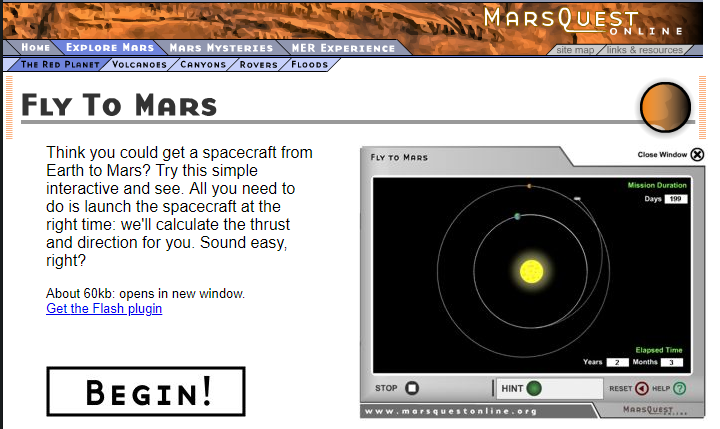
The Earth-Mars distance calculator
Apart from that, to better understand the distance among the planets we played a nice card game:
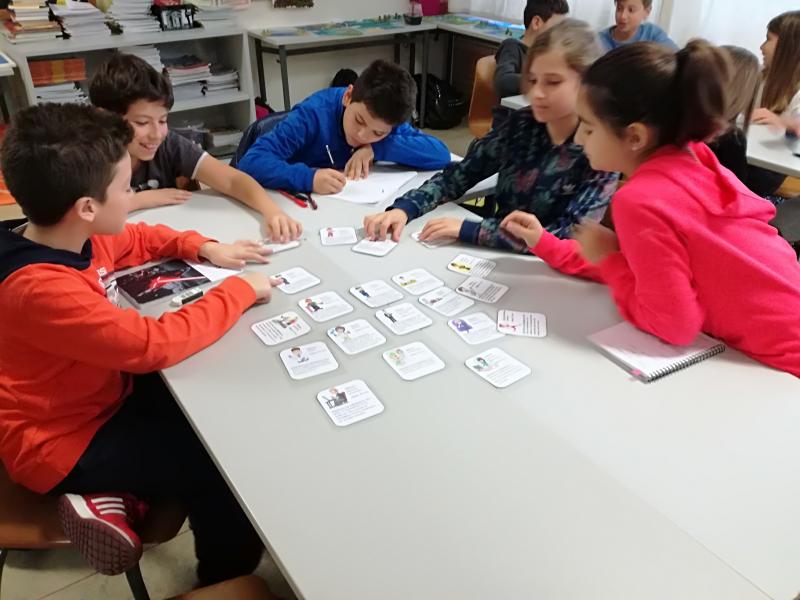
Playing with cards and learning about the distance among planets
We will also need Spacesuits. To understand how Spacesuits work, we participated in two experiments:
- The first experiment answered the question: "Why are the Spacesuits white?"
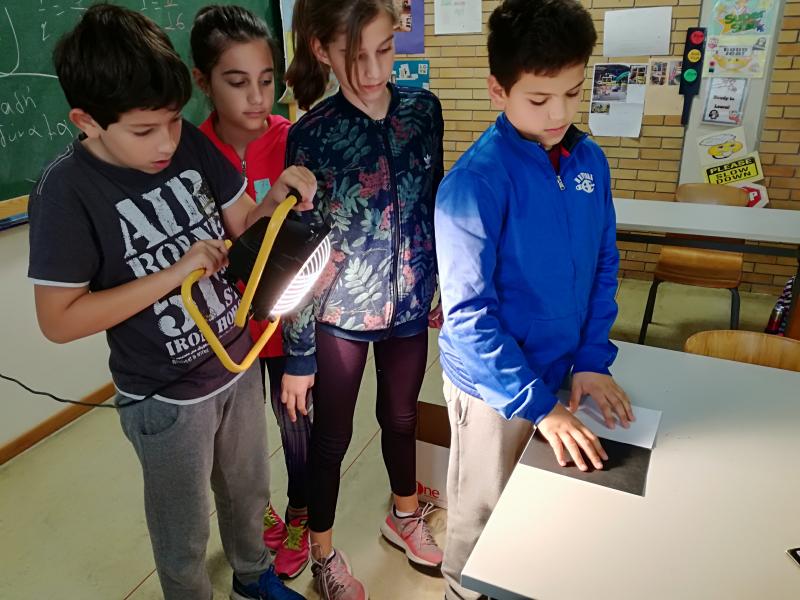
During the experiment
- The second experiment answered the question: "Why do the Spacesuits contain air?"
The next part of our project was really amazing! We had to create the spaceship and its rockets. Again we played a very nice card game to learn about the science behind the launch of the rockets and then we created 3D models of rockets and we printed them with the 3D printer we have in our school. Our parents could not believe that!
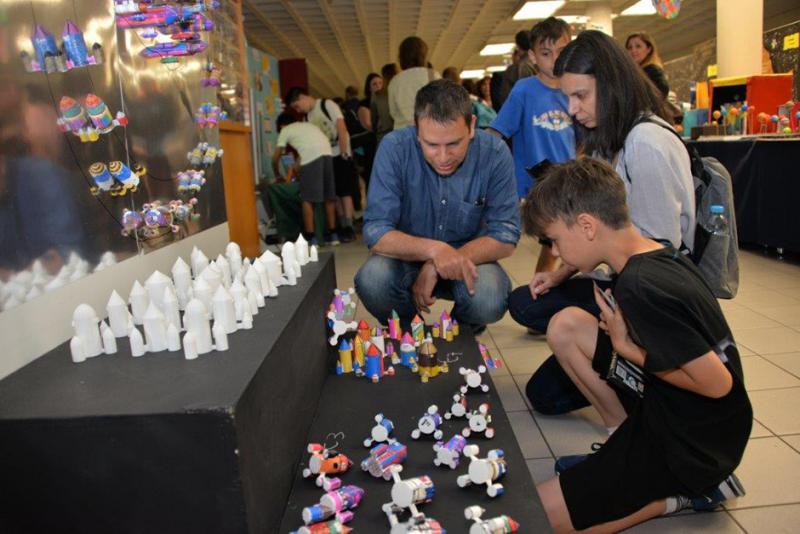
Here are some rockets created by students!
We went even further: our teacher showed us how to simulate a rocket launch by using a simple Depon effervescent pill! It was really amazing!
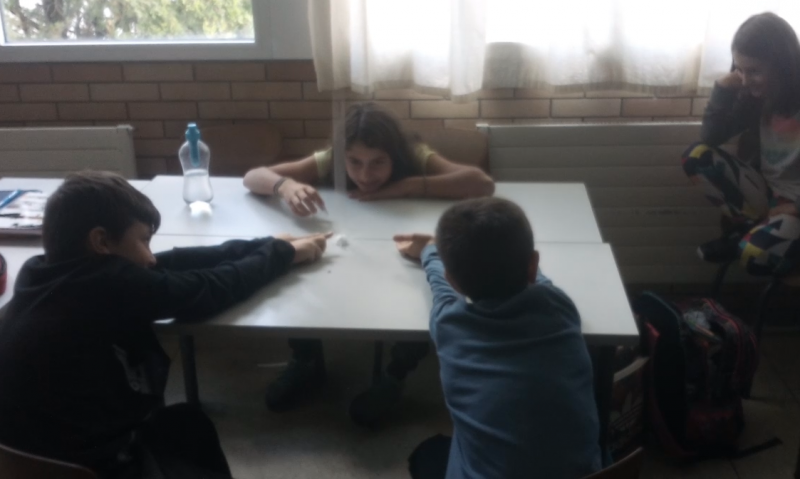
The pill does the trick and the rocket is launched!
The time to travel has come
PERIOD 3: The Journey
Period 3 started with a very impressive video about living in weightless conditions from the International Space Station .
Getting to Mars
After watching the video, we had a lot of questions and we wanted to feel how it would be to work on wightless conditions.
Our teachers created an experiment which simulated these conditions!
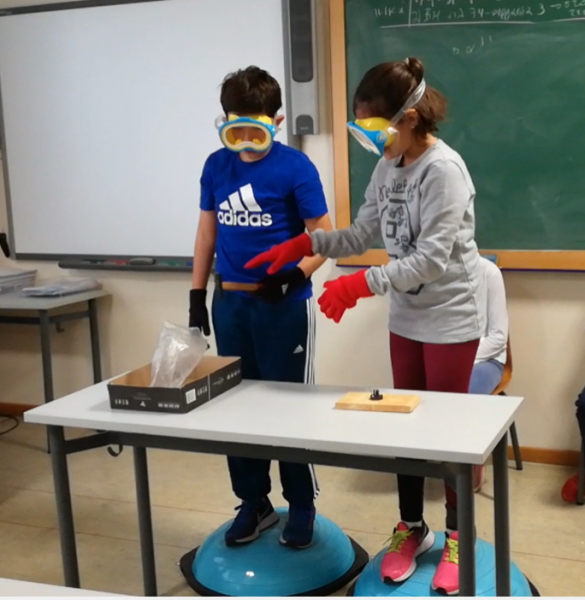
Simulating working on weightless conditions
PERIOD 4: Landing on Mars
We like watching videos and getting inspired through them. Our teacher knows where to find the most appropriate videos for each part of our mission:
How to get to Mars!
After watching the video, it was time for an experiment once again. Using only eggs, sponges, membranes and tapes, our teacher created an experiment that helped us understand how a safe landing to Mars could be made.
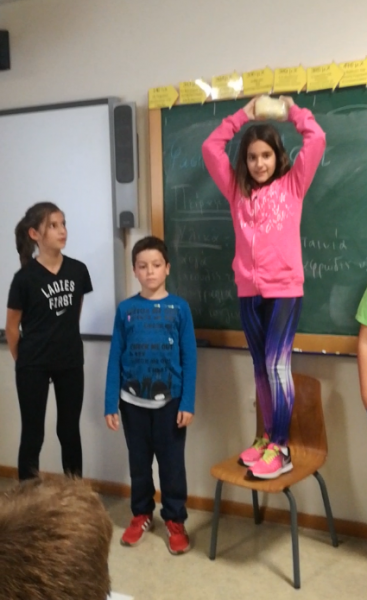
Landing the "Egg" safely on Mars!
PERIOD 5: A sustainable community
Now that we have landed on Mars, we will need to create a sustainable community. We saw at "The Martian" that a Greenhouse is really needed to plant the seeds that we will have with us. So, we prepared the Martian soil and seeded the plants.
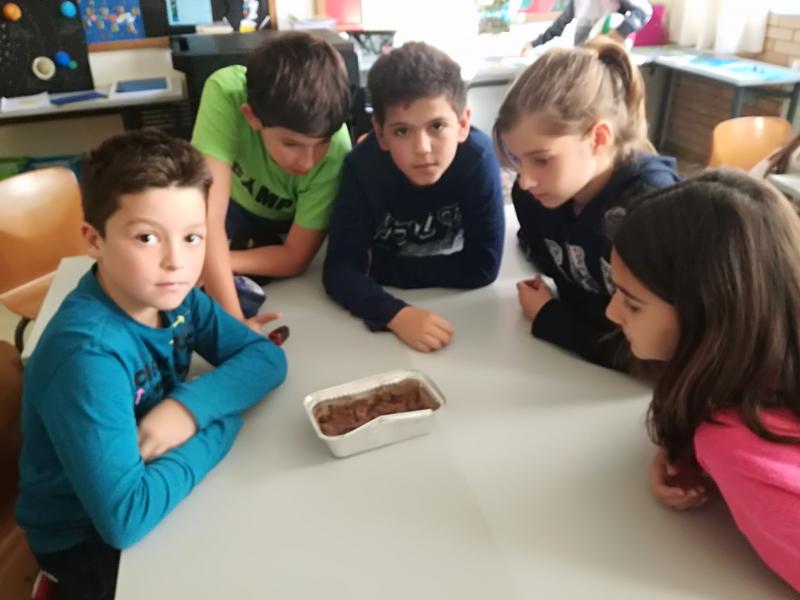
Preparing the Martian soil
Then we created the Greenhouse and after some days, our plants started to grow!
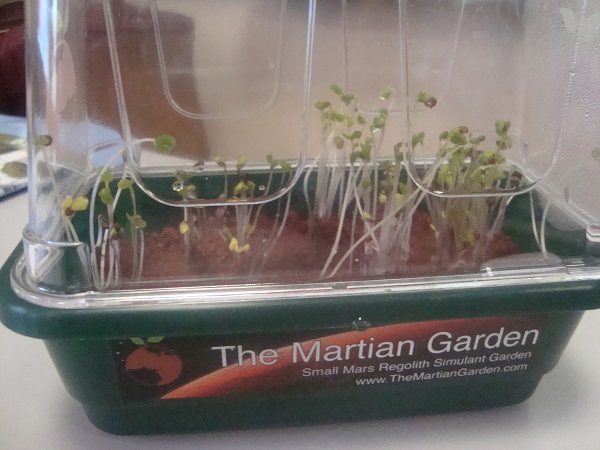
Our Martian garden
A very important part of this period was the creation of Shelters in Mars.
Using simple materials but always following scientific approaches, we managed to create sustainable shelters:
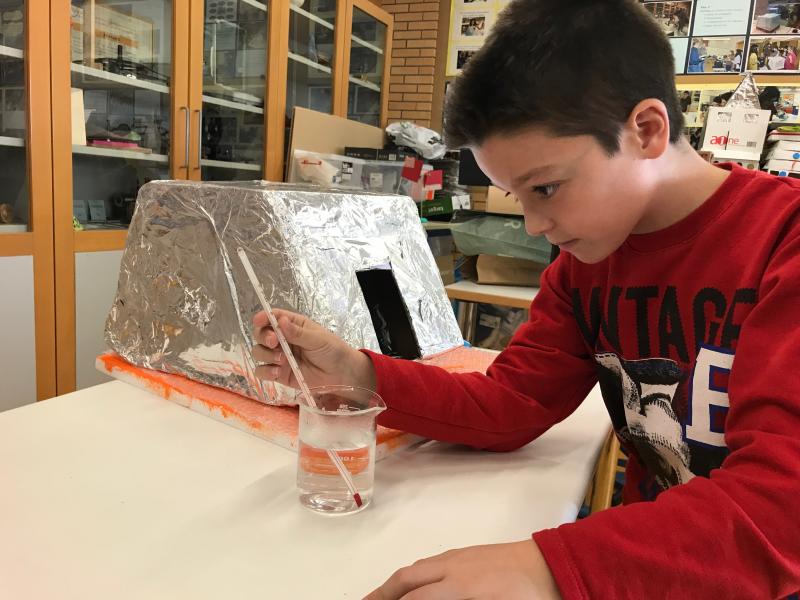
Creating and testing a Shelter
At the final exhibtion in our school, we brought some samples of these shelters.
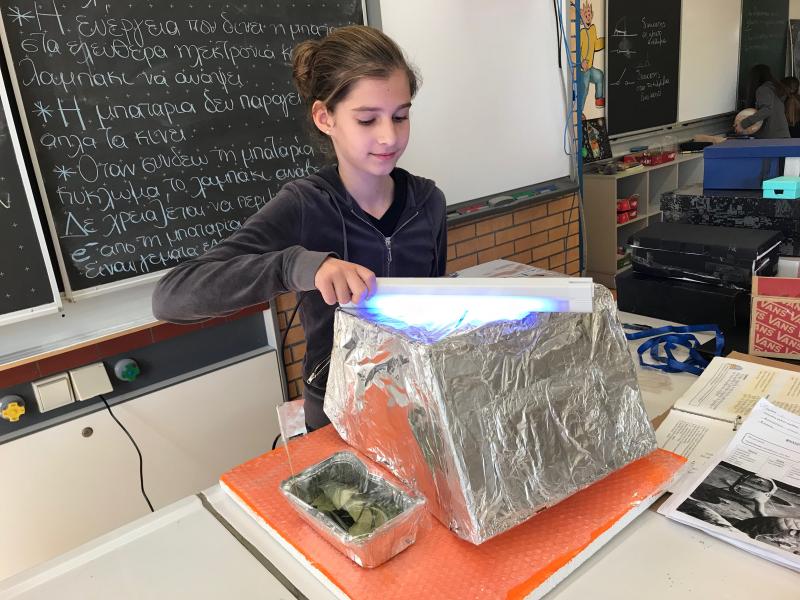
Our shelters and our greenhouses
Our story so far is incredible. We have to write it down! Other students, in our class, in our school, in our country or even in another country can learn from it. Let's start!
PERIOD 6: Living Community on Mars
Our story is written now. But it is on paper. We need to digitise it. Our teacher proposed us to use the STORIES platform.
We opened up the laptop and started working on it:
As a first step, we created our team:
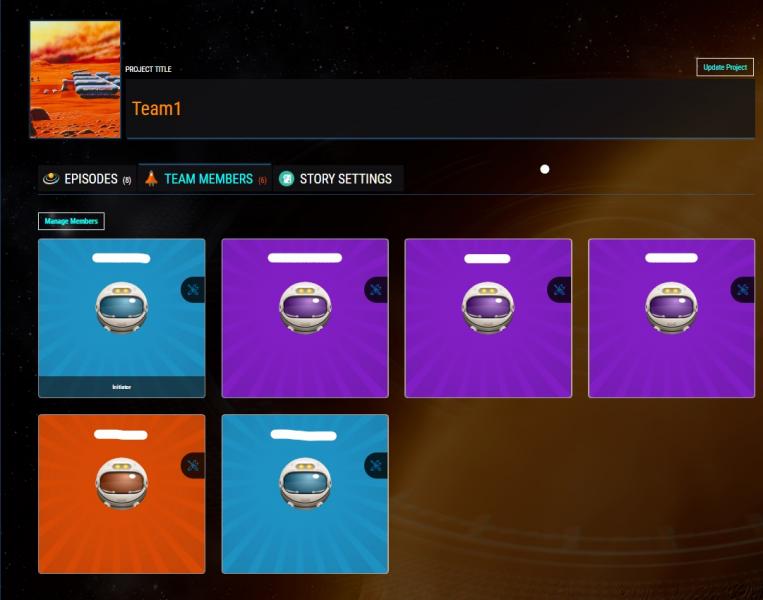
Our project Team on STORIES
Then we used the Collaboration Platform to upload our assets and communicate with our teachers and get advice from external experts.
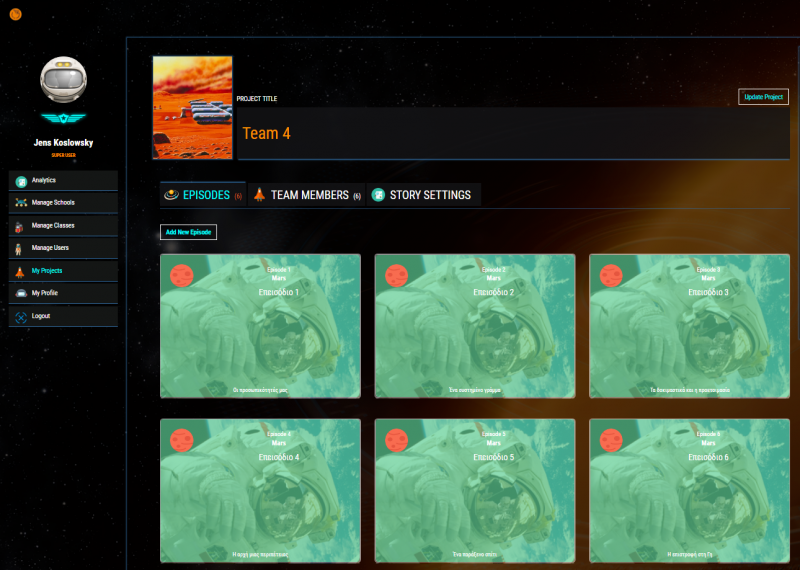
The STORIES Collaboration Platform
Our teacher wanted to see how much we really learned. Therefore, we completed some questionnaires before and after the creation of our story.
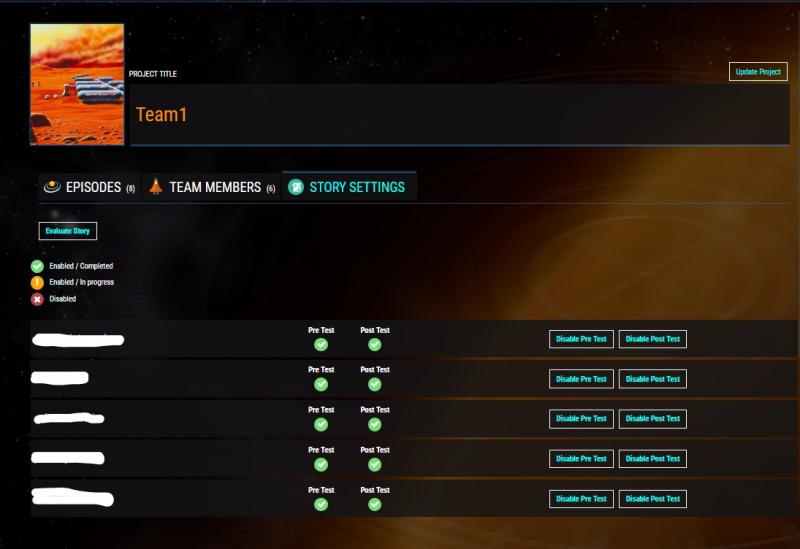
The pre and post test evaluation process
Working on the STORIES Platform was a great experience. It gave us the opportunity to digitise our story and create an ebook!
First of all, we created the frontpage of our ebook:
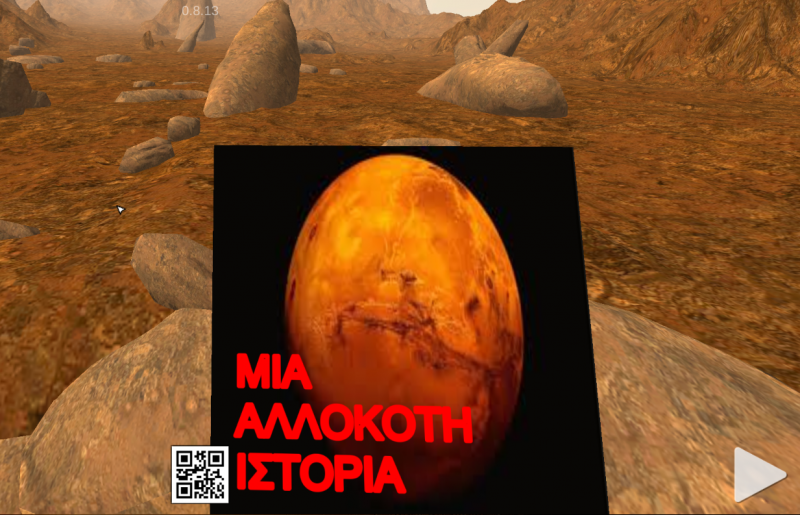
The Frontpage of our ebook
Then, one by one, we filled the pages of our ebook, based on our story whcich we had on paper and on digital assets (images, videos, animations, sounds) created by us or found on the web.
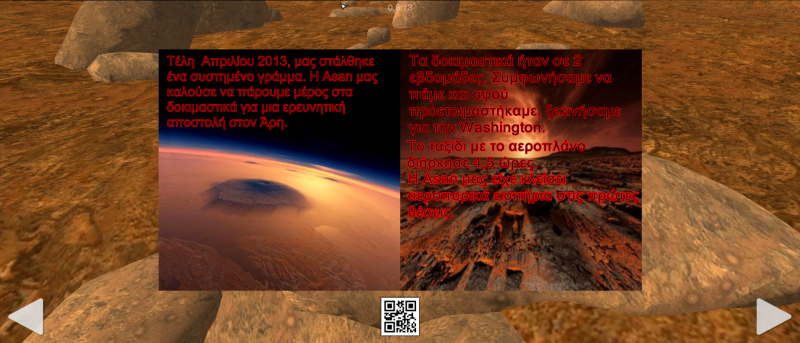
The Invitation Letter in our ebook on the STORIES Platform
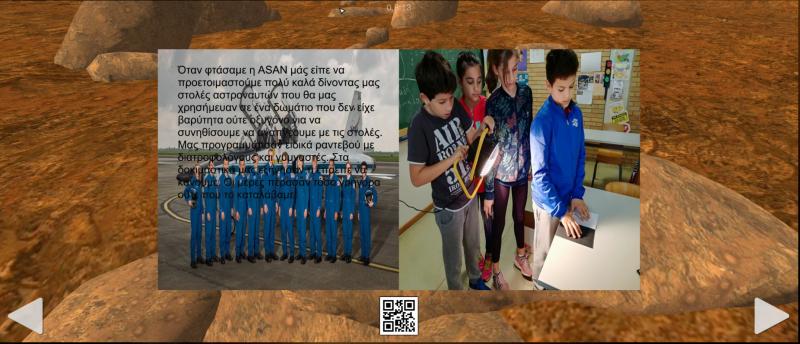
Our team, moments before the Launch in our ebook (on the left page)
Now we have everything we need to SHARE our story!
שיתוף
The Bioshere 2
Apart from the wonderful journey and the experiences we gained, we will never forget the connection in real time with the scientists on Bioshpere 2.
We had the opportunity to ask questions about the difficulty of this enormous experiment, but also about specific issues regarding Bioshpere 2 and a possible future manned trip to Mars and received very substantial and detailed answers from the scientists. In addition, we all had the unique experience of seeing live images from the outside environment (tropical forest, ocean, crops) and from the interiors of Bioshpere 2.
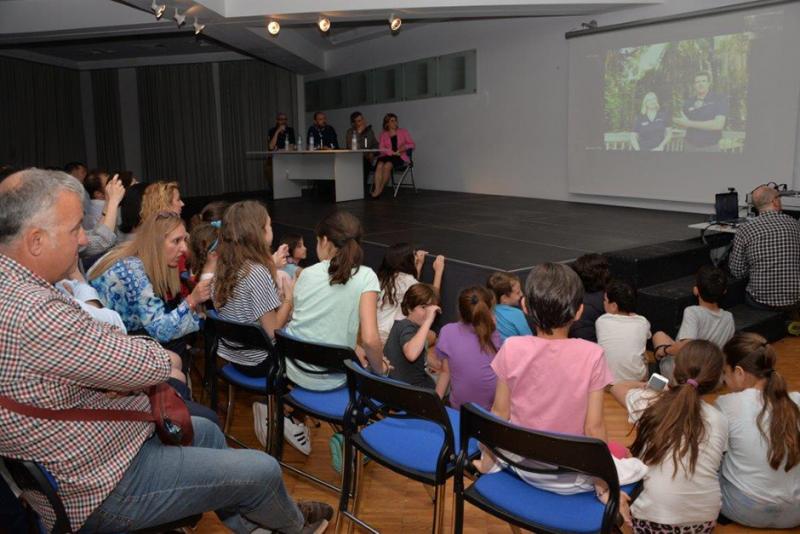
The Exhibition
At the end of this wonderful journey, our school gave us the space and the resources to create an exhibition for our fellow students, our teachers and our parents. They all need to know what we have accomplished!
With a lot of fun and enthusiasm, we took over the role of tour guides and presented to our visitors an interactive exhibition about all our activities. As small space scientists we have demonstrated astronomy experiments (involving the parents!) and presented our solar system through constructions and models.
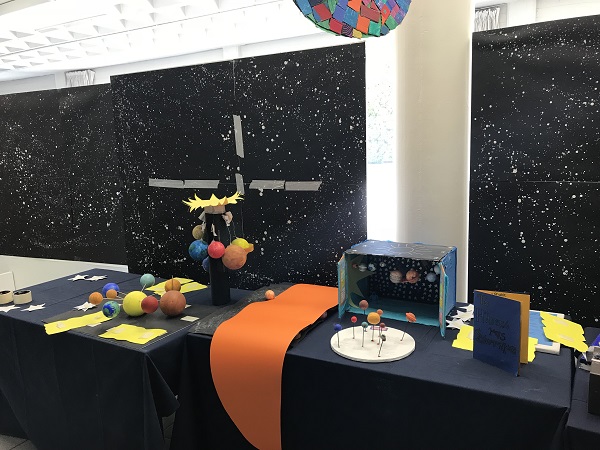
"Modelling" the Solar System
We also talked about the physical characteristics of each planet, and prompted parents to play with them in interactive knowledge games planet themes.
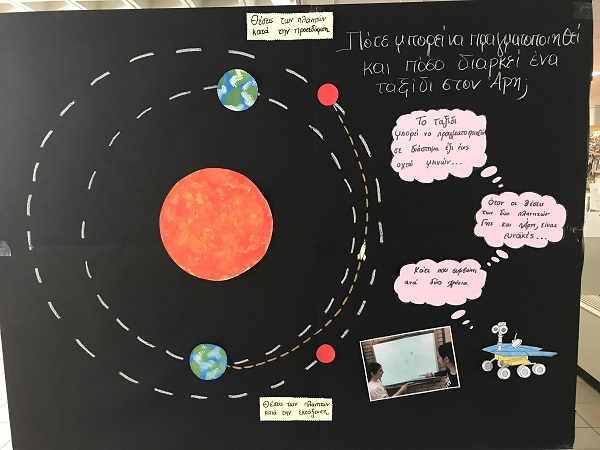
Travel to Mars game
We have also showed applications of space technology in our lives (Spinoffs), presented and explained the Eratosthenes experiment, the Foucault experiment and the construction and operation of Sundials, explained how we made rockets on scale and how we printed them in the 3D printer.
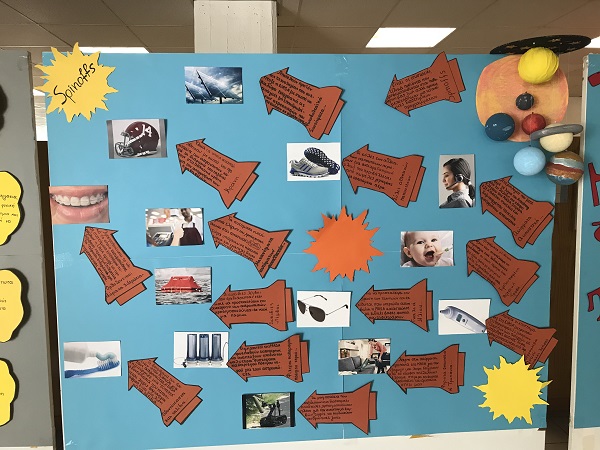
NASA's spin-offs: identifying space technologies that be used on the local communities
Finally, we demonstrated models of shelters in Mars that we have constructed in our team, following scientific methodologies and also presented to the parents fantastic stories in an e-book format that we created about a future journey to Mars based on the realistic conditions prevailing on the Red Planet.
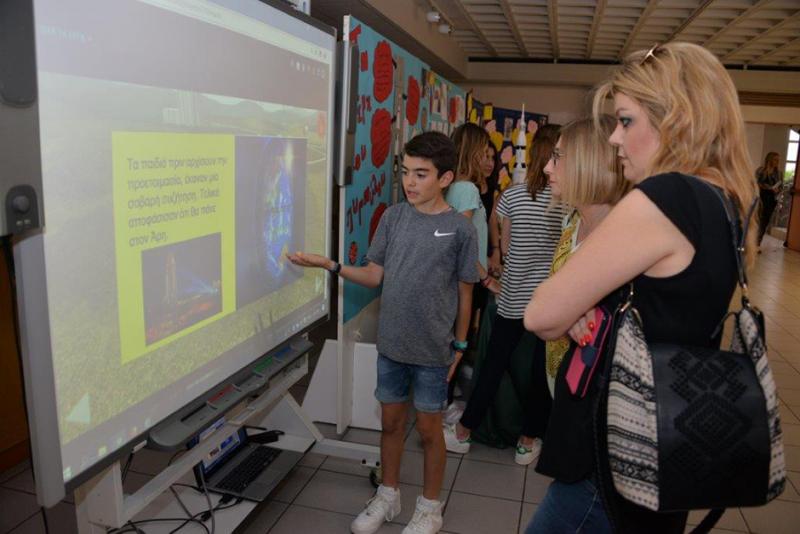
Showing our ebooks to the parents at the exhibition
The evaluation and the competition
Our projects (Mars Stories and the Shelters) were evaluated by a team of teachers and external evaluators and the best were awarded. The Team of students that scored the highest score will travel to Cite de l'espace, Toulouse (http://www.cite-espace.com/), where they will have the unique experience of touring the exhibitions and spaces of the theme park on space and participating in educational and flight simulation events in space!
It was a unique night that combined science with imagination and traveled us so far away!