Hosted by OSOS , contributed by Plagiavlitis on 16 June 2024
ΕΛ
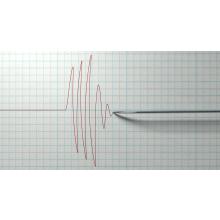
Μπορούμε να δεχτούμε ότι ένα σεισμόγραμα απεικονίζει την μετατροπή των δονήσεων ενός σεισμικού κύματος σε γραφική παράσταση με τη μορφή γραμμικού στίγματος το οποίο μια γραφίδα αποτυπώνει πάνω σε χαρτί. Εξετάζοντας επομένως την ανατομία του γραφικού αποτελέσματος το οποίο παρήχθη, καθώς η γραφίδα ήταν συνδεδεμένη με τον αισθητήρα ενός σεισμικού σταθμού, μπορούμε να συμπεράνουμε ότι η διαδικασία δεν είναι άλλη από μια "εικονοποίηση" των σεισμκών δονήσεων.
Αλλάζοντας ωστόσο την απόδοση των δεδομένων από εικονική σε ηχητική, έχουμε την διδαδικασία που ονομάζουμε ηχοποίηση των σεισμικών κυμάτων. Η διερεύνηση του τρόπου απόδοσης της πληροφορίας που φέρει ένα σεισμόγραμμα μέσα από τις δυνατότητες εκφοράς του ήχου αλλά και τους όρους αισθητικής που διέπουν το μουσικό φαινόμενο, μας δίνει το περίγραμμα δυνατοτήτων που μπορούμε να χρησιμοποιήσουμε εφαρμόζοντας πρακτικές μελωδικής ηχοποίησης της σεισμικής δραστηριότητας.
Για εκπαιδευτικούς σκοπούς, η δυνατότητα αυτή εντάσσεται στην μεθοδολογία STEAM (Science, Technology, Engneering, Arts, Mathematics) η οποία αποτελεί ηγετική προσέγγιση μεθόδων διδασκαλία που προάγουν την ολιστική μάθηση με καινοτόμες μεθόδους. Η σύνδεση ή, καλύτερα, η αντιστοίχιση της εικονικής πληροφορίας ενός σεισογράμματος με το ηχητικό της "δίδυμο", μας επιτρέπει την απ' ευθείας νοηματική ταύτιση των δυο αριθμητικών αποδόσεων, η οποία μπορεί άμεσα να γίνει κατανοητή σε ευρύ ηλικιακό φάσμα μαθητών. Η διαδικασία αυτή της "σχηματικής μεταφοράς" του σεισμογράμματος σε έναν "ηχητικό καμβά" μουσικών γεγονότων αποτελεί και την βάση της μεθόδου που περιγράφεται εδώ.
ΕΝ
SEISMOSCAPES activity seeks to explore creative ways for exploring sonification of seismograms. The activity operates under the knowledge base of SOUNDSCAPES ERASMUS+ project
We can accept that a seismogram illustrates the conversion of the vibrations of a seismic wave into a graph in the form of a linear pattern that a stylus traces on paper. Therefore, by examining the anatomy of the graphic result produced while the stylus was connected to the sensor of a seismic station, we can conclude that the process is nothing more than a "pictorialization" of the seismic vibrations.
However, by changing the data rendering from a visual to an acoustic one, we have the teaching process we call the sonification of seismic waves. Investigating how the information carried by a seismogram is rendered through the possibilities of sound enunciation and the aesthetic terms that govern the musical phenomenon, gives us an outline of possibilities that can be used by applying melodic sounding practices to seismic activity.
For educational purposes, this is part of the STEAM (Science, Technology, Engineering, Arts, Mathematics) methodology which is a leading approach to teaching methods that promote holistic learning through innovative methods. The linking or, better, the pairing of the visual information of a seismogram with its audio "twin", allows us to make a direct conceptual identification of the two numerical attributions, which can be immediately understood by a wide age range of students. This process of "schematically transferring" a seismogram into a "sound canvas" of musical events is the basis of the method described here.
Petros Stergiopoulos, plagiavlitis@ea.gr
להרגיש
Partners