Hosted by SALL , contributed by tasanthi on 6 July 2023
רקע
Our Kindergarten decided to enrich the children's knowledge about sustainable nutrition. More specifically, the Kindergarten of Chrysa-Tsakon is open from 8.15 to 16.00 and located in a rural area of the Regional Unit of Pella. There are two permanent Kindergarten teachers who worked equally in the planning and implementation of our project.The children know a lot about agricultural work and many have relatives involved in farming. Nutrition is a major topic for humans and is a vital learning subject in the educational programme of the Kindergarten.
מטרה
Our children are experiencing the climate crisis. They are growing up in a rural area where most of their families are involved in farming. Moreover, not only will they understand from a very young age the meaning of footprint that impacts global health but also think of ways to reduce their ecological footprint and adopt responsible behaviour in terms of food, production and consumption. Sustainable food is an interesting and innovative teaching topic that is of direct concern to us. Nowadays, in addition to healthy food, sustainable nutrition plays a crucial role in ensuring the health of people and our planet.
יצירה משותפת עם גורמי קהילה
In our action we worked together:
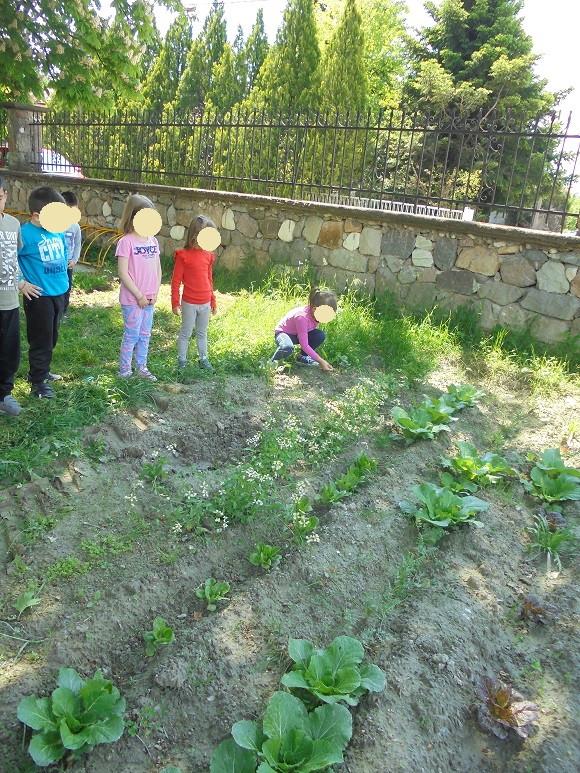
- with parents and a farmer who helped us in the creation of the school garden
- with an agronomist who brought us seeds and plants. With his scientific knowledge about the proper cultivation of plants he helped the children to plant and cultivate the school garden in a sustainable way.
- with the Centre for Environmental Education and Sustainability in Ierapetra, Crete, who offered us training on "Nutrition, Environment and Health"
- with three Kindergartens from different regions of Greece working on the same topic. The children of the Kindergartens communicated with each other online, exchanged their knowledge and experiences and together they created a group poster to advertise Sustainable Nutrition.
הטמעה
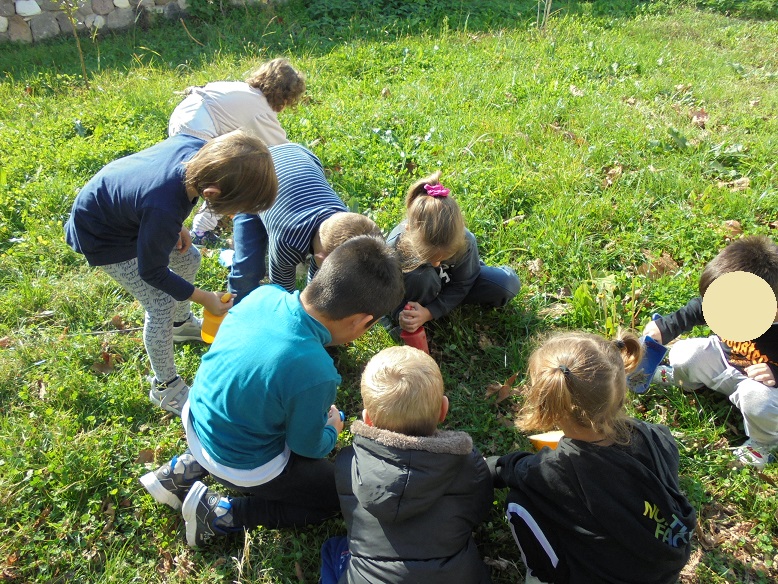
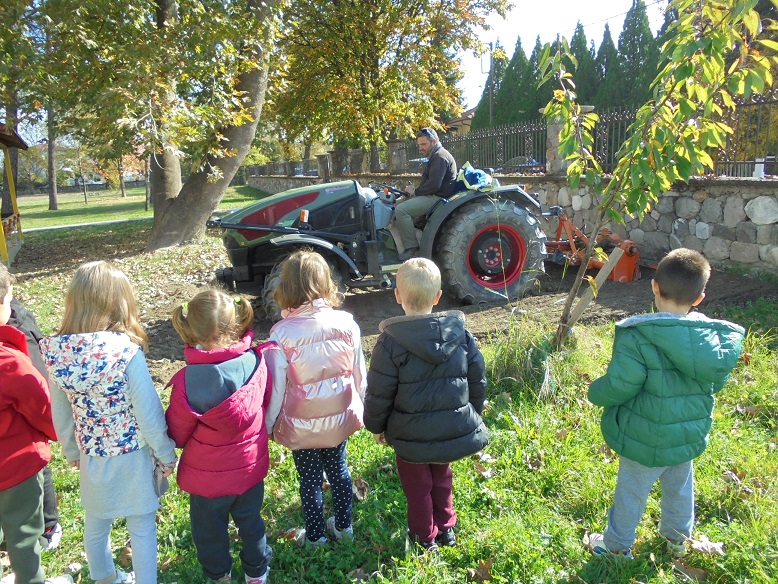
From the implementation of our project, we learned about healthy eating and thought about the production of food. We made our first attempts at growing our own backyard. We learned the technique of farming and how people used to prepare the land in the old days and how they do it today. We compared and informed parents. We made a school garden. We sowed wheat. We planted seasonal vegetables. We watched them grow. We learned from a farmer. We experimented by growing in pots with different conditions in terms of soil, watering, lighting. We came to conclusions. We were informed by an agronomist, sowed seeds and planted seasonal vegetables with his help. We found out the origin of the foods that are not grown at this time of year in our country. We adopted the weekly food plan of WWF Greece: Monday we eat homemade food-Wednesday we eat fruit at breakfast and Friday we don't throw away food. We implemented composting to reduce organic waste. We continued our observations on plant growth. We tried to incorporate them into our diet with traditional and our own recipes. We defined the criteria for healthy food with a small ecological footprint. We worked with the children and kindergarten teachers of three other kindergartens from different regions of our country. Together we created our poster on sustainable nutrition. We informed parents for our activities. We participated online in the event organised by the Centre for Environmental Education and Sustainability, presenting the project and the group's poster. We updated it on our kindergarten blog.
רפלקציה
The students understood that we have to choose our food based on criteria such as local and seasonal fruits and vegetables, foodkilometers, composting. They understood that cultivating the land affects the pollution of the planet and that we need to use compost and water carefully. Our students not only became responsible in choosing the right and nutritient foods but also were more careful in managing food waste.
Futurel Plans
We think it is important to continue next school year with the topics of school garden, sustainable food and the reduction of organic waste. We can also expand into other areas of sustainability of our planet such climate change crisis.