
Hosted by OSOS , contributed by capricorn on 31 May 2023
Peatland is an area of land made up of peat. Peat is a type of soil made up of dead plant remains that have not completely decayed. It forms in moist soil that is not well drained. It takes thousands of years for a large area of peat to form, layer upon layer. Although they represent only 3% of the global land surface, swamps store 30% of the total terrestrial carbon stock, more than all the forests of the planet, therefore they play a crucial role in climate regulation.
Peatlands represent half of the world's wetlands. In the vicinity of our town there is a peat bog (Tinovul Saru Dornei) with an area of 20 square km, which is a natural reserve where characteristic plant and animal species can be found. Turbaria is an outdoor laboratory, which offers students the opportunity to study, investigate, protect and intervene through restoration.
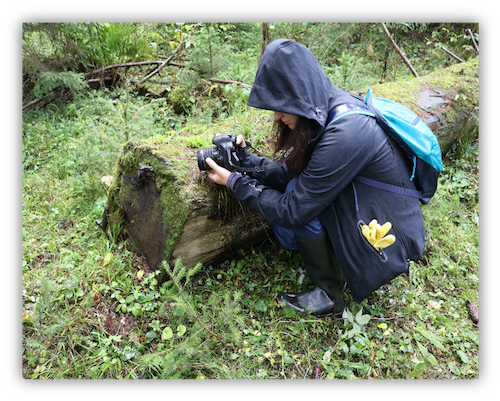
Students approach the scientific method through investigation-based activities that will lead them to learn important concepts such as sustainability, ecosystems, biodiversity and the protection of life in wetlands, implicitly from the Tinovul Mare peat bog. From there, the students will deepen the contemporary problems that affect wetlands globally as well as the solutions that can be implemented at the planetary level but also in their community. In our peatland, it was found that human intervention has destroyed the marsh ecosystem in recent years, by throwing a lot of garbage, digging drainage channels, in order to agriculturally exploit this area, so that certain species of plants and animals have started to decrease and even to disappear (for example the purple butterfly and the dragonfly)
While going through this project, students develop fundamental skills such as teamwork, problem solving, engaging students with special educational needs, critical thinking, communication, creativity. They also develop other important skills such as mutual respect, respect for nature, tolerance, as they collaborate with students from different cultures, religions and geographical backgrounds, with whom they will share common impressions.
In this context, students are invited to become aware of the very important environmental problems of this century.
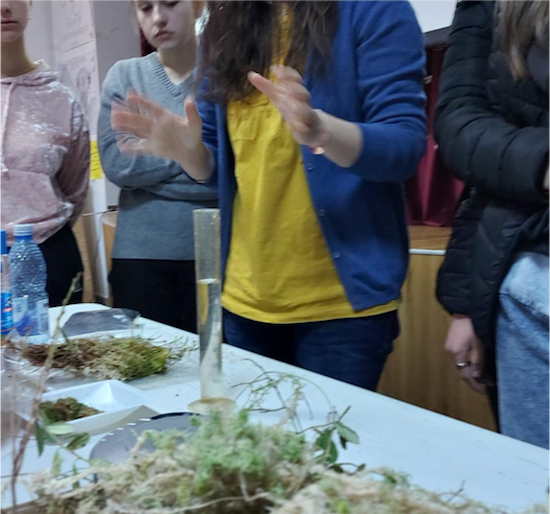
Other skills
Practicing the skills of documenting and extracting the essentials of local specific information
- Obtaining knowledge through scientific research in the field and in the laboratory
- Capitalizing on the knowledge acquired during the course in practical applications such as making leaflets, logos, posters, maps, tables, interpreting the chemical composition of water
- Identifying the concrete ways to raise funds, based on donation sheets made by them, by presenting the project and its purpose
- Acquiring project management skills, actively participating in its writing, identifying real needs of the community (properly underutilized natural areas), setting objectives, evaluating with measurable parameters
- Acquiring the skills to work in a team, to respect their opinions, to communicate with adults and social leaders, to know how to ask for help in carrying out tasks that are beyond them
- They felt that they belonged to the community and that they were valued and their work was taken into account
- They reflected, they implemented, they had the desire to complete their work
- Learning took place - maybe through less information - but skills and abilities were formed (to work in certain computer programs, find new creative solutions, manage time and tense situations)
- They showed empathy, care and interest in the needs of the community, practicing the transfer skills in everyday life of what they understood and learned
Students are able to learn through practical activities:
biology (plants, animals, microscope studio, carbon cycle, photosynthesis, etc.)
technology (building dykes, digging a pool for water storage, thematic path)
chemistry (water composition, plant nutrition)
entrepreneurship (product sales, profits and losses, fixed costs, etc.)
art (drawing the marsh purple butterfly, technical drawing)
mathematics (calculation of the vastness of the trees in the turf, measuring distances, calculating the dimensions of the dug space - depth.)
Information technology (accessing some information, creating video material, PPT, logo, etc.
soft skills (communication, team building, teamwork, taking responsibility, etc.)
להרגיש
Guidelines
In the Feel phase, the students will use specialized websites to collect information about the characteristics of wetlands around the world and compare them with the bog area (marsh) in our area (Tinovul Saru Dornei). For this, they went out with the biology professors and specialists from the Bucharest Biology Institute to the nearby peat bog, to take soil samples, specific plants, to study the degree of humidity, etc. They found that there is a lot of garbage thrown by the people in their area in the nearby turbaria. Very sad!!! They also found that people make drainage to dry the peat and to expand their agricultural crops. This fact has a negative impact on the balance of the ecosystem in this wetland area.
Description
Students use specialized websites to collect information about the characteristics of wetlands around the world and compare them with the bog area (marsh) in our area (Tinovul Saru Dornei). For this, they went out with the biology professors and specialists from the Bucharest Biology Institute to the nearby peat bog, to take soil samples, specific plants, to study the degree of humidity, etc. They found that there is a lot of garbage thrown by the people in their area in the nearby turbaria. Very sad!!! They also found that people make drainage to dry the peat and to expand their agricultural crops. This fact has a negative impact on the balance of the ecosystem in this wetland area.
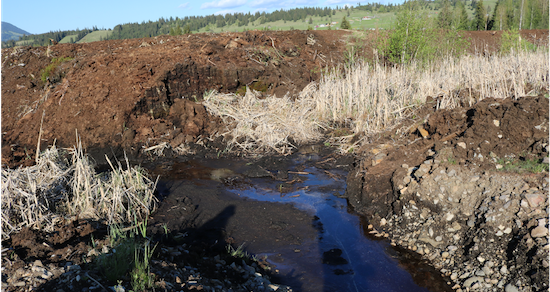
The students will be challenged to investigate, to study in the field with a specialist (biologists, chemists, hydrologists), to know the peculiarities of the flora and fauna of the Tinovul Saru Dornei swamp, to discuss and collaborate with different experts in the field, such as researchers from the Bucharest Biology Institute (our partners). The teachers should allow the students to invite experts to their school, to go together to the marsh area to see what is there and how to intervene to protect it. Also, the students will ask for the support of the local authorities for the greening of the turbaria (marsh) Tinovul Saru Dornei as well as family members and any other important stakeholders.
לדמיין
Guidelines
In the Imagine phase, students will be advised to bring the problem within the community and families, to have important discussions about the causes and solutions of the problem in question. Thus, the students, together with the teachers and partner specialists, created a PPT information material about the species of plants and animals in the peat bog and the role of the peat bogs. Peatlands are important because they have the following characteristics:
- they are wetlands with a high carbon sequestration capacity;
- they are valuable reservoirs of biodiversity, harboring species with special adaptations to this type of habitat;
- act as buffer zones reducing the risk of flooding in conditions of excessive precipitation;
- ensures the necessary water for plants, at the same time reducing the risk of fires in dry periods;
- contributes to water purification.
At the same time, with the help of the experts, the students went on a field trip and were able to identify the threats resulting from the uncontrolled intervention of people on this wet area
- exploitation of peat bogs - to use peat for fuel, soil for apartment plants;
- worldwide, 21% of the total area of wetlands has disappeared, mainly due to the conversion to agricultural land (Fluet-Chouinard et al., 2023), and this fact can also affect our peatland
- protection and restoration of wetlands (implicitly wetlands) contribute to the fight against climate change;
- Climate changes lead to the degradation of peatlands through drought, which leads to the release of an impressive amount of CO2 into the atmosphere and implicitly to the global warming process.
In the same phase, students will be encouraged to invite important stakeholders to their schools to discuss solutions to the problem.
Description
Students are advised to bring the problem within the community and families, to have important discussions about the causes and solutions of the problem in question. Thus, the students, together with the teachers and partner specialists, created a PPT information material about the species of plants and animals in the peat bog and the role of the peat bogs. Peatlands are important because they have the following characteristics:
- they are wetlands with a high carbon sequestration capacity;
- they are valuable reservoirs of biodiversity, harboring species with special adaptations to this type of habitat;
- act as buffer zones reducing the risk of flooding in conditions of excessive precipitation;
- ensures the necessary water for plants, at the same time reducing the risk of fires in dry periods;
- contributes to water purification.
At the same time, with the help of the experts, the students went on a field trip and were able to identify the threats resulting from the uncontrolled intervention of people on this wet area
- exploitation of peat bogs - to use peat for fuel, soil for apartment plants;
- worldwide, 21% of the total area of wetlands has disappeared, mainly due to the conversion to agricultural land (Fluet-Chouinard et al., 2023), and this fact can also affect our peatland
- protection and restoration of wetlands (implicitly wetlands) contribute to the fight against climate change;
- Climate changes lead to the degradation of peatlands through drought, which leads to the release of an impressive amount of CO2 into the atmosphere and implicitly to the global warming process.
In the same phase, students are encouraged to invite important stakeholders to their schools to discuss solutions to the problem.
יצירה
Guidelines
In the Creation phase, students will be encouraged to collaborate with their families, community members and other organizations specialized in protecting the environment, to ensure common involvement in the process of restoring the marshes (local peatlands). They dug basins to collect water and ensure a microclimate for purple butterflies and dragonflies, created fences to enclose the turbidity, dammed the canals to maintain the necessary amount of water. They extracted the trees from the central area of the marsh (especially the birch), because the birch consumes a lot of water and disturbs the hydrological balance of the bog. Slices of wood were cut from the birch trunks, on which the children paint or stick stickers. They monitored the development of life in the rabble through a comparative study, measuring certain parameters over a period of time.
Description
Students are encouraged to collaborate with their families, community members and other organizations specialized in protecting the environment, to ensure common involvement in the process of restoring the marshes (local peatlands). They dug basins to collect water and ensure a microclimate for purple butterflies and dragonflies, created fences to enclose the turbidity, dammed the canals to maintain the necessary amount of water. They extracted the trees from the central area of the marsh (especially the birch), because the birch consumes a lot of water and disturbs the hydrological balance of the bog. Slices of wood were cut from the birch trunks, on which the children paint or stick stickers. They monitored the development of life in the rabble through a comparative study, measuring certain parameters over a period of time.