


Hosted by OSOS , contributed by arg on 28 February 2020
The rapidly evolving modern society makes the role of the school crucial to prepare young people for the transition to the labor market, and above all to equip them with the knowledge, attitudes and skills to play an active role as future citizens in actions and decisions that will have a positive impact. Teachers can cultivate students' curiosity and provide them with the tools and resources to ask, understand, participate and make the importance of sustainability known. This understanding strengthens individual and collective action in the local, national and international level. In this guide we will put together the basic understandings associated with each goal as a way of informing and stimulating discussions between students and teachers in and out of the classroom.
Students research and decide for the sustainable society of the future as global citizens of the modern world.

- Study, record and analyze real world data thata dealing with global issues problems.
- Research in the local community to find solutions to these problems through questionarries.
- Interview experts and colloborate with stakeholders in order to formulate a plan for integrating and achieving the sustainable development goals of the global and local community.
They record the impact of these issues as students as researchers collect data through questionnaires and interviews about the attitudes and behaviors of their local community members. With the cooperation and support of experts in the workplace,
They prepare voluntary actions and propose solutions aimed at achieving the goals of sustainable development.
The empowerment of students to develop personal and social responsibility, by balancing the demands of the environment, society and the economy, is realized through collaboration and communication activities between student groups, with problem solving, creativity, innovation and digital literacy as one of the key skills of the 21st century in cultivating critical thinking.
Objectives
- Prepare students to deal with complex real-world problems
- Development students' ability to use scientific methods.
- Preparing students to critically evaluate the validity of the data or evidence and their subsequent interpretations or conclusions.
- Teach quantitative skills, technical methods and scientific concepts.
- Increase verbal, written and graphic communication skills.
- Educate students on the values and ethics of working with data.
- Motivate learning through students' interest in a particular problem or in particular.
- Working with data provides students with an excellent environment for interaction with head and opportunities. Research on science education suggests that activities are more effective when designed for student interaction
Expected outcomes
- The main expected result is to increase students 'interest in science, its role, how it affects daily life, and, second, to stimulate teachers' motivation in innovative teaching methods to enrich and enhance curriculum. by applying scientific knowledge to real problems that will prepare students for future roles and decision-making as members of the social community.
- Promote the link between education and workplaces through education for sustainable development.
- In order to address the problems of the 21st century and find solutions to address them locally and globally, trainees must be equipped with relevant skills, knowledge, behaviors and values. It is critical for them to understand themselves and their relationships with others, as well as to realize their individual and collective impact on the world around them.
- Empowering students to learn how to play an active role in their local community, in shaping a more equitable and sustainable world at large, in balancing the demands of the environment, society and the economy.
It is a model of good teaching practice that can be applied by the educational community of all disciplines, that promote the school's collaboration and communication channels with the local community and workplaces to address issues.
Tundke
Team of students: Antigoni Maragkaki,Nancy Oikonomopoulou, Despina Panigiraki
Global citizen prespectives
A) HOW MANY HAVE ACHIEVED WELL-BEING?
It goes without saying that there are countries which have reached a high level of well-being, but on the other side, there is another part of our world where people suffer from unhappiness and bad living conditions. Specifically, the 10 countries with the highest levels of well-being are:
- Panama 53.0%
- Costa Rica 47.6%
- Puerto Rico 45.8%
- Switzerland 39.4%
- Belize 38.9%
- Chile 38.7%
- Denmark 37.0%
- Guatemala 36.3%
- Austria 35.6%
- Mexico 35.6%
And the 10 countries with the lowest levels of well-being are:
- Ghana 5.6%
- Haiti 5.3%
- Benin 4.8%
- Ivory Coast 4.5%
- DR Congo 4.1%
- Tunisia 4.0%
- Togo 3.9%
- Cameroon 3.1%
- Bhutan 3.0%
- Afghanistan 0.0%
WELL-BEING FACTS
- At least 400 million people have no basic healthcare, and 40% lack social protection
- By the end of 2017, 21,7 million people with HIV were receiving antiretroviral therapy. Yet more than 15 million people are still waiting for treatment.
- Every 2 seconds someone aged 30 to 70 years dies prematurely from noncommunicable diseases (cardiovascular disease, diabetes etc.)
- More than one to three women have experiences either physical or sexual violence at some point in their life.
- 7 million people die every year from exposure to fine particles in polluted air.
(facts from the united nations development program- sustainable development goals)
B) ENVIRONMENT
According to the Merriam Webster Dictionary environment is “the complex of physical, chemical, and biotic factors (such as climate, soil, and living things) that act upon an organism or an ecological community and ultimately determine its form and survival.” So, as we can see, the importance of the environment in human life is essential as the survival and happiness of people depends on it. Unfortunately, in our days, environment is facing a huge crisis.
Pollution-Facts
- 1.1 billion people lack access to water and 2.4 billion don’t have adequate sanitation
- More than 400 areas around the world have been identified as experiencing eutrophication and 169 are hypoxic.
- Pollution is one of the biggest global killers, affecting over 100 million people. That’s comparable to global diseases like malaria and HIV
- In 1975, the National Academy of Sciences estimated that ocean-based sources, such as cargo ships and cruise liners had dumped 14 billion pounds of garbage into the ocean
- Over 1 million seabirds and 100,000 sea mammals are killed by pollution every year.
- People who live in places with high levels of air pollutants have a 20% higher risk of death from lung cancer than people who live in less-polluted areas
- While children make up 10% of the world’s population, over 40% of the global burden of disease falls on them. More than 3 million children under age five die annually from environmental factors
Over population-Facts
- There are now more than 7,700,000,000 people on planet Earth
- It took until the early 1800s for the world population to reach one billion. Now we add a billion every 12-15 years.
- there was a 41.7 percent increase in the nation’s population between 1974 and 2007. The amount of energy consumed increased 37.1 percent leading to a rise in the number of fuel spills and release of greenhouse gases
Over population-Facts
- There are now more than 7,700,000,000 people on planet Earth
- It took until the early 1800s for the world population to reach one billion. Now we add a billion every 12-15 years.
- there was a 41.7 percent increase in the nation’s population between 1974 and 2007. The amount of energy consumed increased 37.1 percent leading to a rise in the number of fuel spills and release of greenhouse gases
Global warming-Facts
- Average sea level around the world rose about 20 cm in the past 100 years
- by 2050 sea levels are expected to rise 30 to 100 cm, enough to flood many small Pacific island states, famous beach resorts and coastal cities
- within the next 100 years, if not sooner, the world’s glaciers will have disappeared
- The productivity of rice, the staple food of more than one third of the world’s population, declines 10% with every 1⁰ C increase in temperature.
- The developing world will add 3 billion people by 2050, developing world food producers must double staple food crop
Natural Resources Depletion-Facts
- by 2025, 1.8 billion people will have no water to drink.
- In 2011, it was estimated that we have enough coal to meet global demands for 188 years
- there is 188.8 million tons of oil left in the known oil reserves as of 2010, enough to supply the world demands for the next 46.2 years.
- As of 2010, the known reserves of natural gas were estimated to last 58.6 years
Waste Disposal-Facts
- 50m tones of electrical waste globally every year
- We throw away 7.2 million tons of food every year, and more than half of it’s perfectly edible, while, 1 in 7 people across the world don't have enough to eat.
- Between 20% and 40% of fruit and vegetables are rejected by supermarkets before they even hit the shelves.
- At Christmas, as much as 83 square kilometers of wrapping paper will end up in bins
- Humans now buy a million plastic bottles a minute. By 2050, the ocean will contain more plastic by weight than fish.
Climate Change-Facts
- The concentration of carbon dioxide in our atmosphere, as of 2018, is the highest it has been in 3 million years
- Seventeen of the 18 warmest years have occurred since 2000.
- Eleven percent of all global greenhouse gas emissions caused by humans are caused by deforestation
- In the Amazon, 1% of tree species sequester 50% of the region’s carbon.
- Eleven percent of the world’s population is currently vulnerable to climate change impacts
Loss of biodiversity-Facts
- An estimated 80% of the original forest that covered the Earth 8,000 years ago has been cleared, damaged or fragmented
- the rate at which species are becoming extinct at 1,000 to 10,000 times higher than the natural rate would be.
- 12,259 species are known by IUCN, the World Conservation Body, to be threatened with extinction
- Currently, every fourth (24%) mammal and every eighth bird (12%) is facing a high risk of extinction.
- Across the European continent, 42% of mammals are threatened, 15% of birds, 45% of butterflies, 30% of amphibians, 45% of reptiles and 52% of freshwater fish.
- Tropical forests are vanishing at an annual rate of 4%.
- Only 10% of the world's biodiverse areas and 1% of the world's oceans are protected
Deforestation-Facts
- Between 1990 and 2016, the world lost 1.3 million square kilometers of forest
- 46 percent of trees have been felled
- 17 percent of the Amazonian rainforest has been destroyed over the past 50 years
- 250 million people living in forest and savannah areas depend on them for subsistence and income
Ocean Acidification-Facts
- each year the ocean absorbs approximately 26% of all the CO2
- Ocean acidity has increased by about 30% since the beginning of the Industrial Revolution, this rate of change, is faster than anything experienced in the last 250 million years
- Business as usual scenarios for CO2 emissions could make the ocean up to 150% more acidic by 2100
- The ocean absorbs CO2 from human activities at a rate of 22 million tons per day
Ozone layer Depletion-Facts
- The “hole’ that was discovered in Antarctica was over 29 million square kilometers – larger than Russia and Canada combined
- Global Ozone is expected to revert to its 1980 thickness in the next 55 years.
- The scientists have observed reduction in stratospheric ozone since early 1970’s
- a lot of the ozone-depleting substances allowed to go into the atmosphere in the previous 90 years are still on their journey to the atmosphere, which is why they will contribute to ozone depletion
- 5-9% thickness of the ozone layer has decreased, increasing the risk of humans to over-exposure to UV radiation owing to outdoor lifestyle
- One chlorine atom can break more than 1, 00,000 molecules of ozone. Bromine atom is believed to be 40 times more destructive than chlorine molecules.
Acid Rain-Facts
- Acid rain has a pH of 4.3 while pure water is perfectly balanced at 7.
- 95,000 lakes in North America have been damaged by acid rain
- A 2013 report from the Government Accountability Office said, 88% of the Great Lakes were impaired by acid rain around 550 premature deaths each year occur due to acid rain
C) POVERTY
Poverty is a major cause of social tensions and threatens to divide a nation because of the issue of inequalities, in particular income inequality. This happens when wealth in a country is poorly distributed among its citizens. In other words, when a tiny minority has all the money.
The feature of a rich or developed country for example is the presence of a middle class, but recently we've seen even Western countries gradually losing their middle class, hence the increasing number of riots and clashes. In a society, poverty is a very dangerous factor that can destabilize an entire country.
Poverty-Facts:
- 1/2 of the world’s population, 3 billion people, live on less than $2.50 a day
- 1.3 billion live in extreme poverty, less than $1.25 a day
- 80% of the world population lives on less than $10 a day
- 1 billion children worldwide are living in poverty
- 22,000 children die each day due to poverty
- 805 million people worldwide do not have enough food to eat
- 750 million people lack access to clean drinking water
- Preventable diseases like pneumonia take the lives of 2 million children a year who are too poor to afford proper treatment
- 21.8 million children under 1 year of age worldwide had not received the three recommended doses of vaccine against diphtheria, tetanus and pertussis
- 1/4 of all humans live without electricity, 1.6 billion people
- it would take $60 billion annually to end extreme global poverty, less than 1/4 income of the top 100 richest billionaires.
- Hunger is the number one cause of death in the world, killing more than HIV/AIDS and malaria combined
D) PEACE-WAR
Throughout the course of human history, the average number of people dying from war has fluctuated relatively little, being about 1 to 10 people dying per 100,000. However, major wars over shorter periods have resulted in much higher casualty rates, with 100-200 casualties per 100,000 over a few years. While conventional wisdom holds that casualties have increased in recent times due to technological improvements in warfare, this is not generally true.
War has a catastrophic effect on the health and well being of nations. Studies have shown that conflict situations cause more mortality and disability than any major disease. War destroys communities and families and often disrupts the development of the social and economic fabric of nations.
Although war may financially benefit a country and stimulate the economy, it has detrimental effects on politics, economics and society. War causes the foreign policy to change.
TWO EXAMPLES OF THE BIGGEST WARS IN RECENT HISTORY:
World War 1
- Claimed the lives of 6,000 men a day
- Took the lives of more than 9 million soldiers
- 21 million more were wounded
- Civilian casualties caused by the war numbered 10 million
- The two nations most affected were Germany and France, each of which sent 80 percent of their male populations between the ages of 15 and 49 into battle
- helped to spread one of the world’s deadliest global pandemics, the Spanish flu of 1918, which killed an estimated 20 to 50 million people.
- 150,000 British soldiers came down with venereal infections.
- At the height of the war the British Army had 870,000 horses
- By 1918 Britain was spending £6million a day on the war. The total cost has been estimated at £9,000million
- Battle of The Somme, July 1, 1916, the British suffered 60,000 casualties - 20,000 dead. It was the worst toll for a single day in military history
World War 2
- 100,000 Allied bomber crewmen were killed over Europe
- In 1941, 3 million cars were manufactured in the US. 139 more were made during the entire war
- 20% of the males born in the Soviet Union in 1923 survived the war
- 1 out of every 4 men serving on U-boats survived
- Total casualties were between 50 and 70 million people, 80% of who came from only four countries — Russia, China, Germany, and Poland. 50% of the casualties were civilians, the majority being women and children.
- 8,000,000 French, Dutch and Belgian refugees were created during the summer of 1940
- 180,000 people per night were sheltered within the London underground system
- civilian deaths during the Blitz were around 40,000
- bombing operations over Hamburg and Dresden in July 1943 and February 1945 killed 40,000 and 25,000 civilians, respectively
- Berlin lost around 60,000 of its population to bombing by the end of the war
- German civilian deaths totaled as many as 600,000
- 100,000 mentally and physically disabled Germans were murdered between the start of the war and August 1941
- The Nazi Hunger Plan led to the deaths of over 2,000,000 Soviet prisoners in 1941
- 6,000,000 Jews were murdered in the Holocaust
- 350,000 concentration camp prisoners died in pointless death marches
- The death toll on the Eastern Front was over 30,000,000
All in all, we may believe that we aren’t in danger of war, and that may be the case now, but situations changequickly and we do not know what the future holds for us. That being said, we may be safe from war today, but no one can promise about tomorrow.
E) Gender equality
Women and girls around the world face violence and discrimination, regardless of age, background or country.Every country in the world has laws that treat women and girls as second-class citizens. These systematic inequalities violate their human rights and prevent them from reaching their potential. Gender equality will be achieved only when all women and men share the same rights and opportunities and when all behaviors, aspirations and needs of both genders are equally valued and favored.
Facts from all around the globe
- Every year, 12 million girls are married before their 18th birthday, today they are almost 750 million. 1 in 5 girls becomes a mother before that age.
- 7,000 adolescent girls aged 15 to 24 are infected with HIV every week.
- 98 million girls who should be in secondary school are not.
- Women earn 77 cents for every dollar that men get for the same work.
- 35 percent of women have experienced physical and/or sexual violence.
- Women represent 13 percent of agricultural landholders.
- Only 24 percent of national parliamentarians were women as of November 2018, an increase from 11.3 percent in 1995.
- The EU employment rate for men of working age was 78.0 % in 2017, exceeding that of women (66.5 %).
Gender equality: example from a European country, Greece
The gender equality indicator consists of six basic sections: work, money, knowledge, time, power and health. A total result needs the combination of all six in one. The scale goes from 1(total inequality) to 100(total equality). It also takes into consideration the condition of each country and its performance in many sections.
The European Union from 2005 to 2017 made progress only with 5,4 points.
In just 12 years Greece increased its points only by 4,4. Specifically, in the work section it collected 64,2 points, taking the second to last place through the EU, increasing its points since 2005 by 1,7. Only the 49% of all women (age 20-64) work while the percentage of men is 70.
In the words of the Communication Officer of the Center for Women's Studies and Research, Natasha Kephallinou, “One more serious issue is the unequal concentration of men and women in many jobs. Many jobs that are considered to be feminine according to stereotypes usually attract 23% of women and only 8% of men while the jobs that are considered to be masculine such as those that revolve around technology, science and math attract only 4% of women and 20% of men.”
Greece scores 71,4 points for the money section, 55,7 for education, 44,7 for time, 24,3 for power and 83,5 for health.
The time management of women becomes worse and worse since the 38% of women are occupied with taking care of other family members at least one hour through the day while the 20% of men do the same. Almost 85% of women cook at home (and other chores) as opposed to the 16% of men.
As far as the power section goes, which is taking part in decision making, Greece scores the least points of all categories and takes the 27th position of the list of all EU countries with 27,6 points below average.
“The main problem is time management between family and professional life. Today the demands get higher and higher which concludes to the important education of the women of tomorrow.”, says miss Syraggela.
Its of high importance that Greece is one of the 4 countries of the EU where women don’t represent even the 20% of all the parliament even though from 2005 to 2018 the percentage went from 9 to 19.
According to evidence from General Secretariat for Gender Equality, the SOS 15900 phone line got 5.088 calls in 2018, 4.116 of those were for civil violence. The 2.864 calls were from the abused women, the 1.252 calls were from a third person (friends 26%, parents 11%, relatives 10%, sibling 12%, neighbor 15% and other people 17%). From all those calls the 2.519 concerned domestic violence from husband, the 110 sexual abuse, the 28 rape, the 99 trafficking and porn and the 108 other cases of violence. These women asked 1.621 times for psychosocial support, 1.287 for legal advice, 274 for legal help, 281 looking for a home and 22 looking for a job.
F) Quality Education
There’s nothing more important than access to quality education. It transforms the citizens of tomorrow and it gives the right tools to children to “fight” later on to their lives. However, not everyone enjoys quality education and that definitely needs to change.
Facts:
- 124 million children across the world are out of school and 250 million are not learning basic skills as a result of poor-quality education
- 130 million girls are not in education, 15 million are expected to never be
- Girls are 1.5 times more likely to be completely excluded from primary education
- Children with disabilities are 10 times less likely to attend school than those without. They are more likely to drop out early while the level of schooling they receive is frequently below that of their peers.
- 35% of all out-of-school children of primary age, 25% of all out-of-school adolescents of lower secondary age, and 18% of all out-of-school youth of upper secondary age live in conflict-affected areas
- 103 million youth worldwide lack basic literacy skills, and more than 60 percent of them are women.
- 57 million primary-aged children remain out of school, more than half of them in sub-Saharan Africa.
- In developing countries, one in four girls is not in school.
- 6 out of 10 children and adolescents are not achieving a minimum level of proficiency in reading and math.
Quality Education: example from a European country, Greece:
The 32% of adults has graduated high-school. The 31% has gotten a college diploma. Having a degree has rose in the last decade from 28% (2007) to 42% (2017). Foreigners that come to Greece probably don’t have high education. Their 39% hasn’t finished high school. In 2015 refugees were the 19% of those from 18 to 24 years old. In the contrary, they were the 9% of those who made it into college. People who didn’t attend high school or education of that sort are more likely to be socially unaccepted and unemployed while they also have fewer chances of leaving to another country for better employment as opposed to their peers.
From 2007 to 2017 employment lessened for 12% for those that graduated college and 14% for those that graduated high school while 17% for those that only had the mandatory education. While for those born in Greece graduating from college lessens thechances of being unemployed this doesn’t mean the same for foreigners. The 52% of them that graduated college have a job, that’s 20 less than the natives.
The social acceptance for those that graduated college is 40%morethanthosethatjustgraduatedhighschool.
Women in college are the 50% as opposed to men’s 35%. Contrary to that, men that are employed after graduation sum up the 75% while women only the 63%. Women are socially accepted less than men for 20%-30% in all graduation levels.
Melina Marinou
Air Pollution
Analyzing of the problem
Air pollution can be defined as a change in air quality that can be characterized by measurements of chemical, biological or natural pollutants in the air. The air pollution problem is concerned with the undesirable effects which are produced by excessive atmospheric pollutants. The effects are three basic types: (1)nuisance (2)economic and (3)health[1]. Therefore, air pollution is essentially the release of pollutants that are harmful to human health and to the entire planet or abnormal increase in the proportion of certain components of the atmosphere. It is increasingly recognized that air pollution is transported on mid-latitude westerly winds from Eurasia to the Pacific Ocean basin and across to North America. This trans-Pacific pollution reaches North America and may have substantial impacts on ecosystems and climate in the entire Pacific region. In their Perspective, Wilkening et al . report from a recent meeting where researchers attempted to synthesize and evaluate existing knowledge about trans-Pacific pollutant transport. It is divided into 2 species:
A) Pollution of the outdoor area includes the exposure of pollutants outside the built environment. Particles produced by the burning of fossil fuels, harmful gases, soil ozone and tobacco are examples of outdoor pollution.
(b) Indoor pollution includes the exposure of particles, carbon oxides and other pollutants transported by indoor air or dust. Carbon monoxide gases, radon, chemicals, building materials (asbestos, formalede), allergens, tobacco, mold and pollen are examples of indoor pollution. In some cases, outdoor pollution can be turned into indoor pollution through windows and ventilation.
Although official efforts to control air pollution have traditionally focused on outdoor air, it is now apparent that elevated contaminant concentrations are common inside some private and public buildings. Concerns about potential public health problems due to indoor air pollution are based on evidence that urban residents typically spend more than 90 percent of their time indoors, concentrations of some contaminants are higher indoors than outdoors, and for some pollutants personal exposures are not characterized adequately by outdoor measurements. Among the more important indoor contaminants associated with health or irritation effects are passive tobacco smoke, radon decay products, carbon monoxide, nitrogen dioxide, formaldehyde, asbestos fibers, microorganisms, and aeroallergens. Efforts to assess health risks associated with indoor air pollution are limited by insufficient information about the number of people exposed, the pattern and severity of exposures, and the health consequences of exposures. An overall strategy should be developed to investigate indoor exposures, health effects, control options, and public policy alternatives.
Due to climate change and other factors, air pollution patterns are changing in several urbanised areas of the world, with a significant effect on respiratory health both independently and synergistically with weather conditions; climate scenarios show Europe as one of the most vulnerable regions. European studies on heatwave episodes have consistently shown a synergistic effect of air pollution and high temperatures, while the potential weather-air pollution interaction during wildfires and dust storms is unknown. Allergen patterns are also changing in response to climate change, and air pollution can modify the allergenic potential of pollens, especially in the presence of specific weather conditions. The underlying mechanisms of all these interactions are not well known; the health consequences vary from decreases in lung function to allergic diseases, new onset of diseases, exacerbation of chronic respiratory diseases, and premature death. These multidimensional climate-pollution-allergen effects need to be taken into account in estimating both climate and air pollution-related respiratory effects, in order to set up adequate policy and public health actions to face both the current and future climate and pollution challenges.
- . In Xuan Wei County, Yunnan Province, lung cancer mortality is among China's highest and, especially in females, is more closely associated with indoor burning of "smoky" coal, as opposed to wood or "smokeless" coal, than with tobacco smoking. Indoor air samples were collected during the burning of all three fuels. In contrast to wood and smokeless coal emissions, smoky coal emission has high concentrations of submicron particles containing mutagenic organics, especially in aromatic and polar fractions. These studies suggested an etiologic link between domestic smoky coal burning and lung cancer in Xuan Wei. Ambient (outdoor) air pollution is now recognized as an important problem, both nationally and worldwide. Our scientific understanding of the spectrum of health effects of air pollution has increased, and numerous studies are finding important health effects from air pollution at levels once considered safe. Children and infants are among the most susceptible to many of the air pollutants. In addition to associations between air pollution and respiratory symptoms, asthma exacerbations, and asthma hospitalizations, recent studies have found links between air pollution and preterm birth, infant mortality, deficits in lung growth, and possibly, development of asthma. This policy statement summarizes the recent literature linking ambient air pollution to adverse health outcomes in children and includes a perspective on the current regulatory process. The statement provides advice to pediatricians on how to integrate issues regarding air quality and health into patient education and children's environmental health advocacy and concludes with recommendations to the government on promotion of effective air-pollution policies to ensure protection of children's health. Traffic-related air pollution exposure (particulate matter (PM), soot and nitrogen dioxide (NO2)) has been associated with premature skin aging in several independent cohorts. In real life, human skin is additionally exposed to UV radiation, which is known for its effects on premature skin aging. More recent epidemiological findings suggest that (1) associations of PM can be altered by UV radiation with stronger PM associations at lower levels of UV, and (2) there is an association of tropospheric ozone with wrinkle formation, independent of NO2, PM, and UV. The association between traffic-related air pollution and skin aging has been well-established. More recent epidemiological studies focused on the associations with ozone as well as interactions with of ambient air pollution with UV radiation, a research area that is becoming more important with the increase of global warming.
The impact of global air pollution on climate and the environment is a new focus in atmospheric science. Intercontinental transport and hemispheric air pollution by ozone jeopardize agricultural and natural ecosystems worldwide and have a strong effect on climate. Aerosols, which are spread globally but have a strong regional imbalance, change global climate through their direct and indirect effects on radiative forcing. In the 1990s, nitrogen oxide emissions from Asia surpassed those from North America and Europe and should continue to exceed them for decades. International initiatives to mitigate global air pollution require participation from both developed and developing countries.
Mathematical Problems and approaches in air pollution
1) Deaths caused by air pollution by country between 1990 and 2000
|
Countries |
1990 |
1995 |
2000 |
|
China |
969.657 |
1.060.000 |
1.100.000 |
|
India |
739.934 |
782.090 |
839.299 |
|
USA |
111.688 |
113.374 |
113.950 |
|
Indonesia |
53.082 |
56.781 |
63.391 |
|
UK |
41.972 |
44.940 |
48.031 |
|
Brazil |
41.829 |
38.469 |
32.892 |
i) Find the average of deaths caused by air pollution worldwide in 1995.
ii) Make a single chart on deaths caused by 1990-2000 every five years and by country
2)
|
Population(in mill) |
1990 |
1995 |
2000 |
|
China |
1.135 bil |
1.205 bil |
1.263 bil |
|
India |
870.1 |
960.5 |
1.053 |
|
USA |
250.1 |
266.6 |
282.2 |
|
Indonesia |
181.4 |
197 |
211.5 |
|
UK |
57.24 |
58.02 |
58.89 |
|
Brazil |
194.4 |
162.3 |
196.8 |
2) Find the percentage of the population killed by air pollution
A)China in 1990
B) Indonesia in 1995
C)Brazil in 2000
3) Based on the table bellow, calculate the average of the particle concentration worldwide in 1990, 2000 and 2010.
|
Countries |
1990 |
2000 |
2010 |
|
India |
59.8 |
61.4 |
64.6 |
|
China |
44.8 |
51.5 |
58.1 |
|
UK |
14.4 |
12.6 |
11.8 |
|
USA |
11.3 |
10.7 |
8.6 |
Palla Maria, Bethani Helen, Mourtou Loukia
Air Polution caused by Transportation
Although humans have lived on Earth for thousands of years, only in the last few centuries since the Industrial Revolution has significant carbon dioxide levels accumulated in the atmosphere, which is the key factor in causing the greenhouse effect. (Armbrecht, 2016) Regarding the causes that caused the widespread disturbance to the ecosystem, it is often argued that human activity and humans are generally responsible for the ecological disaster that is expected to result in an increase of at least 2 degrees Celsius (or 4 degrees Celsius, according to a more pessimistic scenario) of the average temperature of the Earth in the century that we are going through (NOAA National Centers for Environmental Information, 2020).
Another popular opinion on the ecological problem is that we all have equally contributed in the creation of the crisis, while the effects of the greenhouse effect affect everyone the same, regardless of economic class and country of origin. In fact, as recent World Bank reports show, the poorest 37% of the world's population is responsible for 7% of carbon emissions, while 15% of the population living in developed countries produces about 50% of emissions. These results are expected, as energy consumption per person is ten times higher in rich countries than in the least privileged. At the same time, the main victims of the ecological crisis are found in the poorest countries (Africa and Southeast Asia) and the lower social strata within Western societies (New Orleans case. In the US on August 29, 2005, Cyclone Katrina destroyed New Orleans and New Orleans at least 1,800 people) (World Bank; Institute for Health Metrics and Evaluation, 2016). The US government has been trying for years to suppress every global effort to prevent the greenhouse effect. But after the flood of New Orleans, the debate has returned in the most dramatic way.
The dominion of the private car
We knew that the degradation of public transport in favor of the private car causes air pollution, congestion, social inequality and other suffering. (Reality Check team, 2019) Now we have learned that the lack of public transport is literally killing us (World Health Organization (WHO), 2019)! In the US it seems you just don't exist unless you have a car. When the authorities ordered the evacuation of the city, it didn't even cross their minds to care how those without their own means of transport would make it. According to information (Union of Concerned Scientists, 2008), not only was there no public transport evacuation, but in those days buses and trains were not even operating. The only means available to the public were free buses to the now well known 'Superdome' stage! This means that they actually let those who had no cars die (OECD Observer, 2014)!
The problem
The industrialized USA made a terrible mistake when turning to the IX car as a tool to improve urban mobility. The car has caused significant and unforeseen impacts on city life and has become a major contributor to their environmental, social and aesthetic problems. Driving in the city:
• Kills the vitality of the streets
• Isolates people
• Encourages sprawl
• poses a threat to other road users
• It tarnishes the beauty of the city
• It annoys people with the noise it causes
• Causes air pollution
• It kills thousands of people every year
• Worsens global warming
• Wastes energy and natural resources
• Makes nations poorer
Our challenge is to remove cars and trucks from cities while improving mobility and reducing its overall cost.
City driving can only be displaced if a better alternative is available. What if we designed a city that could function without a car? Would anyone want to live in such a city? Is this feasible from a social, economic and environmental point of view? Is it possible to get rid of cars while maintaining the fast and comfortable mobility it once offered?
Public transportation is usually considered a nasty and slow substitute for the car. It should be a more enjoyable experience and obtain the average speed of a car driving in favorable traffic conditions. This can be achieved using proven technology, but high density neighborhoods are a prerequisite for fast commuting and economical public transport. Fortunately, densely populated cities can also offer a better quality of life.
We need to build more cities without cars. Venice, the greatest existing example, is liked by almost everyone and is an oasis of peace even though it is one of the most densely populated urban areas in the world. We can also convert other existing cities to the model of a city without a car over a period of several decades. (Pirolli, 2014).
Design goals
The design of cities serves three main requirements:
• High quality of life
• Effective use of resources
• Fast transport of people and goods
Bousiou Chrisanthi, Mitropoulos Stelios, Moschobitis Christos
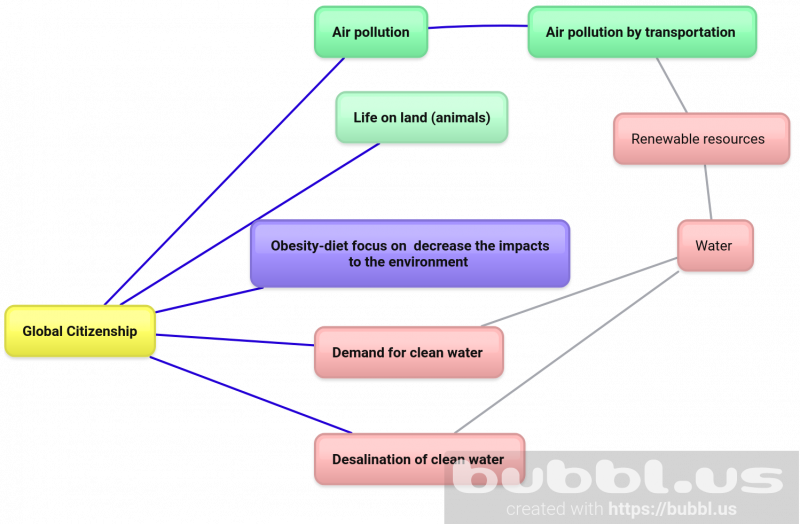
Water as reneable energy source-The need for clean water
Drinking water is one of the most important goods for man. It is not only a necessary element of survival, but also a factor that has a significant impact on health. In many developing countries, poor water quality is the cause of epidemics and deaths. In 2010, the UN General Assembly explicitly recognized the human right to water and sanitation. Everyone has the right to adequate, continuous, safe, acceptable, naturally accessible and accessible water for personal and home use. In developed countries where these problems have disappeared due to industries and agricultural pollution, they reduce the quality of natural water, resulting in consumer health problems. These problems are the subject of intense research. The result of this effort is to produce standards that, when applied, ensure water quality. The problem of degraded water quality is a concern in many areas of the country. Recently, chemical cocktails have been detected in the groundwater of the Artaki-Psachon plain, while the problem with hexavalent chromium in Boeotia or heavy metals in Arcadia is known. Water is not always clean. In our glasses, substances that determine its hardness, show pollution, cause irritation, deterioration or damage to the body, and some of them prove to be carcinogenic. In fact, most are always present in natural waters and their risk is determined by high concentrations. As thousands of Greeks today live in fear, the "water dictionary" from the National School of Public Health can be an ideal first-hand guide to water quality and the dangers we face.
At the same time an even bigger problem is marine pollution. Sea pollution is a global problem that is affected by local and chronic actions. From the very beginning of its existence, mankind has used the marine systems to maintain and develop its societies. Commercial and tourist routes were opened, peoples and cultures came into contact and trading, food and raw materials were extracted from these vast systems, maritime warfare was and will continue to be, dumping of all kinds of waste, facilities and resorts but. The uses of the systems in most cases were unreasonable and based on the assumption that such immense systems could not be easily affected while even in such a case the restoration would be quick and easy and above all by nature. Although this could make sense for substances that enter the marine environment and can be readily degraded without affecting organisms, the rapid development of technology and the use and synthesis of more and more substances have provided the seas with Huge quantities of non- or difficult-to-degrade chemicals that are transported through the food chain from organism to organism and from generation to generation. The sea is an important source of protein for both its organisms and those living in the terrestrial environment.
So its pollution affects all the organisms and ecosystems on earth and as such has a global dimension. But unlike the pollution of the land that could potentially be taken by the governments of the states facing the problem, the situation at sea is much more difficult or not at all because of its vast extent but also because it does not belong to most of it. in no state. So while activities from all continents burden the marine environment, no state is formally responsible for remedying the problems. Actions are mainly taken in coastal areas where the largest fishing activity is found. It is estimated that 90% of world fish production takes place in coastal areas with the remaining 10% coming from the oceans, which are also described as biological desert.
More specifically, according to UNICEF [3]:
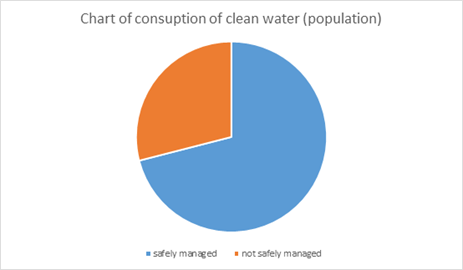
• In 2017, 5.3 billion people safely used potable water management services - that is, they used improved on-site water sources, available when needed and without contamination. The remaining 2.2 billion people without secure service management in 2017 included:
• 1.4 billion people with basic services, meaning an improved source of water on a 30-minute round trip
• 206 million people with limited services or an improved water source requiring more than 30 minutes to collect water
• 435 million people get water from unprotected wells and springs
• 144 million people collect raw surface water from lakes, lakes, rivers and streams.
• In 2017, 71% of the world's population (5.3 billion people) used a safe drinking water management service - that is, one located on site, available when needed and free from contamination.
• 90% of the world's population (6.8 billion people) used at least one basic service. A basic service is an improved source of drinking water on a 30 minute round trip to collect water.
• 785 million people do not yet have a basic drinking water service, including 144 million people dependent on surface water.
• Worldwide, at least 2 billion people use a source of faecal contaminated drinking water.
• Contaminated water can transmit diseases such as diarrhea, cholera, dysentery, typhoid and polio. Contaminated drinking water is estimated to cause 485,000 diarrhea deaths each year.
• By 2025, half of the world's population will live in areas of high pressure.
• In the least developed countries, 22% of healthcare facilities do not have a water service, 21% do not have sanitation and 22% do not have waste management services.
Geographical, socio-cultural and economic disparities persist not only between rural and urban areas, but also in cities where people living in low-income, informal or illegal settlements usually have less access to improved sources of drinking water than others residents.
About 829,000 people are estimated to die of diarrhea each year as a result of unsafe drinking water, sanitation and hand hygiene. However, diarrhea can be largely avoided and the deaths of 297,000 children under the age of 5 could be avoided each year if these risk factors are addressed. Where water is not readily available, people may decide that hand washing is not a priority, thereby increasing the chance of diarrhea and other diseases.
Diarrhea is the most well-known disease associated with contaminated food and water, but there are other risks. In 2017, over 220 million people needed preventive treatment for schistosomiasis - an acute and chronic illness caused by parasitic worms that have shrunk due to exposure to contaminated water.
In many parts of the world, living or reared insects carry and transmit diseases such as dengue fever. Some of these insects, known as carriers, are bred in clean, non-dirty waters, and domestic drinking water containers can serve as breeding grounds. The simple operation of covering water storage tanks can reduce the reproduction of the carriers and can also reduce the contamination of water faeces at the household level.
Economic and social impacts
When water comes from improved and more accessible sources, people spend less time and effort on their natural collection, which means they can be productive in other ways. This can also lead to greater personal safety by reducing the need for long or dangerous routes to collect water. Better water sources also entail lower health costs, as people are less likely to get sick and suffer medical costs and are better off staying productive. With children particularly at risk from water-related illnesses, access to improved water sources can lead to better health and therefore better school attendance, with positive long-term consequences for their lives.
Challenges
Climate change, rising water scarcity, population growth, demographic change and urbanization are already challenges for water systems. By 2025, half of the world's population will live in areas of high pressure. Wastewater reuse, water, nutrient or energy recovery becomes an important strategy. More and more countries are using sewage for irrigation - in developing countries this represents 7% of irrigated land. Although this practice, if inappropriate, poses health risks, safe waste water management can bring multiple benefits, including increased food production.
Options for water sources used for drinking water and irrigation will continue to evolve, with increasing dependence on groundwater and alternative sources, including sewage. Climate change will lead to greater fluctuations in rainwater harvesting. The management of all water resources should be improved to ensure supply and quality.
WHO's response (World Health Organization)
As an international authority on public health and water quality, the World Health Organization (WHO) promotes global efforts to prevent the spread of waterborne illness, advising governments on the development of targets and regulations. based on health.
WHO works closely with UNICEF in a number of areas related to water and health, including water, sanitation and hygiene in health care facilities. In 2015 the two organizations jointly developed the WASH FIT (Hygiene Facility Improvement Tool), an adaptation of the water safety plan approach. WASH FIT aims to guide small, primary healthcare facilities in low- and middle-income environments through a continuous cycle of improvement through assessments, risk hierarchy, and specific and targeted actions. A 2019 report outlines the practical steps countries can take to improve water, sanitation and hygiene in healthcare facilities.
• It is estimated that 801,000 children under the age of 5 lose diarrhea each year, mainly in developing countries. This accounts for 11% of the 7.6 million deaths of children under the age of five, meaning around 2,200 children die daily as a result of diarrheal diseases.
• Insecure drinking water, inadequate water availability for hygiene, and lack of access to sanitation contribute together to approximately 88% of diarrheal deaths.
• Worldwide, millions of people are infected with neglected tropical diseases (NTDs), many of which are related to water and / or hygiene, such as Guinea Worm disease, Buruli Ulcer, Trachoma and schistosomiasis. These diseases are most often found in places with unsafe drinking water, poor hygiene and inadequate hygiene practices.
• Guinea worm disease (GWD) is an extremely painful parasitic infection spread through contaminated drinking water. GWD is characterized by spaghetti-type worms up to 1 meter long, which slowly emerge from the human body through cells in the skin anywhere in the body, but usually on the lower legs or lower arms. Infection affects poorer communities in remote parts of Africa that do not have safe drinking water. In 2015, 22 cases of Guinea worm disease were reported. Most of them were from Chad (41%).
• Trachoma is the leading cause of blindness worldwide and is the result of poor sanitation and sanitation. About 41 million people suffer from active Trachoma and nearly 10 million people have vision problems or are irreparably blind as a result of Trachoma. Trachoma infection can be prevented through increased facial cleansing with soap and clean water and improved hygiene.
EVIDENCE
Unfortunately, we live in a society where water scarcity as a problem, has a serious impact on the life of people in many countries. Some notable examples are countries such as Jordan, Egypt, Yemen, Sudan, and Djibouti, who are in a horrendous position, while at the same time South Africa has predicted a general lack of clean water (1). As a result, poverty in Africa is often caused by a lack of access to clean, safe water and proper sanitation. Nearly one billion people do not have access to clean, safe water - that is the equivalent of 1 in 8 people on the planet! For these people, poverty is a way of life.
Actually, only 2.5% of the world’s water is fresh and even then only 1% of fresh water is easily accessible. So we have to find a different source of freshwater before it’s too late.
Furthermore, we have to understand that approximately 2 billion people are living without access to improved sanitation while at the same time the lack of water isn’t the only factor of the problem. Even though we live with state-of-the-art technology, it is very difficult to collect drinkable water. According to water.org, women and girls spend 200 million hours every day collecting water. And even if this problem wasn’t a sharp cause of suffering all over the planet and we weren’t already persuaded, we have to think that every year more and more people die as a result of the lack of water (1 million people die each year from water, sanitation, and hygiene-related diseases), and of course a shocking data that made us understood the depth of this problem is that a child dies approximately every 2 minutes from a water-related disease. As far as the facilities are concerned, research has shown that 22% of health care facilities have no water service, 21% has no sanitation service (Diarrhoeal disease is the second leading cause of death in children under five years old. It is both preventable and treatable.) and 22% have no waste management service.
This undesirable situation puts in danger our future as predictions about water crisis warn us that if the usage of clean water is not changed by 2030 then the world’s water supplies will be down by 40%, equivalently to the needs of the future. By 2035, the world’s energy consumption will increase by 35 percent, which in turn will increase water use by 15 percent, according to the International Energy Agency. If we continue doing what we are doing today, by the year 2040, there will not be enough water in the world to quench the thirst of the world population and keep the current energy and power solutions going, according to Seametrics. Believe it or not, destruction is coming and by not doing anything, it is difficult to avoid it. The time for accusing has passed, now we must defend ourselves if we don’t want to be eliminated.(2)
Having the opportunity of seas, it would be such a waste of a solution if we hadn’t taken into account that saltwater is, of course, not drinkable, however, we can easily make it so. We humans can make good use of desalination in order to accommodate our needs. A very important factor is time and water quality. We are going to work on these factors and on what we can improve on in order to have at least a decent supply of water in any desirable occasion.
- Massive mortality rates as water is one of the most precious resources on the planet.
- Pollution. Usage of water like there is no tomorrow or waste leads to general water pollution, a fact that affects all of us, as the food chain will have been harmed forever. Α massive destruction, for animals microorganisms, plants.
- Sanitation problems and diarrheal diseases, as it is already mentioned.
- Hunger. Water shortages have a direct impact on crops and livestock, which can lead to food shortages and eventually starvation. As well, because of water shortages some people cannot shower, wash their clothes or clean their homes properly.
Moreover, water scarcity can cause serious problems in the daily life of everyone as many children in the poorest countries cannot go to school because of sicknesses and weakness, or even the parents cannot work in order to earn the living for the same reason. So we understand that the lack of water is a very serious problem that has to be taken into account
There are 1338 million Km3 of water on Earth.However, only about 35 million Km3 of this is fresh.Furthermore if we don’t count the water shielded in glaciers, icecaps and underground which are not easily accessible we are left with only 120 thousand Km3 of easily accessible water. Additionally, humans consumed around 2100 Km3 fresh water in 1995.
Let’s assume that the amount of fresh water we consume per year stays the same then we can create a function showing as how many years are left before freshwater “extinction”.
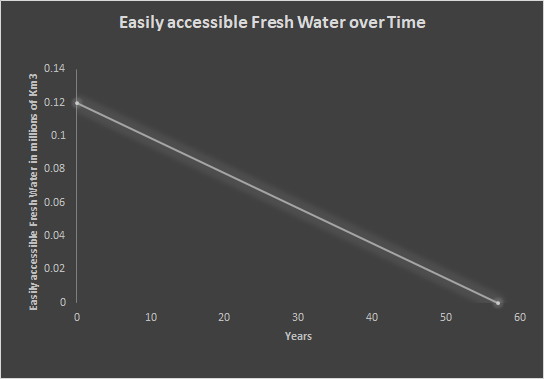
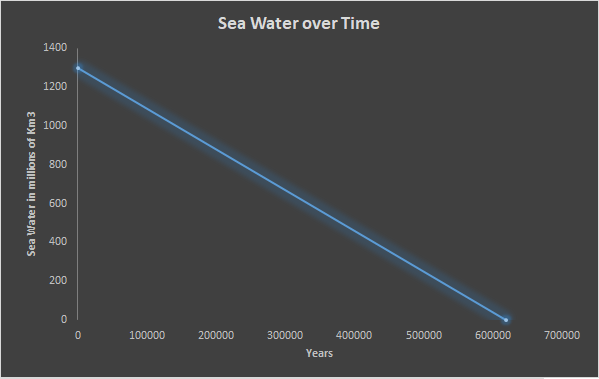
As you can see, from the diagrams, if we start using seawater we can solve the water crisis problem for more than 600.000 years, provided that the consumption remains the same. Giving enough time for humanity to find a permanent solution.
Papadopoulou Panagiota, Ntakoula Panagiota, Pageiou Dora
OBESITY IN GREECE
Obesity is a condition caused by excessive accumulation of fat in the body. It has adverse effects on health, leading to reduced life expectancy and / or increased health problems.Obese people are classified as obese when the body mass index (BMI) - a measurement taken by dividing a person's weight in kilograms by the square of his height in meters - exceeds 30 kg / m2. Obesity increases the chances of getting a variety of diseases, such as cardiovascular disease, type 2 diabetes, obstructive sleep apnea, certain cancers, osteoarthritis and asthma.
Obesity is usually due to excessive intake of foods, high energy density, lack of physical activity and genetic predisposition. In some cases, the primary cause is genes, endocrine disruption, medication or psychiatric illness.
Nutrition and physical activity are the basis for treating obesity. The quality of nutrition can be improved by reducing consumption of foods high in energy, such as those high in fat and sugar and by increasing fiber intake. Anti-obesity medicines may be taken to reduce appetite or to inhibit fat absorption in combination with proper nutrition.
Obesity is one of the leading preventable causes of death worldwide, with an increasing incidence in adults and children. Authorities regard it as one of the most serious public health problems of the 21st century. In most of the modern world (especially the western one), obesity is a stigma, even though it was considered a symbol of wealth and fertility at other times in history, which is still the case in some parts of the world today.
CHILD OBESITY
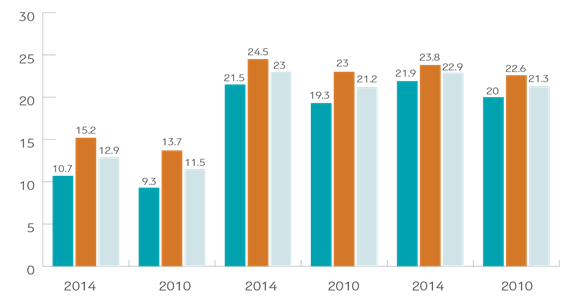
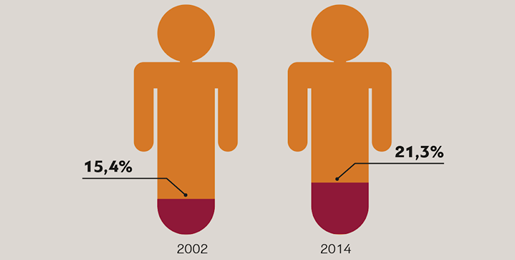
42% of boys and 38% of girls in Greece are overweight, while 20% of boys and 14% of girls are obese, according to the latest data from the World Health Organization's Childhood Obesity Initiative (COSI, WHO).
Of the obese boys, Greece with 20% is third after Cyprus and Italy (21% both). Greece is fourth with 14% in obese girls, followed by Italy, while Cyprus (19%), Spain (17%) and Malta (15%) are in the top three.
The percentage of students who are overweight has increased
Alexandra Baka, Vicky Ntorli
Animal rights
Based on conducted researches
All over the world, billions of animals are bred in cages. This includes pigs, hens, rabbits, ducks and quail - which are obliged to live under severe pressure in cages. Sows are forced to breastfeed their piglets in crates, rabbits and quail endure their entire lives in barren cages, and ducks and geese are placed in cages and fed great amounts of food in order to produce foie gras. These systems restrict, restrict and prevent animals from expressing their physical behaviors.
The European Union (EU) recognizes productive animals as living beings. However, tens of billions of animals suffer short, sordid lives on factory farms, where the priority is profit above all else.
To save space, factories like such are full of garbage and cages, preventing ordinary behaviors such as nesting or feeding. This often causes animals to cause injuries to themselves due to frustration and stress.
The use of antibiotics to promote the development of agricultural animals is outlawed in the EU but is legal in some countries. In the United States, approximately 80% of all antibiotics are believed to be used in productive animals
Animals used in experiments
The USDA/APHIS published the 2016 animal survey statistics. Overall, the number of animals (covered by the Animal Welfare Act) used in the Us survey increased by 6.9% from 767,622 (2015) to 820,812 (2016). This includes both public and private institutions.
These statistics do not include all animals, as most mice, rats and fish are not covered by the Animal Welfare Act - although they are still covered by other regulations that protect the welfare of Animals. Also, the 137,444 animals kept in research facilities in 2016 were not included, but did not participate in research studies.
Statistics show that 52% of research is conducted on guinea pigs, hamsters and rabbits, 10% on farm animals, while 11% on dogs or cats and 9% on non-human primates. In the United Kingdom, where mice, rats, fish and birds are counted in the annual statistics, more than 97% of the survey concerns rodents, birds and fish
Stray Animals and animals that produce fur
The abuse of stray animals in our country at all levels remains intense. In urban centres a reduction in their abuse incidents can be spotted, while they remain at the same levels in the province. About 2 million people in Greece own an animal. One in five privately owned animals is abused with intent or ignorance. Phobes are unfortunately the most serious danger to the lives of stray animals. Every year 6 to 8 million people are spent on the project. Annually approximately 6-8 million dogs and cats are being taken to shelters in Europe, of which 3-4 million are euthanized for not being adopted at their specified period of stay.
Globally, we must also take into account the different value that some animals have in certain cultures. A typical example is that of the case of dogs. In the US and UK for example dogs are considered a kind and friendly pet ideal for all homes. In contrast, in many Muslim countries dogs are believed to be dirty and dangerous animals that endanger the public health of the state. Therefore, understanding different cultures can lead us to find a common ground so as to solve problems such as the increasing number of strays on the streets, animal experiments, etc.
Mink, foxes, chinchilla, etc. They are brutally killed every year in fur farms using methods such as electric shock and poisoning. No law yet in the U.S. has placed restrictions and laws on the protection of these animals.
In Greece there are farms made for fur animals mainly in Kozani and Kastoria. Which in 2011 reached the number of 43 fur farms, in 2014 105, 123 in 2017, 131 in 2018 and finally in 2019 they are reduced to 112.
Kujutage ette
Impacts to the social community of these global issues problem
QUESTIONNAIRE - “ARE YOU A GLOBAL CITIZEN?”
The link of the questionnaire: https://www.surveymonkey.com/r/LXXZBFK
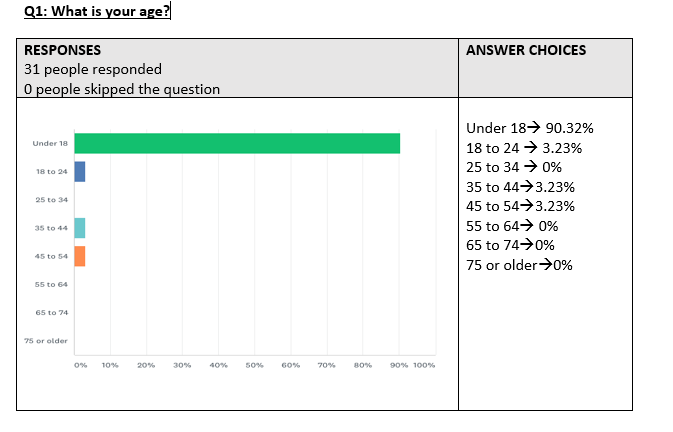
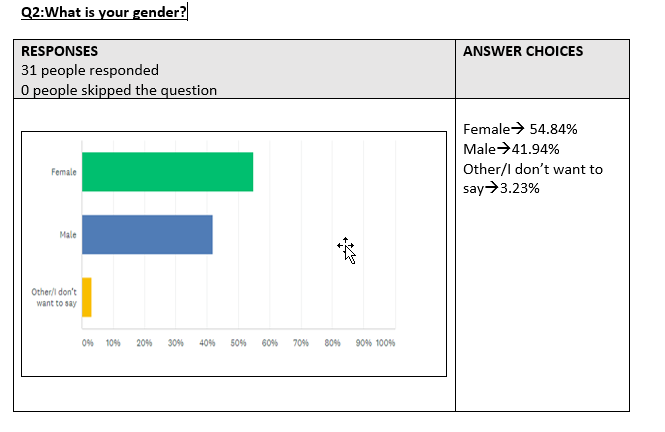
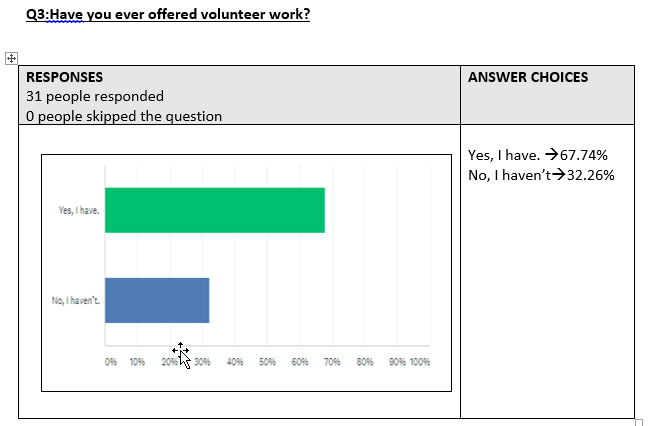
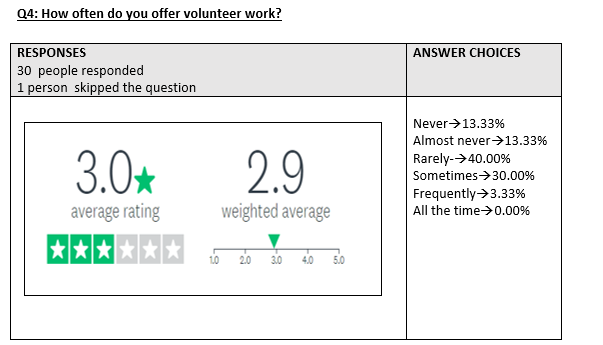
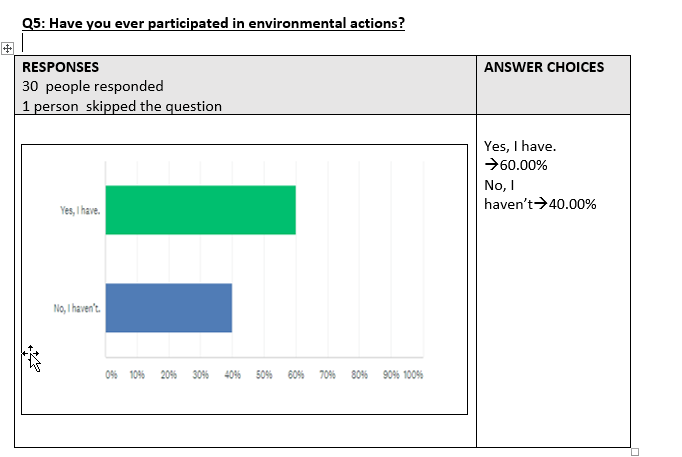
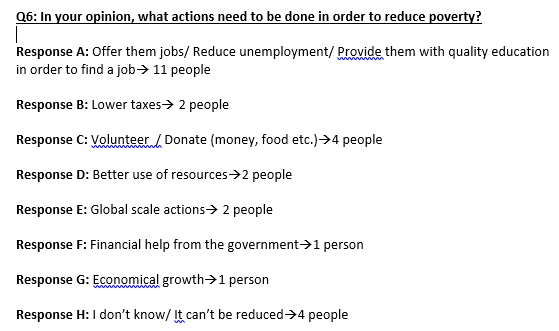
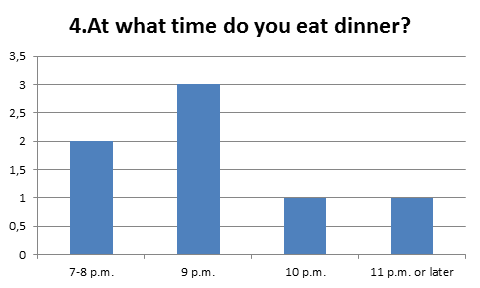
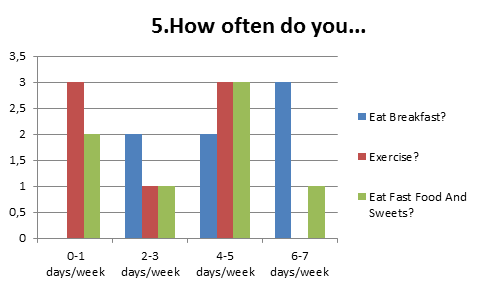
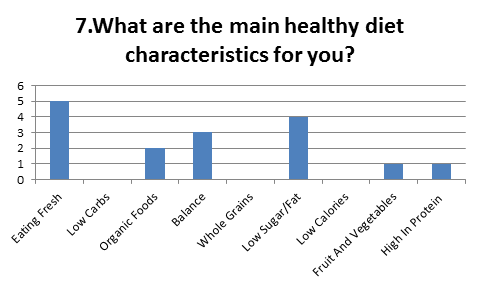
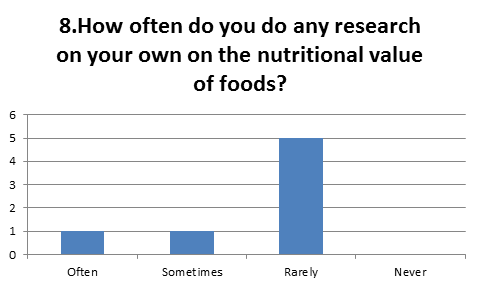
For this task 31 people from different age groups were asked to answer 10 questions about global citizenry. The results are presented below:
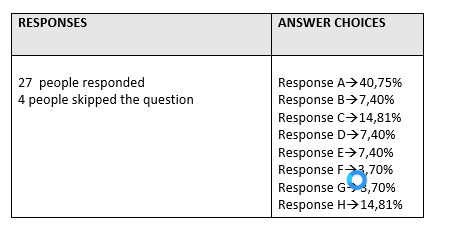
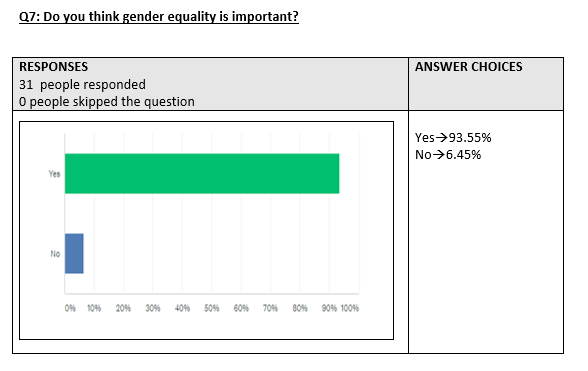
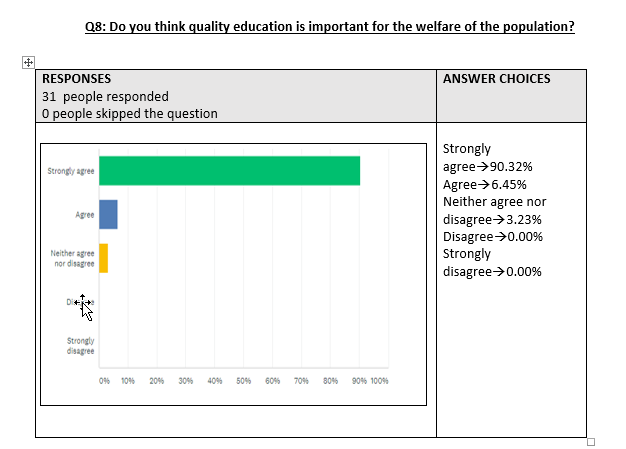
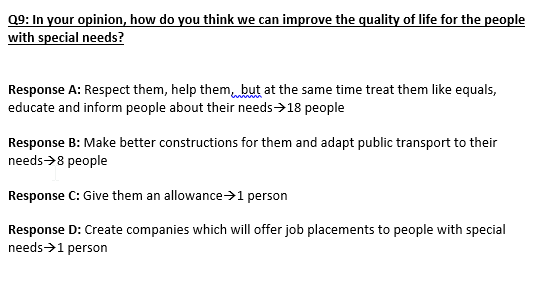
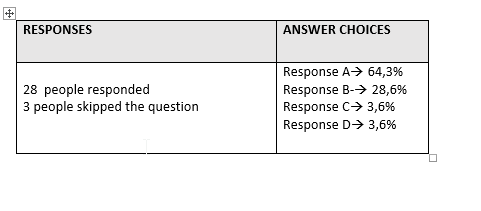
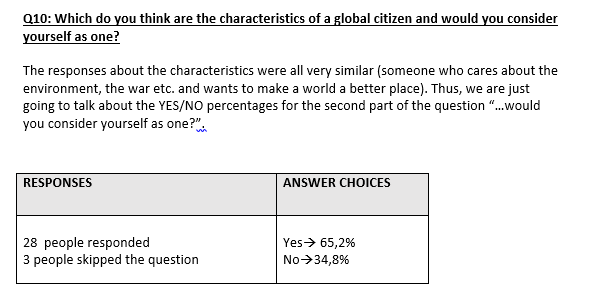
Research for air pollution
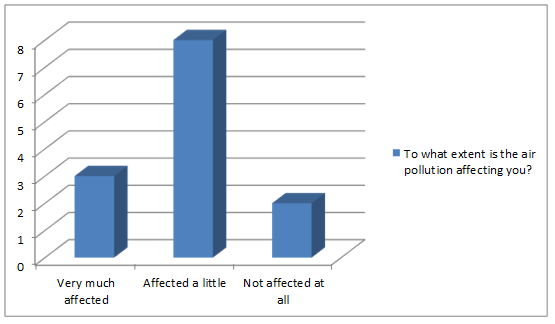
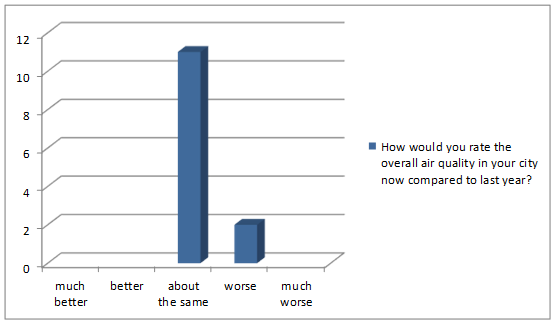
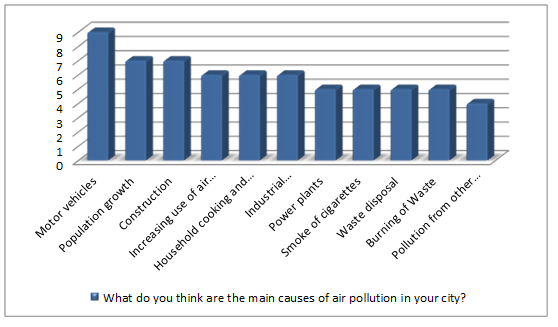
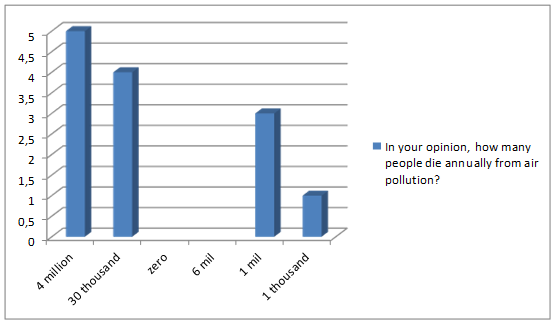
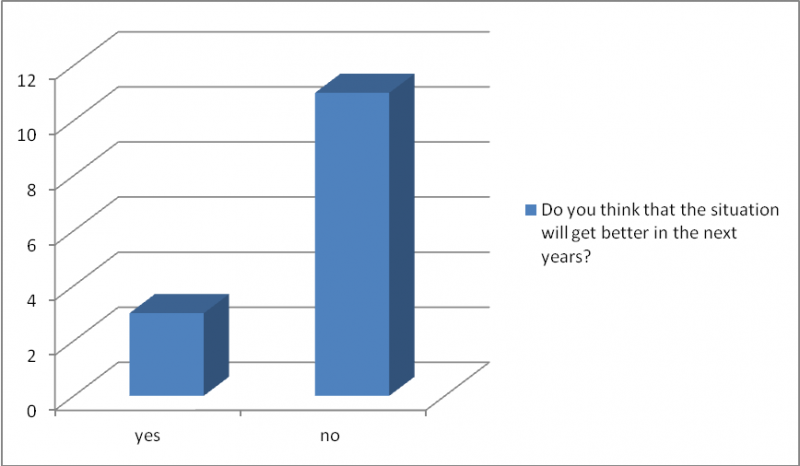
During my research, I felt it necessary to record the views of my peers on the issue of air pollution and to try to calculate how much they know about this phenomenon. So, escaping from the theoretical framework of the work, I submitted a questionnaire to peers in the first grade which was answered by them.
From the following responses we understand that students are relatively aware of the issue of air pollution. However, they ignore the number of people killed (per year) from air pollution, and believe that the situation will not improve in the next few years
Report for “Renewable and Non Renewable Energy Sources” Survey
Summary
Key stats
Responses: 27
Unique visits: 36 *
Total visits: 44
Average time to complete: 04:08 minutes
Completion rate: 75%
*The following survey was handed out to high school students*
(Analysis:https://helenbethani.typeform.com/report/rC57yl/0LIJjSb3TVjgvCKr)
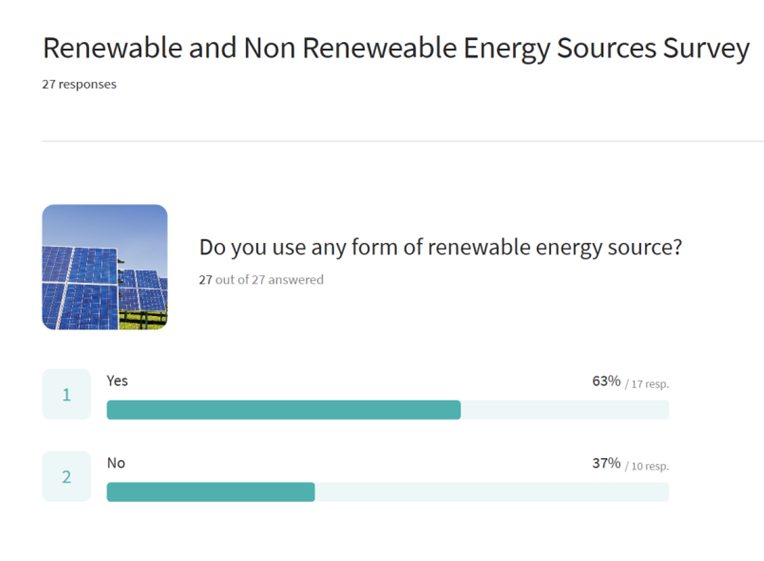
Most students do not seem to be keen on the usage of renewable energy sources. This information reveals that nor do they nor their families follow eco-friendly energy sources. As a result, we come to the conclusion that “green” energy sources need to be brought up to the spotlight immediately before it’s too late for humanity to take action.
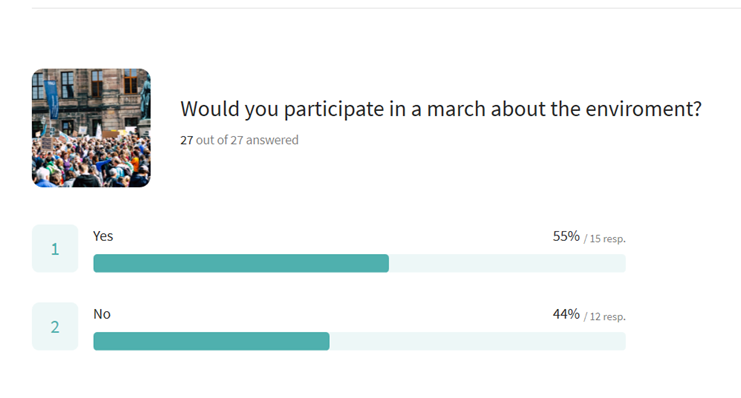
By this info, we can comprehend more easily the amount of awareness, disinterest and apathy that is dominated in today’s adolescents. As shown above, the two percentages are very close meaning that the majority of the students are very skeptical about this way of approaching environmental problems.
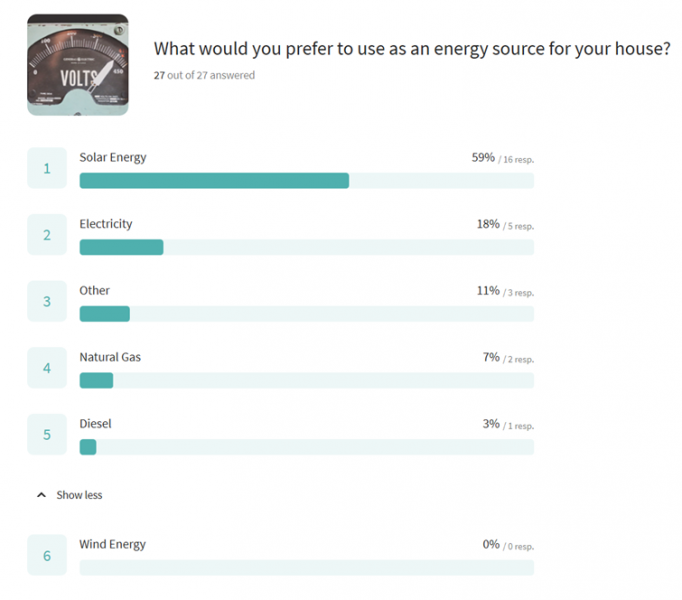
Observing the data of this question of our survey we cannot ignore the fact that there is an eco-friendly attitude by the students. So in the end, we ask ourselves, what does prevent them from implementing a renewable energy source for their houses? Many factors could take place in this prevention. For example, an area could not support eco-friendly house programs or the cost is too high.
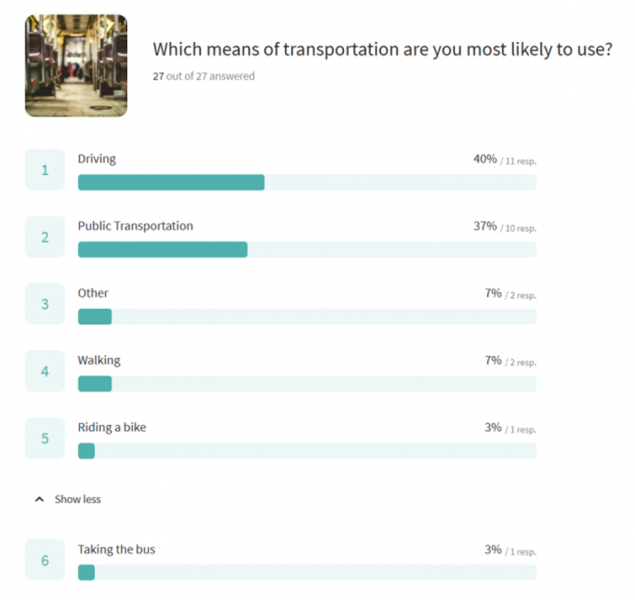
This time we have noticed that most students, move from a place to another by the usage of cars or public transportation (metro, trolley, e.t.c.).
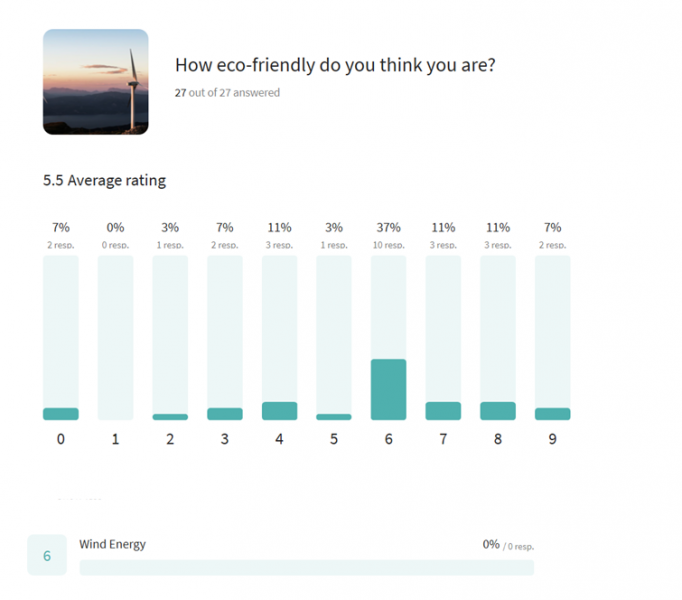
By these precentages, we observe that students are aware by their inactivity of protecting the environment and as a result, we come to the conclusion that they seem to not care about their surroundings, even if that means losing their own planet. By that, we mean that awareness needs to be raised.
In your opinion, what do you think caused air pollution?
- factories and industries
- Because of the increasing number of cars that are used even for small distances
- Factories
- Air pollution was surely caused by the many factories the world has. Also due to the overpopulation a loy more cars are out in the roads releasing a lot of harmful fumes for the environment.
- It's all a lie air pollution is fake and so is our universe. We live in a simulation. The real God is Shrek. In shreks world we can live freely. A world where you can brun faggots and no one will care, a world where Jews are criminals and executed on the spot, a world where you can abuse your family without any consequence, a world where true gamers exist. That is truly worthy of being the shrekverse, A TRUE GAMER WORLD
- Them farting cowz. They fart so much, they release methane in the environment causing global warming!
- mostly gases from all sources
- burn of fossil fuels
- Cars, fumes from the factories
- fuels from vehicles
- Mostly the gas that all cars produce as well as as that coming from factories. Also, the smoke from the fireplaces is very toxic as well.
- The primitive Jew killing methods the Nazis used. The fuckers turned Jews into CO2 and released into the atmosphere. Furthermore those American faggots missed with the Nukes and hit the Weebs instead of Israel.
- The factories and the industries
- People's unawareness
- Carbon dioxide and other pollutive gases
- I think air pollution is caused by the usage of cars, factories, fireplaces and air conditioner
- Compressed air and gas
- Vehicles factories
- Factories
- Factories
- I think many factors contributed to the fact that the whole world is suffering from air pollution. But I think that the main factor is mass production factories and the daily use of cars.
- Gas, cars
- The development of technology, the increase in the number of factories and also people’s ignorance or unawareness when it comes to the pollution of the environment
- fumes from cars and factories
- solid and liquid particles and certain gases that are suspended in the air.
Cleanliness of Water and Youth
We decided to do a poll through a questionnaire we made. We asked 20 of our peers to answer some water-related questions to help us with our work.
Here are the questions with the answers as well as some diagrams.
Regarding drinking water:
- Do you use a water filter in your home?
YES 4
NO 1
I DON'T KNOW / I DON'T ANSWER 1
We asked our friends who answered YES the reason they use the filter and some of the answers were:
-We use the filter to retain harmful substances as tap water is full of them
-We use a water filter because we saw it in an advertisement on TV
- How often do you check the purity of your tap water?
CONTINUED 3
SPAIN 5
NEVER 12
Our interest was that our friends who answered often used a water filter in their home!
- Do you prefer to drink tap water or bottled water?
Regarding seawater:
- Do you consider the seas of Attica clean for swimming?
YES 6
NO 9
MAYBE 5
Although only 6 of them consider the seas of Attica clean, at least 14 of them have gone for a swim in Attica this summer!
- Have you ever volunteered on a beach?
YES 3
NO 16
I DON'T KNOW / I DON'T ANSWER 1
Conclusions:
From the above poll, we came to the following conclusion. Unfortunately, our peers do not show much interest in the purity of the water as it has not bothered them immediately. This can be changed through education to raise awareness among the younger generation and to take further steps to address this very important issue.
If the children take care of the correct information of the young people regarding the environmental problems in general, we believe that a better tomorrow will come for our country and consequently for the whole planet!
- Questionnaire
How many people worldwide live without a source of clean water near their house?
More than 785 million
How many deaths are caused annually due to lack of drinkable water and diseases caused by the consumption of dirty water?
More than 6 million
How many people are infected annually with these diseases?
Around 220 million
How much money do you think should be invested to provide clean water to African countries with a water shortage?
An estimated 210 billion USD
Have you ever donated money to an organization whose goal is to provide clean water to developing countries?
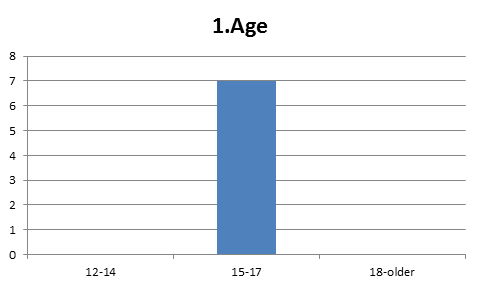
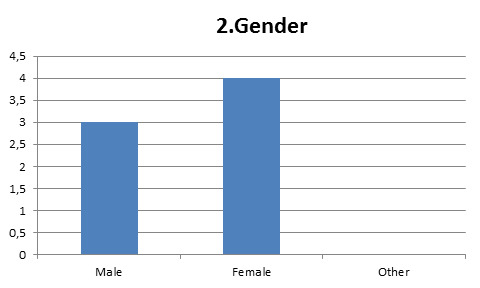
We gave this questionnaire to 144 people. The sample we took includes teenagers and adults from urban areas and adults from rural areas.
The results we got were very interesting.
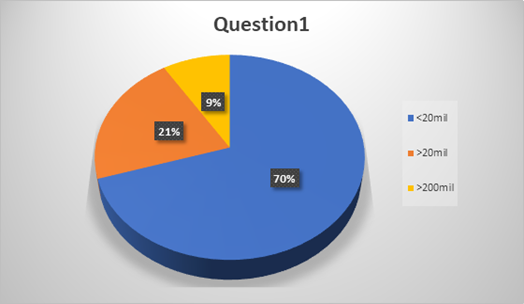
Regarding the first question 87 people answered less than 20 million, 46 answered between 20 million and 200 million, while only 11 answered with a number above 200 million
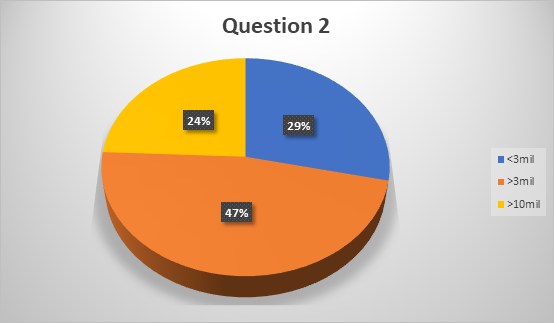
Regarding the 2nd question 41 people answered below 3 million, 68 answered between 3 million and 10 million and 35 answered above 10 million.
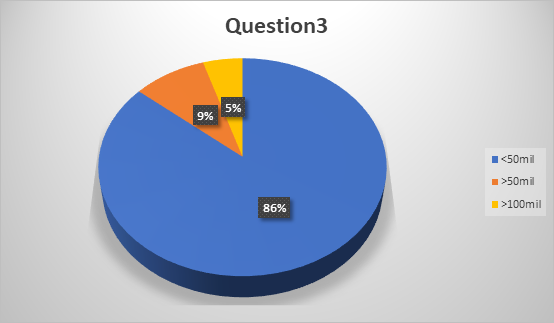
Regarding the 3rd question 124 people answered below 50 million, 13 answered above 50 million and only 7 answered above 100 million.
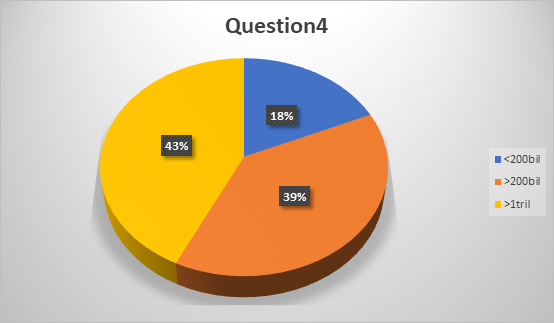
Regarding the 4th question 27 people answered below 200 billion, 54 answered above 200 billion while 63 answered above 1 trillion.
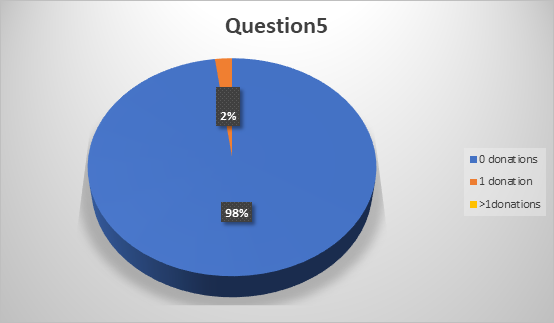
Regarding the 5th question, 141 people answered that they have never donated money and only 3 have donated money to an organization out of which none has donated more than once.
What do you think we can do to reduce the high levels of obesity?
Answers:
- People should be informed about the characteristics of a healthy diet from an early age, therefore schools should spend more time teaching students how to eat healthier
- We should promote exercise and teach at schools what a balanced diet looks like
- Inform people
- Limit fast food consumption
- People should exercise more
- People need to exercise more so you need to give them a purpose, in other words you need to motivate them
- Maybe one could try to inform people about the problems obesity causes and how easy it is for one to become obese
Loo
Make decisions and plans to degrease the impact to our local community
Basic factor the colloboration with stakeholders and scientific community (Interviews)
In this part we are going to present you the solutions to the problem analyzed in the previous sectors of the project.
Assisted by many means of communication and social media we aim to:
-achieve well being through tips from texts, experts such as therapists, nutritionists etc. that also refer to exercising and having fun
-pass an environmentally friendly point of view and inform about actions they can help to such as cleaning a beach and planting trees and serious environmental issues and possible ways to solve them
-notify and possibly solve social issues (poverty, hunger, war-peace, proper education, gender equality etc)
1ST SOLUTION-THE MAIN SOLUTION
In the end, what can we do? How can we help the next generation of citizens?
We’ve decided to assemble a team of experts specifically for them. There will be more than one gymnast, psychologist, nutritionist, teacher and other specialist. They will help the children through every key part of their lives.
The gymnast will help them properly work out and have a healthy body that leads to a healthy lifestyle. With useful therapy sessions from the psychologist, children battle anxiety and every other issue that bothers them in their personal lives. The peak of healthy lifestyle will be reached with the nutritionist addition, showing the young citizens what to eat so their minds can always be alert. The teacher will help them with their studies whether they don’t understand something at school or whether they need extra classes because they can do more than what their teachers offer. Last but not least, there will be plenty of specialists which will inform the students about the important problems which occur in our planet, they will encourage them to volunteer and thus become the global citizens of tomorrow.
This team will be a free club for all kids in the center of our city. The members will be divided in groups by age and interests. The assembled experts once in a while will visit schools that are a little far away and inspire them to join the club and become the best versions of themselves.
With the passage of time this idea will expand and every city will have more than one of its own club.
Until then, we have created a g-mail account so everyone can email us their problems and be sure we will respond immediately with the help of our team of experts. It’s simple, free and relieving not only being offered a solution but even talking openly about your problem to us. We are here to help, we all need that better future. Are you with us?
OUR GMAIL: citigenz@gmail.com
We will need some human resources and we will get our classmates and our friends to volunteer.
Make decision for air pollution
Do you believe that air pollution is an extremely serious problem?
Yes it is so serious that’s responsible for more than 7 million deaths every year. That means that there’s 1 death every 8 people in the world each year. Premature deaths can be avoided if we take the right decision. There are many diseases caused by exposure to the air pollution like lung cancer obstructive chronic pulmonary diseases or asthma but as well cardiovascular diseases.
What kind of interventions are you suggesting?
Well actually firstly we need to put the scientific evidence on the table. That’s the first thing and this is what helps you link diseases to the risk factor represented by air pollution we identify the air pollutants that are bad for our health we set up standards for them. We should monitor quality of air by using sustainable public transport system in the city and think about the energy efficiency when we heat our houses. Thus, there are plenty interventions we can make that will be extremely beneficial for human health.
Interview of Dr. Maria Neira, World Health Organization’s Director of the Department of Public Health, Environmental and Social Determinants of Health
Interview 2:
-What is your background? What made you decide to start your own business?
David Lu: I've been an environmental activist for a long time. I was disappointed with what most environmental organizations did and wanted to see if we could capitalize on our business to have a positive social impact. Having lived in China for 18 years, I generally believe that air pollution is one of the most pressing environmental issues we face today.
-What are your thoughts on sustainable development goals and how do you think your company can contribute to their promotion and implementation?
Based on the conversion of sustainable development goals into action, data on air quality help implement sustainable development goals.
-What is your view on climate change?
Climate change is the most demanding challenge of the 21st century. Most of the efforts we have made so far have focused on mitigating greenhouse gas emissions in order to stop the increase in CO2 concentration by 2050, but that is not enough. Air pollution is also directly linked to climate change. Given that the majority of today's air pollution shares the same sources as greenhouse gas emissions, the development of policies to mitigate air pollution usually leads to a reduction in greenhouse gas emissions.
Excerpt from an interview with David Lu, co-founder and CEO of Clarity Movement Co.
Make decisions for air pollution by transportation
An organization that can motivate us and work as a model is Greenpeace. Greenpeace is a N.G.O. that works on environmental issues, such as responsible consumption, protection of the forests and the oceans. One of Greenpeace’s environmental actions connects with the energy sector. This action promotes the use of renewable energy sources and is aiming to put an end to polluting energy projects. Greenpeace has created 3 programs related to this issue: #Coal, #Oil and #Energy_Revolution. The concerns those programs are about relate directly to our project, therefore they could work as a model for us.
We came as a team in contact with local automakers to better understand our problem. We asked for more information first on the levels of pollution for which cars are responsible and then on the relationship between polluting and car manufacturing.We discussed the available fuel alternatives, as well as their environmental impact, in order to pinpoint the most environmentally friendly alternatives and focus our work on them. In addition, we contacted local engineers of all specialties (politicians, electricians, engineers, etc.) to examine the problem from a more professional perspective. Through working with these professionals, we have been able to broaden our horizons and better understand the situation in our own city.
We focus on the creation of a city that runs completely on sustainable energy sources, as well as the presentation of the city in a model. The benefits of our project to the environment are numerous. Air pollution is the main cause of the greenhouse effect, which is responsible for climate change. With the use of sustainable energy sources, air pollution is going to be reduced, leading to great progress regarding climate change. Apart from having a positive impact to the planet, our project also has benefits concerning the health sector. It is true that air pollution can cause deceases such as lung cancer, stroke and heart attack, leading to the death of thousands people per year. By reducing air pollution, the rate of those problems will be reduced to, possibly leading (in long term) to the increase of life expectancy.
Explanations by mathematical problems
ENERGY CONSUMPTION OF HOUSING IN GREECE
The percentage of energy consumed by each household, also known as an energy footprint, plays a key role for the environment. This is the case, as the energy consumed by each dwelling (thermal and electrical) "translates" into pollutants for the environment. The following problem will help to better understand the size of this energy and how it is used.
PROBLEM A
Each household consumes 13,994 kwh annually for all energy needs. These energy needs are divided into thermal and electrical. If the kwh required for electrical needs (energy) are equal to:
sin2ω *x + cos2ω *x =
(let’s suppose that x is kwh)
Find:
- I. Percentage of electricity
- Percentage and amount of kwh of thermal energy
PROBLEM B
Fill in the table below on the basis that the total number of energy consumed per household per household is 13,994 kwh. (For cooking categories and appliances should first be solved the equation and performance given).
|
USAGE |
PERCENTAGE |
AMOUNT |
|
Heating of spaces |
63,7% |
|
|
Hotwaterproduction |
|
797,658 kwh |
|
Cooking(1) |
|
|
|
Cooling spaces |
1,3% |
|
|
Lighting |
|
237,898 kwh |
|
Appliances(2) |
|
|
PROBLEM C
The annual energy consumption rate of each household depends directly on the degree of urbanity of the area in which it is located. A) Fill in the values in the table below if the equations (1) and (2) correspond to the kwh number of electricity for urban and rural areas.
|
|
URBAN REGIONS |
RURAL REGIONS |
|
THERMAL ENERGY |
|
|
|
ELECTRIC ENERGY |
|
|
|
SUM |
12.453kwh |
19.993kwh |
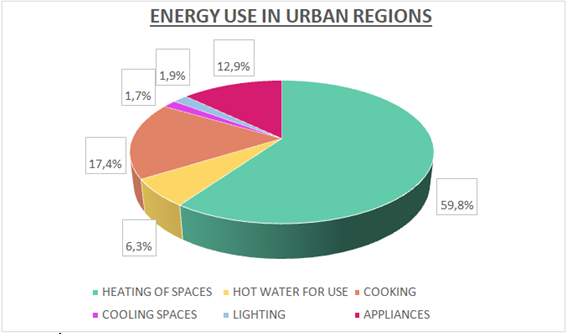
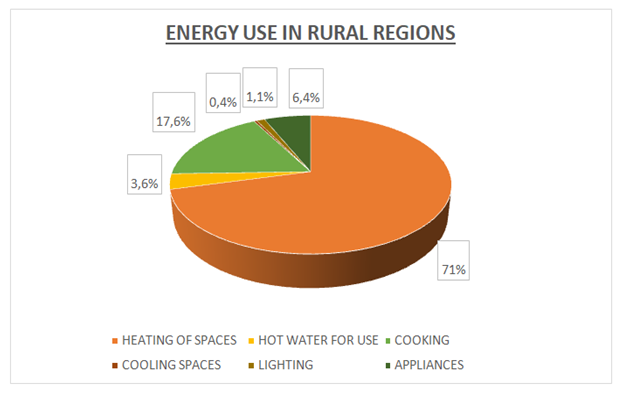
Captivity-Solution-Product desalinationof the water
As a team, we can demonstrate a system that consists of desalination action and at the same time is a water purifier in order for all of us to have fresh and clean water. The procedure of desalination might be thought to be difficult and probably with no chance to be achieved. The easiest, cheapest and least time-consuming method is the ’’natural’’ or solar desalination. With this method more and more people can produce their own water and be independent of the water crisis. A negative thought would actually be about the limitation of the water supply seas. However, a decent consumption of water would give us at least 300.000 years of wealthy life as far as the water is concerned, when without the proper desalination the planet’s deadline would be in just 25 years.
However, the desalination would be just the beginning of the method of making seawater drinkable. Even if the salt is removed, the water won’t be drinkable because of the micro bacteria and other ingredients that harm ourselves. Our solution goes for a water purifier.
Τhe cheapest water purifier can be constructed if we use active charcoal, natural sand, and cotton. Generally in a plastic bottle, every material has an equivalent quality of ⅓ of the bottle. water’s smell and taste are often removed by active charcoal carbon filters. However, they aren’t as effective in removing other materials like salts. Slow sand filters produce high-quality water without the use of chemical aids. Passing flocculated water through a rapid gravity sand filter strains out the floc and the particles trapped within it, reducing numbers of bacteria and removing most of the solids. The cloth filter is a cost-effective and appropriate method for reducing the contamination of drinking water. It is easy to maintain and can be used anywhere. Inexpensive cotton cloth or a sari cloth, folded four to eight times, provides a filter of approximately 20-micrometer mesh size. Also, other materials that can be used for the same purpose might be ceramics, diatomaceous earth. As far as the ceramics are concerned, the dirty water is pushed through the ceramic, and the ceramic captures impurities like arsenic and microbes. MIT says ceramic filters are popular in many countries due to their cheap construction costs. Diatomaceous earth is the decayed form of a type of siliceous rock. When layered, it’s very fine texture helps to remove larger impurities like algae, as well as waterborne viruses, according to the National Drinking Water Clearinghouse. This makes diatomaceous earth-based water filters popular for recreational uses like swimming pools.
Of course, a water purifier gives the opportunity of producing clean water from mud-based liquids that include water, as the purifying is the stronger it gets with such cheap materials. In the construction method, we build two different layers of vessels that are not communicated but within we place the filter-bottle, in which we have already made a hole to the bottom and to the top. So the water can be purified as it moves from the first layer towards the bottle-filter to the second layer. The need to produce to phenomenically different systems is based on the fact that sea salt can not be purified and so the salt to be removed from the water mass.
To start, we think that funding would be ideal for our plan. It is important we have an amount of money in order to construct the desalination machines that we already mentioned. Afterward, when the project is self-sustainable, we will put our volunteering work into practice.
Clean water is something that many of us think is a safe bet, yet plenty of our fellowmen don’t have that amenity. And of course, as clean water is vital for our existence, offering to people that are in need of it is an act of philanthropy.
Our basic goal is to prevent the water crisis by helping and giving such a big hope to countries of the 3rd world where the problem is massive and the creation of products like that focus on, firstly, donation or cheap production in small quantities.
Other prespectives - Solutions
In the last decades, more and more businesses are interested in desalination projects, although not many of them have gained publicity. One of the most well-known companies that are accustomed to making fascinating desalination projects, as they have been in this field for many years is named Acciona corporate. We are looking forward to learning from them the general know- how to prepare and create the plans for our desirable machines. As a matter of fact, Acciona is now working on a desalination plant in Australia and on a magnificent project in the UK. We assume that their knowledge of huge desalination plants is something very important in order to accomplish our first goal. We aim that on an occasion of expanding this idea to massive production of cheap desalination-purifiers systems it would be a great honor if a well- known company in this area helped with their experience, knowledge, and workforce.
According to the Organization for Economic Co-operation and Development (OECD), a very good solution would be about the raising of the water prize in order to have less waste and control the pollution. However, we think that something like that would probably struggle the majority of the poorest countries to maintain supplies of water because the prize would be theoretically much bigger. Even though that would be a problem, undoubtedly it would help to limit the problem of water scarcity.
Climate change and water scarcity are producing the most dramatic consequences in developing regions, such as northwest India and Sub-Saharan Africa. One proposed solution is to transfer water conservation technologies to these dry areas. Doing so is tricky because economies are weak and there are gaps in skills that often compel government and business authorities to impose these changes on local citizens.
Another innovative solution seems to be the education of the masses. The creation of different behaviors can at long last make us, all, understand the urgency of the issue and of course, plenty of us will understand that the deadline is not only written in papers, is rather a fact. Some regions led by India, Australia, and the Southwest U.S., are already facing the freshwater crisis. So, an educational program is valuable, useful and a practical method for us to feel the existence of fear, and start working hard for the better of our future.
And what about creating huge conservation systems, where water can be stored. Surely a genius idea as the rainwater is increasingly unpredictable and provides pure and clean water. A combination of new technologies and energy can, indeed, help a lot, but always the difficulties in the solution are not based on finding the idea but having the ability to make it. And if we want to be realists we have to admit that for the common public, we are at least bored as we make excuses all the time.
An admirable example of sacrifice, for the public in order to make 3rd World countries through the water crisis is the action of Bill Gates. He wanted to find a way to make the sanitation system of countries in Africa and India better. The solution: Worms. Worms may not have spines, but they're doing some back-breaking sewer work in more than 4,000 toilets across India. The worm castings are 99 percent pathogen-free, which is better than a septic tank, and weigh only 15 percent as much as the original waste. The castings are usable as fertilizer. Or they will be when the tank is eventually cleaned out. The first Tiger Toilets are approaching five years old, and have not required maintenance yet.
Water desalination can have a positive effect on the local community. Initially, desalinated water can be used to cultivate land or reduce water costs for local residents. The use of desalinated water also sensitizes local citizens to the issue of water scarcity, a global issue that needs to be addressed in order for humanity to continue to thrive.
To understand more about animal rights, an interview was held with the president of the animal welfare association Lamia, Mrs. Efi Griva. Moreover, in order to understand the possible legal framework to which we are referring, we also recorded some articles of the Ministry of Rural Development and Food which are directly related to the questions Mrs. Griva was asked. The interview is recorded below in a summary.
What do animal welfare associations do and yours in particular?
Animal welfare associations are fighting for animal rights. Ours is particularly motivated in four areas. In the active sector, our association helps collect, house, sterilize and supply medicines to strays. In the cultural field, there are some protest events in the context of the operation of our association. In addition, we have the educational part, during which we visit and teach in schools. Finally, in the context of the political sector, we participate with 3 of our members in the committee of the municipality for the management of strays and we fight for better law and even judicial decisions.
How do you think the number of stray animals will decrease?
The answer is sterilization. All animals should be sterilized whether they are strays or not, so efforts are being made by the municipality. This is not observed by groups of breeders, especially by hunters who usually reproduce animals illegally, choosing only those with the requested characteristics and tossing the others on the streets.
Article 9(1) from the Public Consultation of the Ministry of Rural Development and Food on the Draft Law "For dominant and stray pets and the protection of animals from exploitation or use for profit purposes":
Municipalities are required to ensure the collection and management of stray pets, in accordance with this Article. This work can also be carried out by animal welfare associations and associations, in cooperation with the competent Municipality.
Article 9(4) from the Public Consultation of the Ministry of Rural Development and Food on the Draft Law "For dominant and stray pets and the protection of animals from exploitation or use for profit purposes":
Stray pets collected are driven in part to the existing shelters of stray pets, municipal vets or private vets, which have the appropriate infrastructure and can accommodate temporary and temporary for a reasonable amount of time the animals to be treated, until they are treated, undergo a veterinary examination, sterilized, marked by electronic labelling, as strays and recorded on the online electronic basis.
Where should one look in order to adopt an animal?
Because in our country there are pet shops, animal welfare associations make an effort to close them by law. The right way to adopt animals is to get in touch with a breeder. But why not take animals from a pet shop? Initially, the animals that exist in such shops are in cages, and those that are not bought slowly die. There are also many animals in illegal farms which are only used for the breeding of pureblood dogs and live in awful conditions. The best way is to communicate with a kennel or an animal welfare charity.
Article 4(1) from the Public Consultation of the Ministry of Rural Development and Food on the Draft Law "For dominant and stray pets and the protection of animals from exploitation or use for profit purposes":
The Information Technology Department of the Ministry of Information Technology creates an Online Electronic Basis for the marking and registration of pets and their owners. The Online Electronic Base shall record, by the certified veterinarians, the data relating to the identification of the paminthed pets and the identification of their owner.
Are animals given away?
Animals are by no means given away, animals are not objects, when you have an animal, it's like having a little child. Which means an animal can't be a gift. It should certainly be a family decision, a conscious decision.
Article 6 Paragraph 1 of the Public Consultation of the Ministry of Rural Development and Food on the Draft Law "On Domestic and Stray Pet Animals and the Protection of Animals from the Use or Use for Profit":
The natural or legal person or association of persons for the purpose of commercially raising, breeding or selling pet animals must obtain a permit issued by the Directorate General of Regional Agricultural Economics and Veterinary of the Region in which he resides.
Article 5 Paragraph 6 of the Public Consultation of the Ministry of Rural Development and Food on the Draft Law "On Domestic and Stray Pet Animals and the Protection of Animals from the Use or Use for Profit":
The publication of this law prohibits the publication of pet ads for adoption or free concession or sale on brochures, brochures, or websites unless their electronic signature number is indicated.
What are the needs of pets? Does the law help?
The law is quite strict regarding pets, meaning that we should provide them with welfare, that is, not only feed them, and provide them with water and shelter, but also be free (not chained up). The point is that there is no control system that helps improve the animals’ well-being. So despite the existence of a rigorous legislative framework and respect for our responsibilities, unfortunately, animal welfare is not always guaranteed.
Article 5 Paragraph 1 of the Public Consultation of the Ministry of Rural Development and Food on the Draft Law "On Domesticated and Strayed Animals and the Protection of Animals from the Use or Use for Profit":
The owner of the dominant pet must:
(a) ensure the marking and registration of his animal;
(b) comply with the animal welfare rules and ensure that it is subject to at least an annual veterinary examination.
(c) be provided with the pet's health booklet or passport for each pet animal.
(d) not abandon his animal.
(e) ensure that the animal's faeces are immediately cleaned of the environment.
We hear and read on social media but also on media about aggressive animals? But what does it mean to be aggressive?
Social media as well as many channels present dogs as well as animals in general as aggressive because of an attack on humans. The story is always recorded from the side of the human, the version of the dog is the one we have not ever heard. Even though the law defines aggressive animals as animals that unintentionally attack a person, most of the time the animal has not attacked someone unintentionally. For example, it has happened many times that we see people walking around with some stick. When a dog sees a stick it realizes it will be hit, and let's not forget that most stray dogs have been hit before. In this case the animal reacts in a bad way.
How can animals help vulnerable groups?
Animals in general, in relation to humans, understand neither disability nor ugliness. In this way it is safe to say that an animal loves everyone unconditionally, and the only thing it sees in one is the love it transmits and nothing else. Therefore, bringing an animal into contact with a person who has either a problem, autistic children, or people with mental problems automatically means better socializing conditions. Vulnerable groups are also the blind, so there are dogs who are blind guides. In addition, even with a dog at home, we help our children develop empathy. Empathy means being able to step into someone else's place and understand their need. This way, of course, the animals can help the vulnerable groups, as well as all of us.
What about productive animals? Do they have rights?
Productive animals are doomed to live in miserable conditions. For example, the chicken meat sold for 1.99 per pack comes from a hen who has lived all its life in an A4-sized cage. This means that it has never walked and it has grown under a lamp, fed only special foods to grow fast. So we encourage people to see the pain in every dish that they consume, to think that just as we want to live, so does the animal.
Article 5 Paragraph 1 of the Integrated Public Consultation of the Ministry of Rural Development and Food on the Draft Law "Arrangements for the Establishment and Operation of Livestock Installations":
All kinds of new livestock establishments are established and operate beyond residential areas (cities, towns, villages, settlements)
Article 5 Paragraph 2 of the Integrated Public Consultation of the Ministry of Rural Development and Food on the Draft Law "Arrangements for the Establishment and Operation of Livestock Installations":
The minimum area of land required for the construction of livestock facilities is determined by the provisions of Articles 6, 7 and 8 of Law 1577/1985 "General Building Regulations" (A`140) and the specific provisions of the town planning legislation applicable at all times.
Article 5 Paragraph 3 of the Integrated Public Consultation of the Ministry of Rural Development and Food on the Draft Law "Arrangements for the Establishment and Operation of Livestock Installations":
The minimum distances between livestock establishments and sites or activities in need of protection are set out in Annex 1 to Article 19 of this Act and have a two-way validity, in the sense that they apply in the same way in cases where the area where legally operating livestock already operates.
What is the position of animal associations for fur animals (that is, their fur coats) and equidae?
In our country there has been a great deal of effort for equidae, because in the past we had very bad reviews for the donkey used for transportation purposes in Santorini and Hydra. So as a country we have accepted an international outcry, animal associations all over the country have fought for it and as a result we have already improved the way we treat equidae. Now for fur animals, there has been a great campaign in our country by all animal organizations, and that is because fur animals are beaten alive. So anyone who wears fur or leather should understand that what he wears is the result of torture.
How can we help the current situation?
In many ways. First of all, adopting an animal, an animal from a kennel or even an animal association, if and when we want it. If we can't do that, talk about the animals and their rights, about the production animals, it's good to have food on them to feed on if we can, talk about neutering, get into an animal association. These are simple ways in which everyone can help the situation.
We got ideas from these organizations and decided not only to influence our local community through personal information to friends and acquaintances, but also to create a game on an online gaming platform to attract children who attend schools so that they can be informed about issue.
Jaga
Participation to STEM Discovery Week 2020
Writing our actions to blog and STEM Discovery map event

Website for educational community
Participate in the Global Social Leaders (GSL) Student Competition focused on the United Nations’ Global Goals for Sustainable Development.
The aim of the competition is to develop students’ understanding of global citizenship and how to turn their ideas into reality. We support young people to develop and implement a project that helps to achieve the United Nations’ Global Goals and join a global movement of socially conscious leaders.
Members of https://www.globalsocialleaders.com/fellowship/ for sharing our actions through blog

Scientific articles for Open School Journal for Open Science


Finally, we took care to inform the close members of the community (classmates, friends, relatives, acquaintances) about our work through social media, the promotion of informative mails and up close, talking about who we are, our goal and what we have already does.
https://www.instagram.com/fightingforthefuturegr/

Another action we took to raise awareness among our fellow citizens was to create a game. With this action we sought to inform not only our adult fellow human beings, as they usually do not prefer computer games, but also the younger ones, who will find it more attractive.
The game takes place in a supermarket and the player is asked with the help of the keys to choose the healthy foods to fill his basket, in order to earn points. When his score reaches 15 points, then he wins.
However, the player must be careful not to touch the unhealthy options, as this will lose lives, of which he has only 5.
Through the game, younger people learn to make the right food choices in their daily lives in a fun and attractive way.
You can play the game here: https://scratch.mit.edu/projects/366905529