
Hosted by OSOS , contributed by saveesfga on 28 January 2020
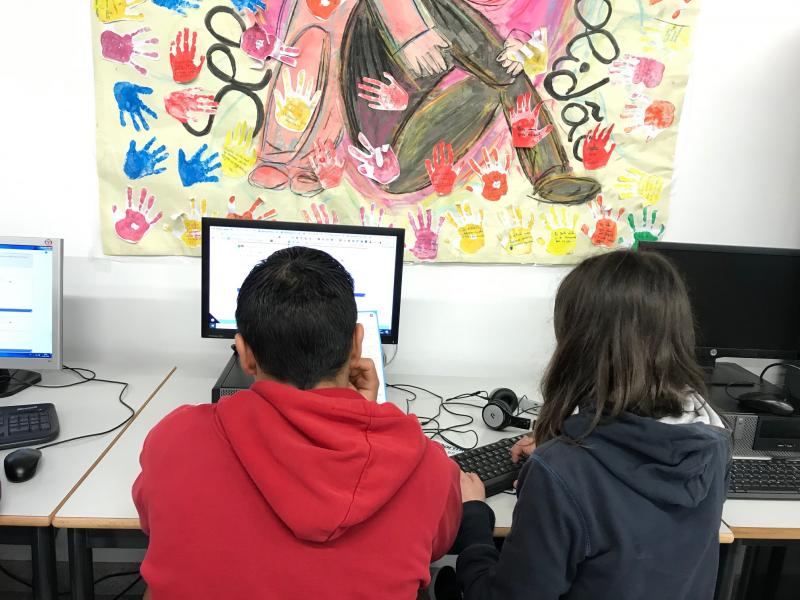 Environment pollution
Have you seen the news? Are you concerned about the state of our planet?
Do you think our school has done a good job in this area? or can we do better?
And in the family ... at home and in the community, has everyone been doing their best? Do they have the knowledge and motivation to act?
Pollution, environmental degradation and climate change. These are the main concerns of the Portuguese with regard to the country's environmental sustainability (in Jornal Público, 2019).
Shall we start this adventure?
This project has three main objectives:
1- Motivate students and their families for environmental issues.
2- Motivate the school community in general.
3- Change waste selection and recycling habits.
Activities to Develop
1- Preparation of the questionnaire for the school community.
2- Preparation of the questionnaire for the family.
3- Application of questionnaires
4- Analysis of the questionnaires
5- Dissemination of results and awareness campaign through the posting of posters in the school space.
Shall we start this adventure?
Tundke
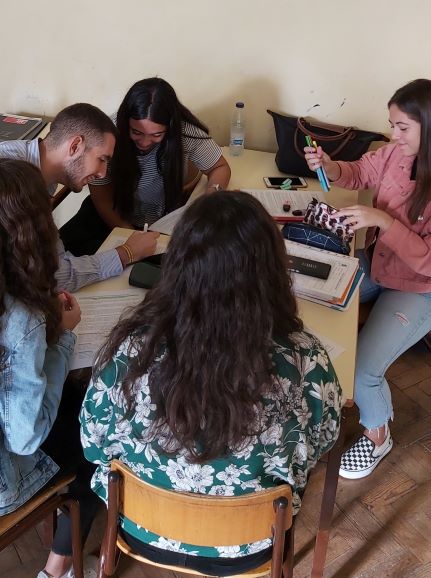
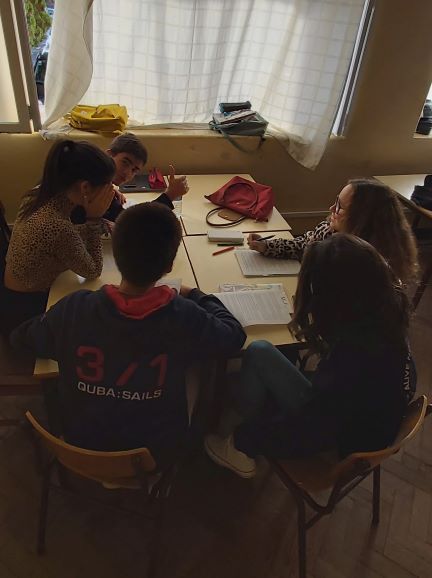
We present the "Feelings" of our classmates in group reflection:
1- Have you seen the news? And are they concerned about our planet?
A: Yes, most of the time.
A: Yes, the situation on our planet is currently very serious and out of control. Man is polluting the planet without worrying about the health and well-being of human beings in future generations. If the situation is not controlled in time, our descendants may not have drinking water, food, or even worse, oxygen.
A: We see in the news, every day, that water is running out, several places are burning, global warming is melting Antarctic ice and animals are losing their natural habitats, making them stay in extinction pathways. The seas are becoming more and more polluted, more and more hurricanes, earthquakes and tsunamis are occurring; for example, in the Philippines, the Taal volcano has just erupted, causing a lack of oxygen and forcing the evacuation of the nearest populations.
A: Yes, we are watching the news, there are many animals in danger of extinction, the forests and seas are very polluted, for example: the Amazon and Australia had fires, killing thousands of living beings.
A: Yes, we are very concerned about the situation, as we see disastrous news every day, for example: fires in Australia and the destruction of the Amazon rainforest.
2- Do you think our school has done a good job in this area? Can we improve? What?
A: At school, most employees, students and teachers collaborate in recycling lids and separating waste, but we can all improve even more, for example: by reusing our school supplies; separating organic waste in classrooms; spending less electricity (turning off classroom lights and opening shutters); minimizing the use of plastic at school; replacing plastic with reusable paper.
A: I think the school is doing a good job, placing recycling bins scattered everywhere, but we could improve by taking field trips to the woods and beaches to collect the garbage / recycle / plant new trees. At home, we can save energy and water consumption and avoid using plastic straws. We think that some initiatives should start in our home, creating good recycling habits and saving energy and water, for example.
A: The School has done a good job, namely with projects to raise awareness about the environment and to place recycling points, but we could do much more ...
A: Yes, the school is doing a good job in relation to recycling. Recently, trash bins have been scattered around the corridors, but we can do more, such as awareness campaigns for recycling and energy saving and water consumption initiatives at school.
A: The school has good and bad things, good things are what we recycle and we are doing projects on that. We can also make excursions to the beaches to clean them and advertising campaigns to draw attention to this matter.
A: At school, most employees, students and teachers collaborate in recycling lids and separating waste, but we can all do even more, for example: reusing our school supplies, separating organic waste in the classroom, spend less electricity, turning off the lights in the rooms and opening the shutters, minimizing the use of plastic in the students' bar, replacing the plastic with reusable paper.
Kujutage ette
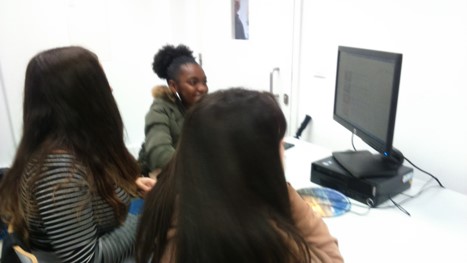
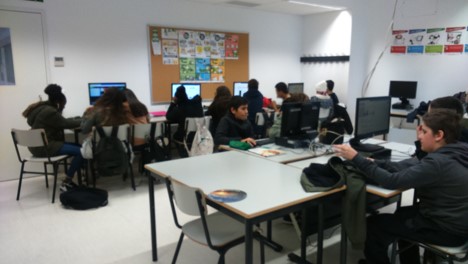
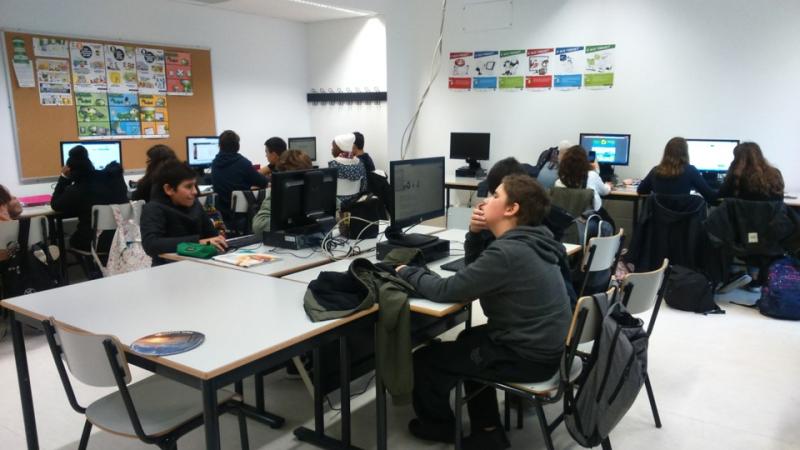
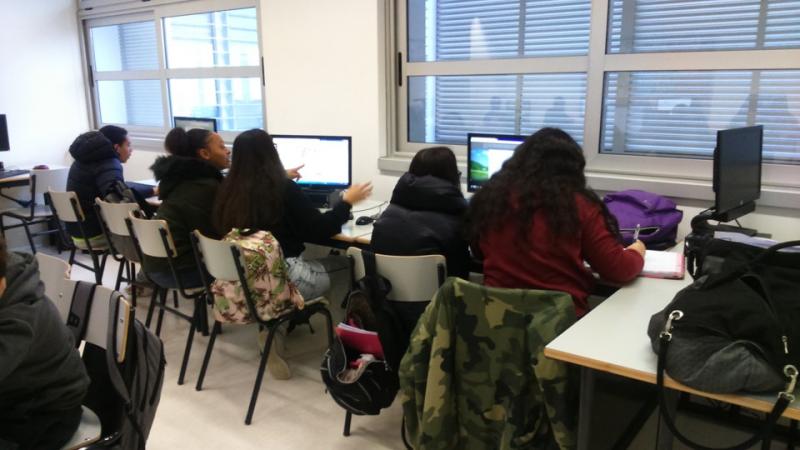
In class, with the help of a computer, we searched the "Ponto Verde" website for information on recycling habits.
We respond to a quizz on the "The public" site to test our own knowledge of recycling. It was very funny.
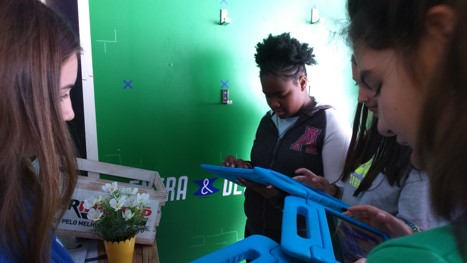
The groups, with the help of the teacher, did research on campaigns and actions taking place in the geographical area.
The students found that the Cascais Town Hall has some ongoing initiatives:
- Morning in the garden: planting native vegetables and plants;
- Intelligent system helps Cascais to reduce the number of waste collection: this system improves and reduces the weekly collection service per box and avoids possible inconveniences, even when there is an increase in the number of people in the village;
- Cascais saves 600 thousand euros a year with smart garbage collection: the project includes several types of sensors and allowed greater efficiency on routes and great cost savings;
- 275 classrooms will have new Ecopoints: Initiative covers 1st cycle schools and kindergartens
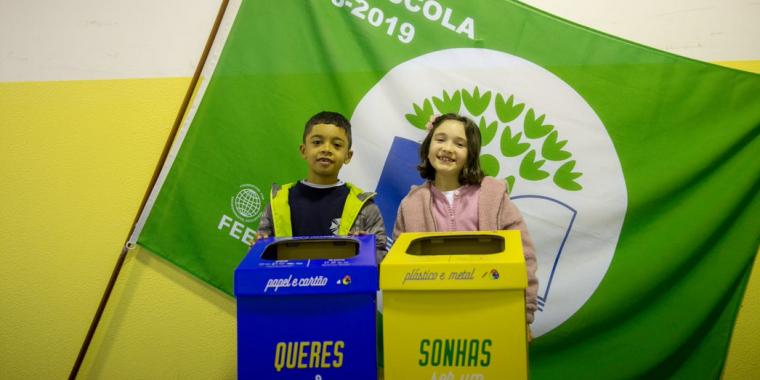
At the end of the session, we decided to do a questionnaire to understand the habits of the school community regarding recycling.
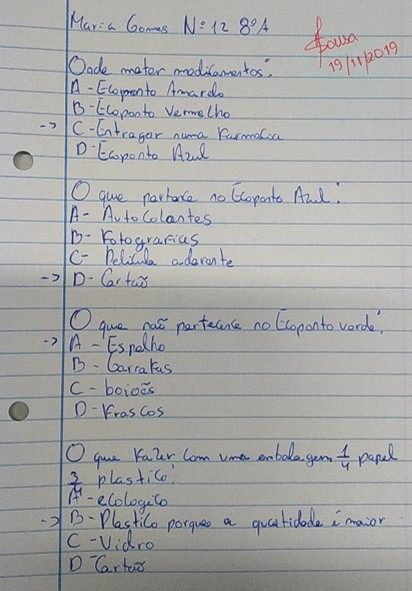
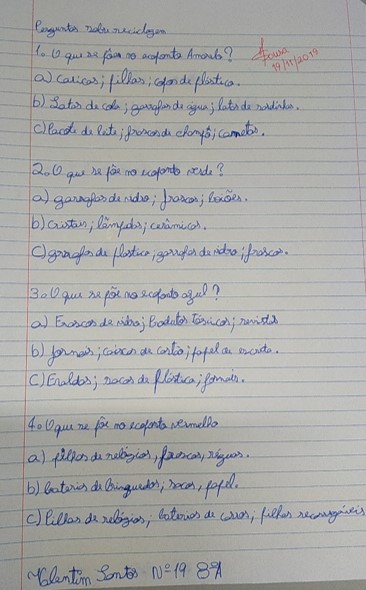
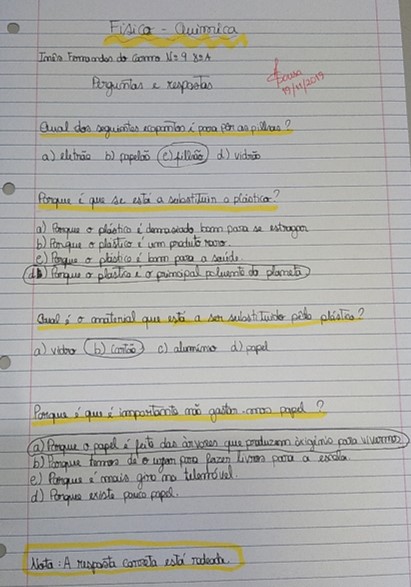
Loo
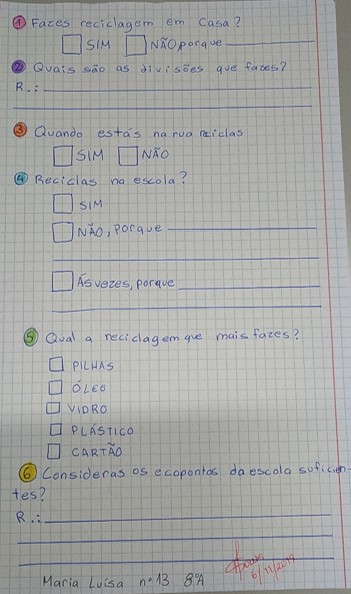
In the classroom, we and the rest of the class created a questionnaire regarding recycling habits, waste separation and what we can improve in relation to it.
This questionnaire, conducted by the students of 8B, is anonymous and is intended to study the recycling habits / knowledge within the school community.
- What year/grade are you in?
□ Year 6-7 (Grade 5-6) □ Year 8-10 (Grade 7-9) □ Teacher/school employee
- At home, do you usually separate garbage/trash for recycling?
□ Yes □ no □ don’t know
(If you recycle, please skip to question 4)
- Why do you not recycle at home?
□ Lack of public recycling bins in my area □ Public recycling bins are too far away □ lack of habit
□ too much work □ other reasons
(f you don’t usually recycle at home, skip to question 6)
- If you do recycle, what do you recycle?
□ Paper/Cardboard □ batteries □ glass □ plastic □ corks □ others
- How regularly do you use the recycling bins?
□ Everyday □ once a week □ once a month □ don’t use them
- Do you know what each of the different coloured recycling bins correspond to?
□ Yes □ No
- Where should you dispose of a broken mirror?
□ Yellow recycling bin □ green recycling bin □blue recycling bin □ normal/everyday bin
- Where should you dispose of medicine packages?
□ Yellow recycling bin □ blue recycling bin □ normal/everyday bin □ at the pharmacy
- Which products should you dispose of in yellow recycling bins?
□ Toothbrush □ tuna tin □ plastic cutlery □ batteries
- Which products should you dispose of in green recycling bins?
□ Glass dish □ lightbulb □ wine glass. □ wine bottle
- What type of paper should you dispose of in the blue recycling bin?
□ Stickers □ photographs □ tissues □ none of them
- Do you think our school is environmentally friendly?
□ Yes, why? _______________________________________________________
□ No, what can we do to make it better?_________________________________
Thanks for your cooperation!!
Due to the confinement by Covid-19, it was not possible to continue the project.
After preparing these questionnaires, they should be applied to students, teachers and school staff, treating the collected data, organizing them in frequency tables, graphs and calculating some statistical measures. Finally, the conclusions reached by the students would have been discussed in class.