Hosted by OSOS , contributed by mariagia on 11 July 2019
 The activity aims to strengthen pupils' citizenship and to raise awareness among all participants - parents, teachers, students - against social and environmental prosperity issues such as pollution from plastic. The project will include both exploratory, reflective collaborative learning and collaboration among the members of school community, expert scientists and local authorities. The dissemination of students’ knowledge and experience will be reflected in the writing of a theatrical performance that will be presented to the local community. Such a multidimensional educational framework that is crucial to students' citizenship can help them to reap: expertise, self- confident for self-directed activism.The activity aims to strengthen pupils' citizenship and to raise awareness among all participants - parents, teachers, students - against social and environmental prosperity issues such as pollution from plastic. The project will include both exploratory, reflective collaborative learning and collaboration among the members of school community, expert scientists and local authorities. The dissemination of students’ knowledge and experience will be reflected in the writing of a theatrical performance that will be presented to the local community. Such a multidimensional educational framework that is crucial to students' citizenship can help them to reap: expertise, self- confident for self-directed activism.
Age of students participants: 13-15 years old
Activities will be developed during the "Omilos of science" on an experimental model high school that is a two hours' course taking place after every day schedule, in specified day, once a week and students select to participate on it.
Science, Geography, Mathematics (statistics), ICT, Arts.
The theoretical background of the activity is Latour's Actor-network Theory which, among other things, suggests that, in human decisions and actions both material and immaterial factors have an equal role as well as Ranciere's pedagogy of emancipation, which considers that equality is a prerequisite for democracy and not an aim pursued.
The teacher who can help the student on this path is called ignorant teacher, not because he does not know anything but because he does not learn his own knowledge on his students. And on the other he leads them to wander in the forest of things and points, tell what they saw, what they think about what they saw, verify it and verify themselves. This view is at the opposite of educational policy that defends the educational aim of ensuring equal opportunities, which is adopted as a fact and value of life.
Methodology articulated on student-centered inquiry learning, involves the continuous use of concept maps. Students once acquiring the necessary scientific knowledge will conduct a social research in their local community.
According to the above this activity take into account all the dimensions of RRI: of (1) Anticipation and reflection, (2) Inclusion and Diversity, (3) Responsiveness and Adaptive Change and (4)Openness and transparency.

Tundke
ΣΚΟΠΟΣ ΤΗΣ ΕΡΕΥΝΑΣ
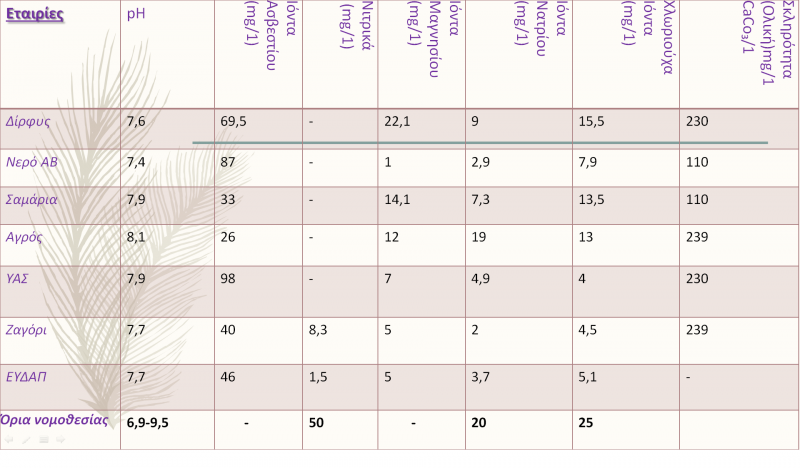
Αντικείμενο της έρευνάς μας είναι η ποιότητα του νερού που πίνουμε είτε από την βρύση είτε από πλαστικά μπουκάλια καθώς και η άποψη των φίλων και μαθητών του σχολείου μας για αυτή.
ΣΤΟΧΟΙ ΤΗΣ ΕΡΕΥΝΑΣ
Είναι το πλαστικό μια ακίνδυνη λύση;
Ή μήπως το εύχρηστο αυτό υλικό συσκευασίας επιβαρύνει το περιεχόμενό της;
Δύο φάσεις έρευνας
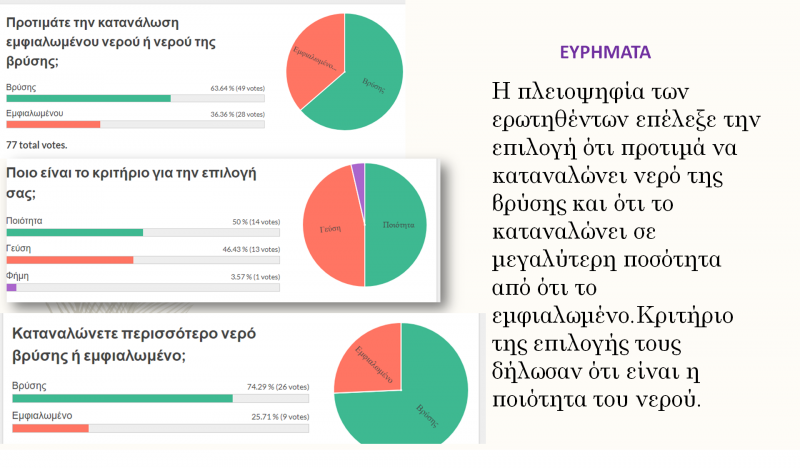
Δεύτερη φάση, ενδεικτική κοινωνική με τα μέσα κοινωνικής δικτύωσης με την οποία διερευνήσαμε την τάση των ατόμων του περίγυρου μας όσον αφορά στην προτίμησή τους στο νερό που πίνουν.
Kujutage ette
ΜΕΘΟΔΟΣ
Δύο φάσεις έρευνας
Πρώτη φάση, διαδικτυακή με την οποία αναζητήσαμε πληροφορίες σχετικές με την ποιότητα του νερού που πίνουμε καθώς και τις συνέπειες από τη χρήση του πλαστικού στο νερό, στο περιβάλλον και στην υγείας μας.
Δεύτερη φάση, ενδεικτική κοινωνική με τα μέσα κοινωνικής δικτύωσης με την οποία διερευνήσαμε την τάση των ατόμων του περίγυρου μας όσον αφορά στην προτίμησή τους στο νερό που πίνουν.
Loo
Jaga