Hosted by OSOS , contributed by anadrougka on 17 July 2020
Δείτε εδώ την δραστηριότητα στα Ελληνικά  / Veja a atividade em Português
Project Presentation
The “Students Study Volcanoes” accelerator focuses on the study of a physical phenomenon with great societal impact and proposes pedagogical practices based on inquiry‐based methods that are more effective in science education. The objective of this combination is on one hand to increase children’s and student’s interest in science, on how science is made and how it affects everyday life, and on the other to stimulate teacher motivation on up‐taking innovative teaching methods, subjects and practices to enrich and renew the science curriculum.
This accelerator aims to shed light in the mechanisms of volcano eruption, provide students and schools with educational scenarios employing state of the art simulations and remote labs which can be used to help forecast the possibility of a volcanic eruption and finally provide students with the means and methodology to raise awareness regarding volcanic dangers. This way, the students are trained to become sensitive and informed citizens, responsive to the needs of their local community, who will be able to understand and in the future manage crises in a consistent and minimum-risk fashion.
Information for the teacher:
This accelerator was created in the framework of the project - IDiverSE (Islands Diversity for Science Education - 2017-1-PT01-KA201-035919), co-financed by the Erasmus+ agency of the European Union).
Teachers are invited to explore it, copy it and edit whatever they feel necessary before they share it with their students. Specific guidelines were added to the four phases, where teachers can read the full content of the accelerator.
You can find more information as well as translation of this project to other languages through this link: https://idiverse.eu/students-study-volcanoes/
RRI Principles
One of the key aspects of OSOS is the inclusion of RRI - Responsible Research and Innovation - principles (more information at RRI-Tools.eu). This is how this accelerator fits in the RRI model:
|
Governance |
Students will be able to share their activities and conclusions with different stakeholders at local, regional and national level using |
|
Public engagement |
Different stakeholders will participate throughout the project in order to enrich the results obtained in their development. In addition, students will be in contact with other OSOS Schools Participants, creating a network to exchange content around volcanology. |
|
Gender Equality
|
Natural disasters such as volcanic eruptions affect everybody equally, regardless of gender. I.e.: Both genders will be equally represented throughout the project and students will investigate the effect volcanoes have on both women and men of the areas affected by volcanic eruptions. |
|
Science Education |
Students can develop changes and proposals to scientific policies around volcano monitoring, working on a series of conclusions that will have scientific value and can be used in the future. They will also work on real seismic data from volcanic areas such as Azores, which will help them understanding the problem.
I.e.: students, in collaboration with stakeholders involved in this Accelerator, will be able to work through the scientific method to know more about volcanoes, their consequences and the problems they pose for the society. |
|
Ethics |
Students will know how to manage real data and will be able to know the importance of working and experimenting with this type of information, reflecting on the need to provide full mechanisms for scientific research.
I.e.: when working with real volcanic data, students will value the integrity of these data and the importance of being responsible for its use, as well as for the conclusions and results extracted. |
|
Open Access |
Society in territories nearby a volcano need to live with constant fear of an eruption modify their lives around this reality, many times working with scientists in community based science projects to help prepare for a potential disaster. On the other hand, people who have no active volcanoes in their vicinity are not aware of the constant struggle of the first category of people and their constant danger and struggle. This Accelerator plays a very important role in disseminating intermediate results and conclusions to the public in order to: raise awareness, notify people away from volcanoes for the needs of those in constant danger and facilitate the possibility to contribute either by volunteering, or by sending food and other resources necessary. Students will be able to elaborate these materials and share them openly, and completely free of charge, to all those sectors that may be interested (such as general public, families as well as local, regional and national stakeholders).
I.e.: during this project, students can begin to raise what issues may be interesting to disseminate among the environment in order to, at the end of the activity, create the materials to disseminate, for example through leaflets or through the Internet. |
Feel
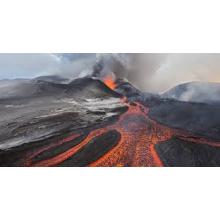
Volcano eruptions can be identified as one of nature’s most spectacular and simultaneously hazardous phenomena. In more than 1500 places of our planet where tectonic plates diverge or converge, the ground will shake and hot molten rock will surface from the depths of the earth, exploding in a burst of heat, emiting fast moving hot ash, toxic gases and rock and of course hot lava which flows destroying everything in its passage.
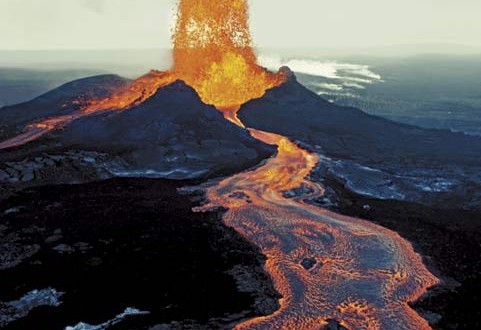
Fig.1: Image from the explosion of the Kilauea volcano in Hawaii in May 22, 2018
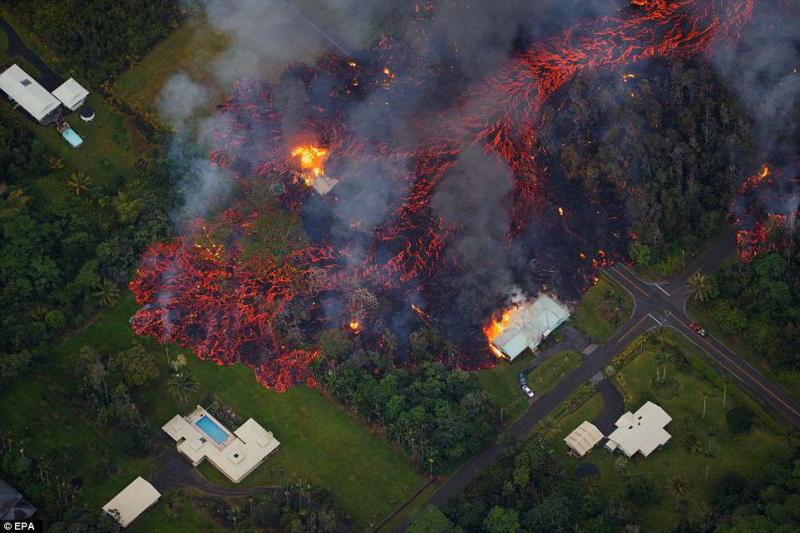
Fig.2: Lava from the Kilauea explosion expanding and destroying everything in its passage
Humans residing in the vicinity of active volcanoes live in constant danger. Their lives and lifestyles are centered around the fact that they live near the clutches of an unpredictable sleeping giant. The reality of a hasty evacuation, the potential for loss of human and animal life, the destruction of property, the environmental disaster and loss of any conception of safety are hard facts that citizens of volcanically active territories face in a daily fashion.
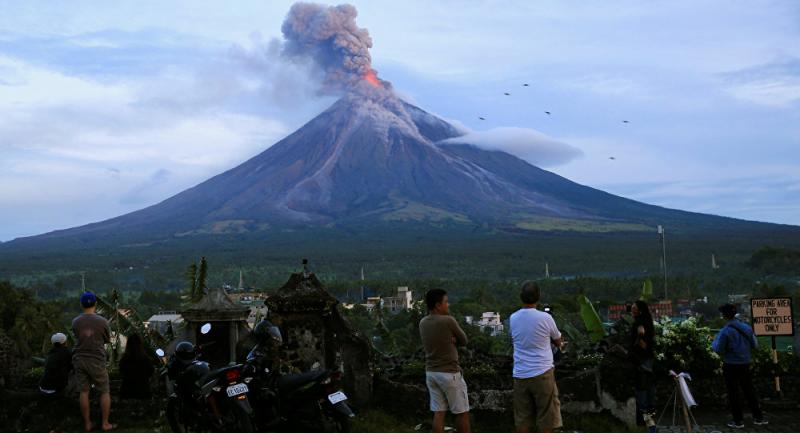
Fig.3: In January 2018, More than 80,000 citizens of the Philippines had to leave their homes due to the threat of eruption of the Mayon Volcano
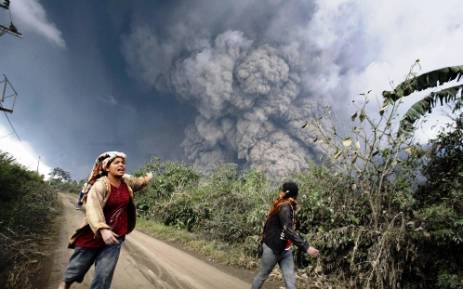
Fig.4: Residents run away to escape from hot volcanic ash clouds engulfing villages in Karo district, Indonesia, during the eruption of Mount Sinabung volcano in February 2014. Picture: AFP.
Can those who do not live in the conditions of constant danger really comprehend the daily struggle that local citizens face? Humans cannot switch nature on and off. However, science provides us with tools which can help us minimize loss in life, destruction of property, and environmental disaster. What is the role of scientists in the reality of a forthcoming volcano eruption? How can citizens organize themselves and prepare for such a phenomenon? What is the role that the school, a hub of knowledge transfer and openness, could play in order to help ensure the wellbeing of local society?
Is it possible to raise awareness of people living in safer conditions regarding the daily hazards that volcano-neighboring communities face?
Imagine
σδη
Create
ηδ