Hosted by OSOS , contributed by nuclio on 21 May 2018
Veja a tradução para português  / Ver esta actividad en español
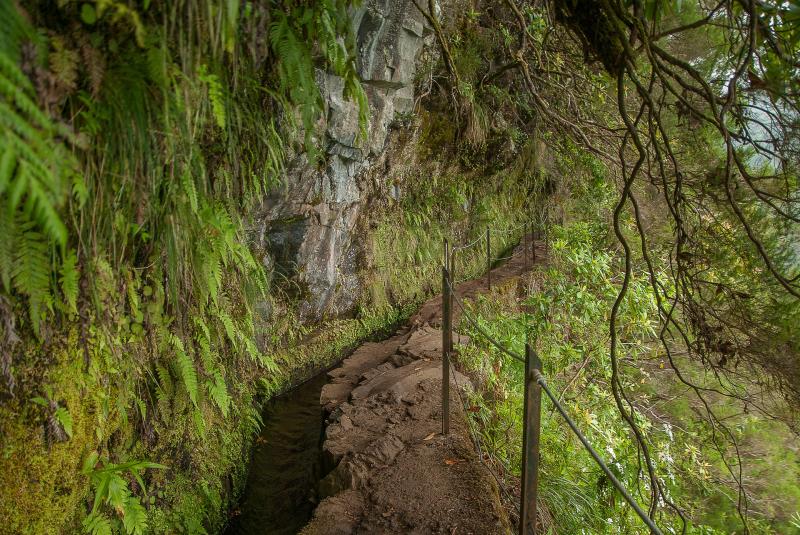
Science Trails are physical trails with stations, or stops, created by the students, which aim to raise awareness to topics particularly relevant in the framework of their community.
Through the exploration of school contents, students will follow a specific methodology to explore their community, involve important stakeholders and co-create stations that higlight their community's uniqueness and brings awareness for important local and global issues.
The methodology used in this accelerator was created under the framework of the Eramus + project called IDiverSE - Islands Diversity For Science Education (2017-1-PT01-KA201-035919) and can be explored by any interested teacher/student, regardless their location on Earth.
Teachers and students who follow the proposed methodology can submit their work and receive a certification. (report forms presented in the "share" phase)
For additional support contact: info@idiverse.eu
Visit the project's website: http://idiverse.eu/

IDiverSE, aims at addressing the diversity of Islands (and all places of the world, in general) – from geographic and biological diversity, cultural and historic heterogeneity to societal challenges - through collaboration among students from different parts of the world and with the exploration of school contents.
In order to create an effective Science trail, students have to select the most important topics to focus on, learn about them in depth, explore the community to fully see how it relates to each of the topics, come up with effective and applicable sollutions for the identified problems or to achieve the defined goals, involve important stakeholders in the process, decide what type of stations and materials they will create to share their sollutions and then create their science trail to share their work with the community.
The full process is in line with the Inquiry-Based Learning and it is described in the four phases of the Design Thinking methodology "Feel", "Imagine", "Create" and "Share".
Although guidelines are provided in this accelerator for the creation of science trails and they can be followed on their own, it is recommended that the participating students first carry out one of the project's activities, which can be found here and in the OSOS Portal as well. In these activities, students will follow very detailed guidelines which will introduce them to Inquiry and to the Design Thinking methodology, preparing them to then assume leadership in the creation of their science trail stations. All the project's activities aim to target global issues that can be explored localy and hence, they can be already used in the creation of the science trails as possibly one of the stations.
List of IDiverSE activities (to be regularly updated):
- UV radiation: friend or foe?
- Marine Waste (soon)
- Microbeads (soon)
- More to come
What does the methodology involve?
The creation of the Science trails as well as all the IDiverSE activities involve the same principles and steps:
-
Personal Geography
Before choosing any activity to implement, students should first reflect on what are the most important topics for them, personally. Personal Geography is an artistic tool that allows students to express their emotions, thoughts, opinions, regarding any specific topic.
As such, in the first step of involvement of the students in the project is the Personal Geography challenge. Students are presented with the following sentence:
"Me in my island, my island in me" (if students are not located in one island this sentence can be adapted. E.g. "me in my community, my community in me" or "me in my school, my school in me", etc.)
Then, reflecting on this sentence, students are asked to make a drawing that represents it personally. It can be abstract, colourful or black and white, etc. Each student decides how to create their art and it doesn't need to make sense to others.
After each student has created their own expression of their place in their island/community/school, a discussion is promoted that will lead to the conclusion about what are the most relevant topics to focus on for each students, group or for the whole class.
-
Inquiry-Based Learning
During the whole process, students will be following the Inquiry-Based Learning principles and teachers will be motivated to assume inquiry attitudes to support their students
-
Interdisciplinarity
Throughout the project's activities suggestions of possible collaborations among teachers of different subject domains are presented. For the creation of science trails, it is very important to involve teachers from different subject domains to support the students from their specific perspectives.
-
Design Thinking
Students follow the four phases of Design Thinking (Feel, Imagine, Create and Share), in order to dive deep into their community, involve the community and create projects with and for the community
-
Collaboration overseas
All the IDiverSE activities involve a small collaborative project accommodated in a platform called Globallab. In this platform, students will find specific guidelines to follow to collect data in their community and upload it online. These specific guidelines lead all students across the globe to collect the same kind of data, using the same tools and the same methods, allowing for the comparison of their results in order to achieve global and local answers for the same problem. Using this platform, students can communicate with each other and exchange ideas about their place in the world and their community. This collaboration is strongly motivated in each activity and should be maintained throughout its implementation.
Through the project's website, teachers have access to a collaboration platform where they should communicate to each other before implementing any activity, in order to establish a previous collaboration and to ensure that their students also communicate with each other.
For the creation of the Science Trails there is no Globallab project prepared as this would limit the students’ freedom when choosing topics. However, by registering on the platform, each user has the possibility to create on project. As such, by establishing a previous collaboration, teachers can then share their students’ projects with others and ensure the collaboration of their students. Teachers and students can also decide to use other ways of communication and collaboration.
Possible ways of promoting this collaboration are:
- In-class skype meetings;
- Creating Facebook group for students;
- Creating a chat platform like Slack, for example;
- Exchanging emails;
- Exchanging letters;
- Etc
Learning Objectives
By being introduced to the IDiverSE activities and then taking leadership over the construction of the Science Trail stations, students will learn the scientific method and the power of the Design Thinking methodology.
Furthermore, teachers should make an effort to work on the creation of the science trails around the school contents, whatever subject domain they are. When thinking about real life it is very easy to discover connections between all subject domains. This is something that should be enhanced throughout the creation of the science trails, promoting the learning of the school contents while at the same time developing fundamental skills such as:
- independence and self-security, Creativity and artistic thinking, Communication, Critical Thinking and problem solving, Collaboration, Tolerance and respect, Global citizenship awareness, etc.
Responsible Research and Innovation
One of the key aspects of OSOS is the inclusion of RRI - Responsible Research and Innovation - principles (RRI-Tools.eu). This is how this accelerator fits in the RRI model:
|
Governance |
This accelerator promotes a transparent and collaborative research so as to contribute to the development of all the involved communities. In this project, students reflect with the community on the problem and will co-create possible solutions sharing, in the end, all their work, including their research process. Furthermore, students will share their results and conclusions with other communities in islands worldwide, through collaboration initiatives. |
|
Public engagement |
Students will involve their communities as well as important stakeholders, i.e., experts in the problem they are working on. After collecting their data, students will discuss with their parents, other family members, friends, community, etc, about possible effective and applicable solutions to the problem in their islands. The whole activity will focus on the engagement of students with their community so as to take into account their real needs when solving a problem. |
|
Gender Equality
|
The problematics involved in this project are transversal for all humans in the world, regardless of their gender. At no moment, the gender of the students will be asked or relevant. On the resources created for the teachers advise is given in order to provide equal opportunities, not only for both genders but also among all the different personalities. In the guidelines given to the students an effort is made to use both male and female role models as inspiration, as well as male and female icons and individuals in pictures. Teacher are also advised to find experts of all genders and invite them to work with their students. |
|
Science Education |
Students will be engaged in Inquiry-Based activities that will lead them through the scientific method and reasoning. It is expected that after creating their projects, students will have understood what science is and how scientific knowledge can be obtained and communicated. By working with the community and sharing their work in the end, students will bring science education to their community as well as awareness for important scientific questions. |
|
Ethics |
One of the goals of this project is to raise awarenes in students and all involved community that we are all part of one system and that responsible for our actions and for the world that surrounds us. We are an integrating part of a community, including our school, family, community, country (or in this case, island), etc.. As such, during the project students will understand that cooperating and collaborating is a much more valuable effort than competing, and that knowledge and good ideas should be used in an ethical way and shared with others. When in collaboration, Scientists can overcome nearly any obstacle and provide what is necessary for a safe, developing and growing society. Furthermore, by involving their community, students will find different personalities and backgrounds and will exercise their tolerance and respect for diversity. |
|
Open Access |
After finishing their research, students will share all their work with the community, providing a fully open access to their data and conclusions. |
Participation of stakeholders
Throughout the whole process of creating the science trail, students will involve their families, acquaintances, experts and their surrounding community in the different activities, by establishing conversations, inviting them to the school, exploring their opinions and ideas, retrieving data from them, and sharing all the results. Students will work together with their communities in order to co-create solutions and improvements for important and relevant issues, at a community level.
Motivation for this project
Our key motivation is to raise awareness for the importance of valuing and protecting the unique cultural and natural heritage the islands of the world, while giving teachers the opportunity to renovate and update their teaching practice to a more student-centred approach, that focuses on the development of key 21st century skills.
While students in the islands may feel somehow isolated, we aim at providing them the opportunity to collaborate, communicate and co-create with students from other islands and other parts of the world, creating a network of work and friendship, that may last beyond the duration of the project. This is also applicable to the teachers involved in the project, which will be working in a European network, making important social overseas connections.
URL + info: http://idiverse.eu
Feel
During this activity students will work together to create a final science trail for their community. Teachers from the school can gather and work in an interdisciplinary way with the students. By the end of the process, the school should have created one science trail with the collaboration of all involved students. Each class or group inside the class should be responsible for one station, for example. Groups of students can be composed of students from the same class or students from different classes and grades. There is no particular rule in how this should be organized, provided the school creates only 1 science trail with as many stations as desired.
Students will begin by deciding on which topics they will like to work on, to create the stations of the science trail, research those topics in depth, collaborate with the community, experts, and any other important stakeholders to collect data and come up with solutions, choose where the science trail will be created, create the stations and then, finally share.
Throughout their process, students should register every detail of their journey with pictures and videos in their project here in the Portal so that by the end they have a complete report to share with other.
Teachers should create one copy of this accelerator for each group. Teachers will then be able to fully edit their copies and adjust them to their students needs and level of understanding. Teachers should make sure that they include all the proper guidelines for their students in the project, before they share them.
1. Choosing the topics
The first step of the creation of a Science Trail is the reflection about where we are and the community around us. For this reason, the first step of the process will be to promote the reflection about the place of each students in his/her community and what are the main aspects that should be focused on when creating a science trail for and with the community.
In order to begin this reflection, we propose an artistic exercise that will help students look deep into their life and discover what is relevant for them. This is called the Personal Geography mapping and it begins with the reflection:
"Me in my island, my island in me"
Click here to download guidelines on how to introduce this method to your students and how to guide them into creating their personal geography maps.
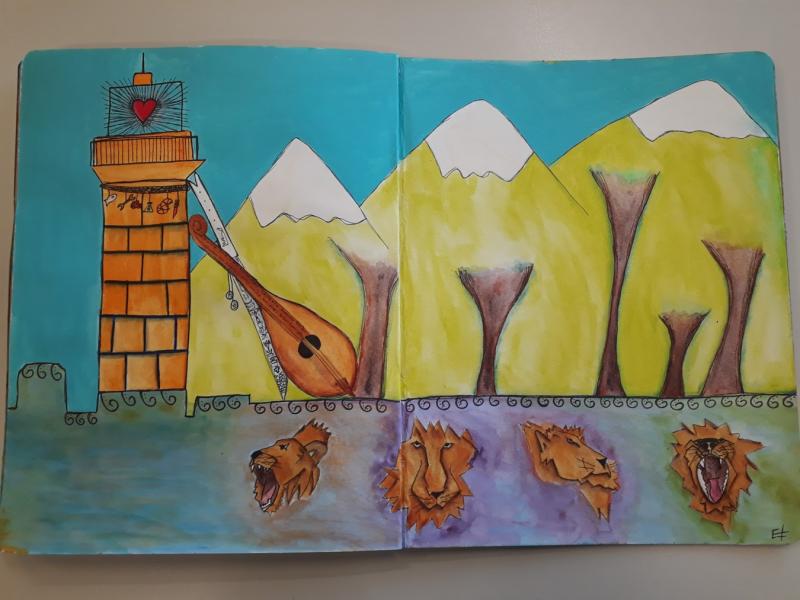
(personal geography map created by Eleftheria Tsourlidaki)
To see a description of the concepts explored in this picture click here
Through the Personal Geography mapping, in this context, it is important to guide students into highlighting not only the main problems that should be addressed in their community but also the strong points about their culture, history and local society. In a science trail, these should also be represented.
After creating their drawings (following the project's methodology guidelines), each student should identify the most important features of their islands, from their perspective. Teachers can use a Padlet, Mentimeter, or any other tool like post-it notes, for example, that students glue to a wall or board. After each student has identified his/her most important topics, the whole class should discuss about what are the most common ideas among them and if they feel the same or not. Each student should have room to argue why he/she thinks that the chosen topics are important.
After this, the class should be divided into groups (as many groups as pretended stations of the science trail) and each group should choose one (or more) topics to work in to create one (or more) station for the science trail.
2. Defining the physical trail and the target community
After each group has decided on what topic they are going to focus, the number of stations of the science trail should be defined. In principle the number of stations will be equivalent to the number of working groups. However, this is flexible and each school should decide on what is best.
A station of a science trail is a physical stop where the visitor goes through an interactive activity/game that will serve the following purposes:
- Introduce the topic (usualy through a game, quiz, fun experiment, etc.)
- Raise awareness to the problem (a video, another game, etc.)
- Present the sollutions and how they can be applied
Considering this, it is important to establish from the begining what type of stations the science trail will contain:
Different types of stations can be planned:
- Self-sustainable station where the accesses a link or a QR code that leads to an online platform where the whole activity can be performed.
- Self-sustainable station created in the form of an exhibition with physical materials that are kept in place
- Stations that require the presence of at least one student to lead the visitors through the activity (this is the recommended for at least the release of the science trail to the publick)
Having decided on what types of stations the science trail will have, the target community should be defined and the place where the science trail will be built should be chosen. This can either be inside the school, in a public garden, on a shopping mall, etc. There is no limit to the possibilities and this should be defined among the school and if necessary the city hall. After being defined, students should actualy map the trail where the stations will be exposed in a Map, marking the trail, the stations and with a proper scale.
E.g. - If the target community is the elderly population, then it makes no sense to create a trail in a forest that could be hard for this public to walk in. Maybe in this case the best place would be the city garden or even the school.
If the target public is the parent community, then the school could be a good place.
If the target is the tourist community that visits the town, then maybe it could make sense to prepare a science trail in an already existing forest trail.
Etc.
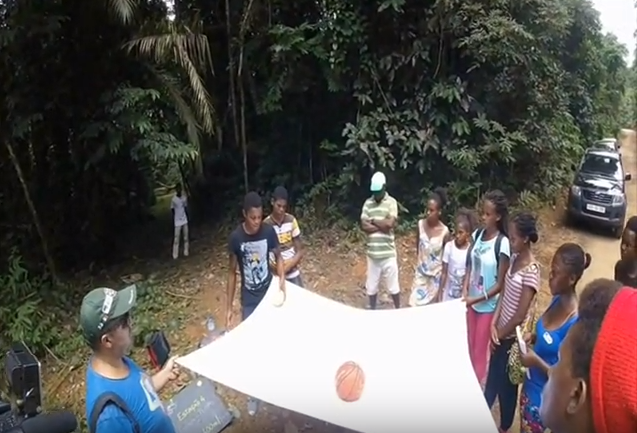
See an example of a science trail created and maintained by students in Principe Island:
3. Research about the topic and the community
After having decided in what topic they will focus, students should carry out a research activity related to the topic at hands and discover how the community relates to the topic.
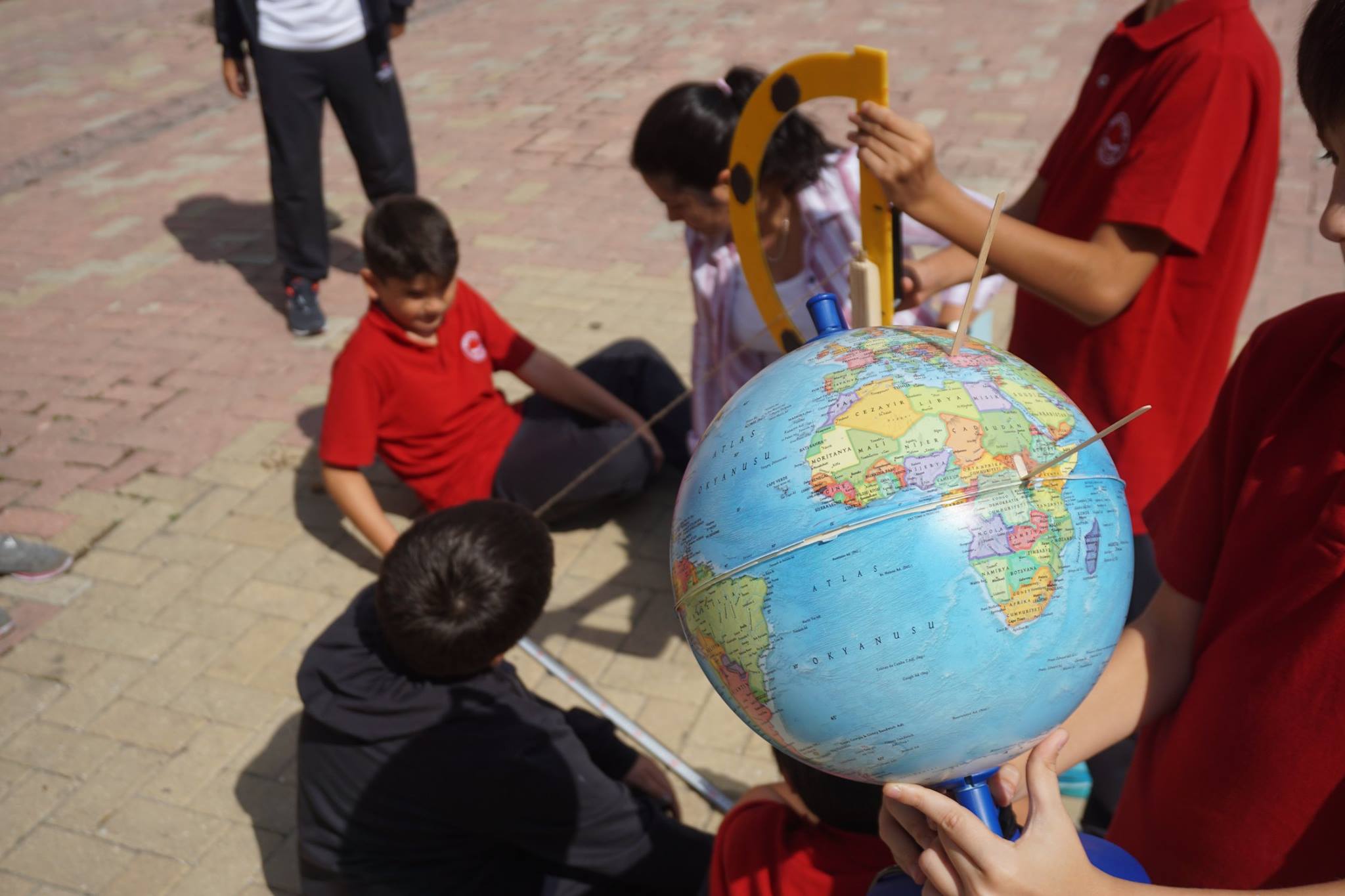
3.1. Learning how to learn (optional but recommended)
As suggested in the description of this project, the most effective way to teach students how to do this, is to lead them to an example activity that guides them through the whole methodology.
As such, at this point, students should explore the IDiverSE activities list and see if they discover an activity related to their chosen topic. If none of the activities relates to their topic, they should choose one to implement nonetheless, in order to get acquainted with the methodology and gain experience to proceed with the creation of their station.
In case students found an activity that they want to implement and that could be used for the creation of their station, then they can take advantage of it and use their results to optimize their work and create a station with their final output.
3.2. Time for action
After being acquainted with Inquiry and Design Thinking, students should take leadership of their progress and begin their own explorations about the topic on focus.
Students should first plan how they are going to research their topic. They should follow the steps of a proper scientific research:
- Begin with one or more question
- Make hypothesis
- Plan how they are going to test their hypothesis
- Put their plans into action and collect their data
- Organize and analyse their data
- Draw conclusions
The main dimensions that students should cover when doing their research are:
- What do I know about the topic and how can I learn more?
- How does this topic relate to my community?
- How does my community relate to the topic?
- What stakeholders should I involve in my process?
For this, students should include in their plans the involvement of the community and visits to the field. They should talk to experts, to their families, maybe interview their community, etc. whatever necessary to extract the information they need about the topic to then proceed with developing solutions to improve it (in case it is a problem) or to highlight it in case it is a strong point about the community).
4. From local to global

This part can either be done after or during the students' research about their topic(s). One of the most important aspects of IDiverSE is the collaboration overseas. Students should know that they live in a place that is unique and special but that they are also connected to other students all over the world. In today's world, isolation becomes less relevant as we are one click away from many other people that feel the same things that we do.
So, students should consider a way of collaborating with students from other places of the world in order to collect the same kind of data and in the same way. Students can explore the Globallab platform to see if there is any relevant project already created about their topic, or they can register and create their own project. If this is the case, teachers should communicate with each other (through the IDiverSE website or any other means desired) and exchange their students' projects so that they can collaborate. Alternatively, teachers should begin collaborating with each other even before their students start their projects and prepare communication channels for their students.
The goal of this collaboration is to learn about:
1. How does the topic relate to other communities around the world?
2. How do other communities around the world relate to the topic?
3. What good examples can I bring to my community from other community(ies) around the world?
4. What good examples can my community give to others around the world?
Students can also communicate to exchange thoughts and ideas and bring some cultural diversity into their projects.
NOTE: Make sure that each group establishes a collaboration with at least one student/group from another country.
After students finalize their research and feel that they have collected all the information they wanted, they can proceed to the "Imagine" phase of their project.
Imagine
At this point students are experts on the topic they are working on. They are now aware of the problems or strong points in their community, related to the topic and they have a good idea of how communities around the world relate to this topic. Students have also established a collaboration with students from other places of the world.
1. Discovering solutions
Students should gather all their information and all their conclusions to begin their search for solutions. If students are focusing on a strong point of their community, they should think about solutions to increase awareness related to those strong points and how this strong point can be used to promote a sustainable development of the community and to bring progress to it. If students are focusing on problems, they should start thinking about solutions to minimize, prevent and even eradicate the problem. In both cases, students should also think about with to promote awareness for the importance of their solutions so that they become more effective.
This can trigger a second round of research repeating the previous 6 points:
- Begin with one or more question
- Make hypothesis
- Plan how they are going to test their hypothesis
- Put their plans into action and collect their data
- Organize and analyse their data
- Draw conclusions
However, this time, the dimensions of focus are slightly different, as for example:
- What solutions exist around the world that could be implemented in my community?
- What other solutions can I create for my community?
- What solutions is my community ready/available/whiling to implement?
- How can I raise my communities’ awareness so that they will accept my solutions?
- What solutions do my community member suggest?
- How can I transform this solution into a station of a science trail?
This process can lead to a second round of communication and involvement with the community. Students should begin by thinking about possible solutions but then they should always involve the community in the process. They should collect their communities’ ideas and thoughts of solutions and they should always take into account what their community is able to do.

Creating solutions that no one can implement will lead to the waste of the students' efforts. So teachers should always remember students to Listen carefully to their community and always involve them in the process. This can be done by inviting parents to the school, bringing surveys home to interview their families, creating a survey and spreading it through emails or Facebook, etc.
Students should also invite experts to the school or visit experts in the field, who can help them figure out solutions and promote a collaboration with mutual benefits.
As a teacher, you should promote communication both with male and female experts in order to ensure a proper representation of both genders in the world of science or any other involved field.

Interdisciplinarity
It is also very important that during the students' journey, they contact with as many subject domains possible. Teachers from different subject domains should collaborate and support students from their various perspectives from all science fields to arts, language, history, psychology, etc. Teachers from the different subject domains can use the students' projects as context to promote learning experiences of the school content, if these are not automatically involved in the student's work.

Students should register all their questions, hypothesis, plans, experiments, etc. They should also be able to make mistakes and correct them on their own as this is one of the most effective ways of learning something.
Collaboration
Students should be encouraged to create a positive working environment in their group and to collaborate with other groups. They shouldn't think that copying is a bad thing if it will help them achieve a better result. Instead they should think about cooperating with eachother so that their final trail is the best it can be.
Also, throughout this phase, collaboration with the colleagues of other countries should be promoted as they can have similar problems or share better of solutions. Different cultures bring different perspectives and some times different perspectives originate brilliant sollutions!
After students have concluded what are the best solutions for their community, it is time to jump to the "Create" phase where they will put hands into action and create their stations for the science trails.
Create
After finalizing the "Imagine" phase, students should start thinking about how their solutions can be incorporated in a station of the science trail.

1. Overview of the station features
In order to be able to effectively plan the creation of their station, students should create an overview of all the features of the station. Some considerations are presented below:
- Location of the trail (indoors, outdoors, etc)
- Place of their station in the trail (beginning, middle, end, slippery pavement, moody floor, etc.)
- How much time people should spend in their station
- What are the most important things to include in the station
- What type of station they will create (online activity, physical activity on-the-spot, combination between online and on-the-spot, etc.)
Example of two on-the-spot activity type of stations:
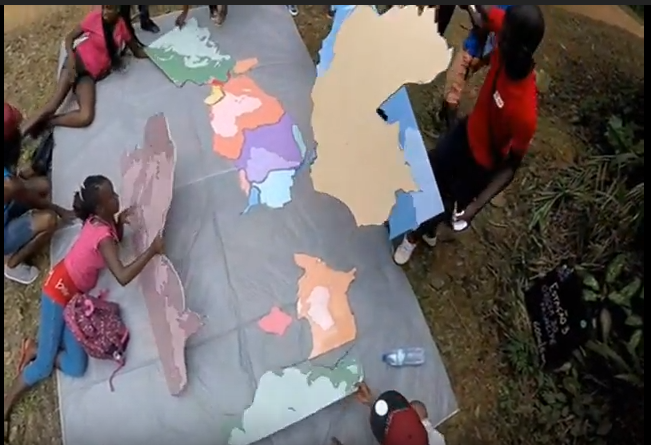
2. Plan the creation
After having an overview of how their station should look like, students should start designing and planning what and how they will create. For this they can consider requiring the support of experts, family member, etc. They can invite these stakeholders to the school and work together in their creations.
The school can promote an open day to the community where anyone (parents, friends, families, etc.) can go to the school and help the students in their creations.
If so, students should include these events in their plans. Students should include the following in their plans:
- Who will participate in the creation?
- Necessary materials
- Expected time length of the creation
- Can the creation be fully made inside the school?
- Possible obstacles and solutions
- What involvement of the community will be necessary for the creation of the station?
- etc.
Their plans, as well as any other relevant details should be fully registered in their projects, here in the portal.
3. Create
When the plans have been defined, it is time to put hands into action! Making sure they have everything they need, students should then implement their designs. If they discover that something doesn't work, let them know that it is OK and that they can redesign their creations.

Important tips: Students should create stations that are fun and interactive for the public. They should involve knowledge from different domains, creating something holistic and interdisciplinary that will spark the visitor's curiosity and will to learn more. Let your students be creative and always think about who they are targeting in their creations so as to adjust their creativity to the publics' needs.
Teachers should make sure that the process of creation is registered in the students' projects through the upload of pictures and videos.
If possible, teachers can contact the local newspaper and invite them to report the happening, since it will be something for the benefit of the whole community.
After the stations have been created is time to complete the final step of the project, which is to share with the public!
Share
I can! Now you can too!
This is where all the students' work comes to its maximum reach and they become true change makers in their community! It is time to share the Science Trail.
Students should understand that their work can really make a difference where they live and inspire others to improve their lives as well. We never know the full extent of the impact of our actions so this is the time to give all that they can and the best that they can.
This is where they pass on to others their knew knowledge and their awareness.

1. Prepare to answer questions
Students should be prepared to fully present their ideas and run all the activities with the visitors. They should be well equipped with theory to answer questions and prepared to say that they don't know something but will investigate to be able to answer. Students should also be able to explain why they chose such topic and what is the impact that they want to have with their station.
Make sure that both genders are well represented in each station, either in the students that run it as in the characters chosen for pictures, role models, etc.
2. Dissemination strategy
Students and teachers should define when they will open their science trail to the community and in which days they will be there presenting it. Once the date is settled, a dissemination strategy should be defined. This is a great moment to introduce students to the world of Marketing. If they create a great marketing around their science trail, they will attract a larger public. This is a skill for life, so make sure that they have time to research on the best marketing strategy for their science trail.
Schools can think about creating flyers, sending emails to the families of the students, creating an event and a page on Facebook to spread in social media, use Instagram, create a Youtube video, etc. Whatever way the school sees fit.
After this, dissemination should begin to ensure a maximum reach.
School boards can contact newspapers and local media to report the event and even create a press release to disseminate it and attract a wider public.
If the target public is the senior community, then maybe Facebook isn't the best channel to spread. In this case students can distribute flyers around the centre of the town, contact the senior homes, etc.
Each strategy should be adjusted to the target public.

3. Define what any visitor will need
Prior to the event, students should think about what materials the visitors will need and make them ready. For example, visitors might need a map to know where the stations are and in what order they should visit them (if there is one). The trail can be a straight line that visitors follow or can be spread with no apparent order. Furthermore, the trail can be followed through a hint game or any other fun activity the students can think of.
Whatever way, always have in mind the target public and make sure that the strategies are adjusted to the needs and make sure that all participants arrive prepared.

4. Reporting the work - get a certificate
After presenting the Science trail to the community it is time for the students to finalize their projects. Here they should add a selection of pictures, videos, etc they have collected. If their projects appeared on local news, they should add here any public reference of their work.
After finishing, students should read their projects and make sure that they have registered all the parts of the process and that anyone who reads it afterwards will fully understand their journey and learn what they have learned.
Once they feel that their project is complete, they should mark it as public and final. Their project will appear in the Portal projects list as well as in the personal area of the teacher who created them and in the community where they were created.
It is likely that not all schools using this accelerator are part of the IDiverSE school network. However, all schools who create a science trail following this methodology are invited to submit their work and teachers and students can receive a certification. The student report takes less than 5 minutes to answer. The Teacher report (mandatory for certification) takes about 5 to 10 minutes.
Students
After students present their station to the public, each group should submit their report through the following form:
Note: this report should be filled in
Teachers
After the presentation of the science trail to the community, one teacher should submit the Science Trail report through the following form
SCHOOL'S SCIENCE TRAIL REPORT FORM
Congratulations for your excelent work! Because together we make the World a better place!