Hosted by OSOS , contributed by Andreea_Baltag on 3 May 2023
Out of the desire to integrate information from several fields of science in order to explain various phenomena to students of grades 5-8, we have laid the foundations of the STEAM HUB project, which takes place in the form of a science club with bimonthly activity, with permanent access, during the entire school year. The project directly addresses a number of 10-15 students, selected by applying a questionnaire to identify their interest in the proposal. Students will work individually and in teams in a collaborative manner. Through the proposed activities, indirect beneficiaries will be a number of approximately 100-200 students, as well as parents and the community.
One of the club’s activities is related to seismology (Seismo Lab) and is aimed to increase risk awareness in the event of an earthquake, to stimulate interest in studying and understanding of seismology related phenomena, to initiate students to scientific research.
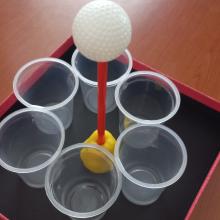
In order to achieve the objectives proposed in this activity, we will be presenting scientific content adapted to student’s level, will consolidate the information acquired by making of a seismograph and a vibrating table, monitoring both, recording and processing their output data.
The activities proposed will be presented interdisciplinary, creating connections with other subject areas:
Geography - studying tectonic movements and earth layers
Biology - studying earthquake precursors related to animals behavior
History - studying collections of papers, documents, statistics, journals, interviews with elderly people regarding earthquakes
Physics - studying interface of seismic waves, exemplifying the phenomena with the help of the vibrating table, observing the movement and damage produced with the help of building models
Math – readying / understanding of a seismogram, identifying the P and S wave time
Computer Science – using software programs in order to transform earthquakes into sound “The sound of the Earth”
Art - drawing posters showing the effects or the energy released when an earthquake occurs.
The project has been implemented in partnership with the Romanian National Institute for Earth Physics, entity that provided the scientific materials adapted to the age groups and training levels of the students. The materials provided by the Institute were presented during several sessions of extracurricular - transdisciplinary activities, involving teachers of mathematics, geography, technological education, physics, language and literature and computer science.
With the help of the funding provided by LfE, we have acquired a seismometer that the students found to be a very fascinating instrument. They now have the tool needed to research and monitor the seismicity characteristics of the local area and its surroundings and the tool needed to identify S and P waves.
With LfE funding we have also procured tablets. These were and are used by students to explore and research various theoretical seismology aspects like: what is an earthquake, why do earthquakes occur, the composition and structure of Earth, the main tectonic plates on the globe, etc. The tablets are further used by students to verify acquired knowledge by solving various interactive tasks in digital format, mainly using game-based learning platform Kahoot.
The proposed project is being implemented through extracurricular activities. These are being held after school hours, within the science club (STEAM HUB), in the form of cross-curricular lessons. We basically provide students with an alternative which did not exist till now and no similar activity is included in the national / governmental curriculum.
Hârtop Secondary School is neighboring a mid-sized town which is only 5 km away. Hartop domiciled students can easily opt to study in a town school. We have implemented various initiatives to retain our students’ quota and in order to achieve this goal, we need to enhance our school’s educational offer. This project contributes and brings added value to our school.
Furthermore, the project is also tackling youth wellbeing, as we try to give them alternatives to social media and screen dependency. In this manner, by having them participating in extracurricular alternatives and using modern educational tools and concepts, we hope to contribute to their further development.
The proposed activity uses equipment purchased with funding from the Learning from the Extremes project being in the same time supported by NIEP researchers who came to our school to install, configure and train the teachers involved in the project. This has added value to our school both at local level (our school becoming some sort of interest point for other schools) and educational level (as we have enhanced school’s offer for students).
The activity proposed by our school was disseminated as follows:
- locally, within the periodic governmental organized pedagogical meetings
- at national level, within the Summer School held in Măgurele, Ilfov
- at international level, within the European Geoscience Union at the GIFT section (Geoscience Information for Teachers).
The students involved in the project are first of all grateful for the opportunity given; they are also excited to be able to learn through practical activities about the phenomena that occur in day to day life. They have been given tasks, like monitoring of the earthquakes recorded by the seismometer and have now the necessary tools to document themselves with ease, using the recently acquired tablets. They are now our relay points, disseminating the information gained to the other colleagues during various activities like e.g. ‘’Alternative Week’’.
Using Hartop STEAM CLUB social media page, students also keep the local community informed on the extracurricular activities carried out, on the the small earthquakes that take place and are recorded by the school's seismometer, etc. Local community has also controlled access on request or during school’s ‘’Open Doors’’ day.
Having students involved in this project enhances their self-confidence and their desire to learn new things. We have observed a positive development in their critical thinking and creativity since this project has begun.
Andreea-Marcela Baltag
Hartop Secondary School, Suceava, Romania
andreeabaltag29@gmail.com
Feel
Guidelines
From the desire to spend their free time doing quality things, the students wanted to learn about subjects that do not appear in the school curriculum.
As a result of the intensification of seismic movements in Romania, they were provoked to learn more about this subject.
Description
So that scientific information can be understood by them, we initiated a collaboration with the National Institute for Earth Physics, so the scientific materials, adapted to the age, could be accessed in digital format and they could start making contact with this subject.