Hosted by OSOS , contributed by KameliaSavova on 31 May 2023
Did you ever wonder what happens with all the thrown plastics in the rivers, seas or oceans? What are microplastics and how do they impact the environment? What can we do to reduce microplastic pollution? The main aims of the lesson activity are: to study the origin of microplastics and their effect to the environment and living organisms and to study different ways to reduce and extract microplastics in nature. Students will study about magnetic extraction of microplastics from the environment. Students will play educational games and activities using technology and equipment provided by LFE project. Students will perform an experiment.
Human activity has been the dominant factor in shaping the face of the earth. The amount of plastic we have generated so far is nearly double the overall mass of all marine and terrestrial animals combined. The plastic after its intended use goes into the environment and degrades under the influence of environmental factors. When plastic breaks down below 5mm, it is called microplastic which causes pollution by entering the natural ecosystems. Plastics take hundred to thousand of years to degrade completely, therefore microplastics have a high probability of ingestion and accumulation in the bodies of living organisms including humans. Microplastics were found everywhere, recent studies have shown their presence in human blood, the placentas of unborn babies and breast milk.
Microplastics have a variety of sources that includes washing clothing, abrasion of tires, paints, cosmetics, food packaging and industrial processes. Plastic particles that are less than 5mm in size before entering the environment are referred to as primary microplastics like microfibers from clothing, microbeads and plastic pellets (nurdles) deliberately added to cosmetics. Microplastics that break down from large plastic products by natural weathering are called secondary microplastics that include the degradation of plastic bags, bottles, packaging films, fishing nets etc. Microplastics are ingested by invertebrates and other organisms and persist throughout the food chain. Microplastics are in the air we breathe, the water we drink and the food we eat which is a great concern for the environment and health of all living organisms.
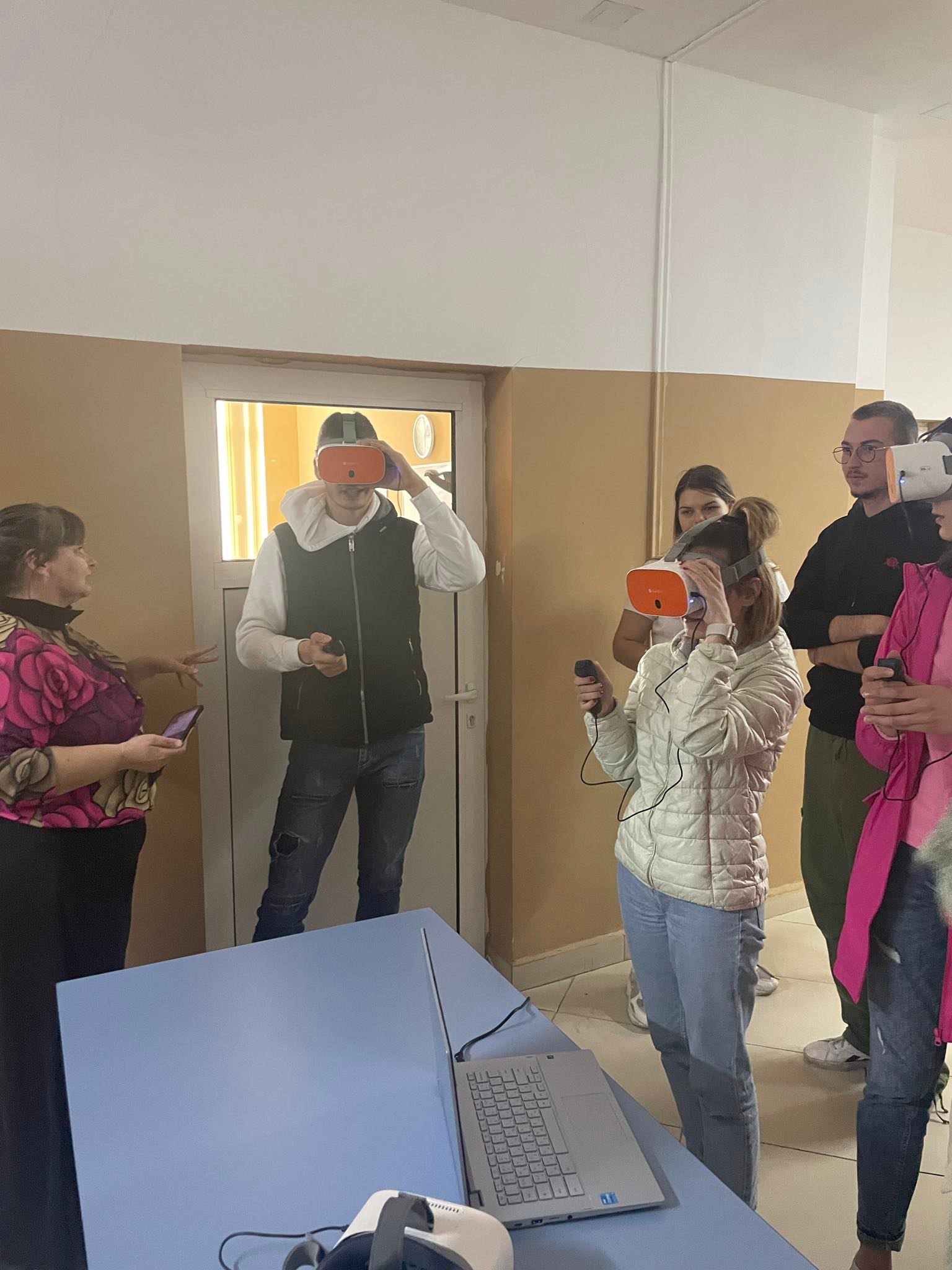
The project combines traditional learning with using of modern technologies like VR glasses, tablets and interactive digital screens. The first task will be students to make their own research about microplastics using Chromebooks. Then students will perform an experiment, showing how is possible to clean the water from plastics and will solve different tasks on the digital screen. The last activity is connected with presenting a short video about microplastics and their impact of marine animals on VR glasses. Realizing the impact of the microplastics is a topic of a great interest both local and worldwide, that`s why using modern and digital approaches will engage the attention of students and their awareness to the problem. The project perfectly corresponds to school`s innovative plan making the student an active learner and participant and giving the opportunity to make choices for its own needs. The students will achieve a mastery of knowledge and skills, but furthermore to make own decisions and influence the others. According to me, the project is referred to all three strategies. Using technology make learning more easier, funnier and effective, students are interested in using it. It will add value to the proposed project because it connects real life problems with curriculum and is needed to be proposed real solutions with the help of technology.
Type
Problem-based learning
Assessment
Use students’ worksheets and discussion contributions to assess their understanding of microplastics and their impact on the environment.
Keywords
Microplastics, plastics, environmental protection, environmental pollution
Duration
Preparation: 2 weeks
Related Subjects and Interdisciplinary connections
Chemistry
Physics
Technology
Arts
English
Biology
Link to the project: https://drive.google.com/file/d/1PIQm9IfJZVdkzdiRxtkCOlXejSuoKswe/view?usp=sharing
Kameliya Savova kameliya_savova@abv.bg
Αισθάνομαι
Guidelines
The proposed topic is one of the "hottest" among the environmental problems the humanity faces. Especially in rural places where there are no separate bins for collecting trash. Students can propose a different ways for obtaining plastics like reusing, reducing or replacing. The main challenges are realising the problem and facing the solutions.
Students work on activities, displayed on the interactive screen:
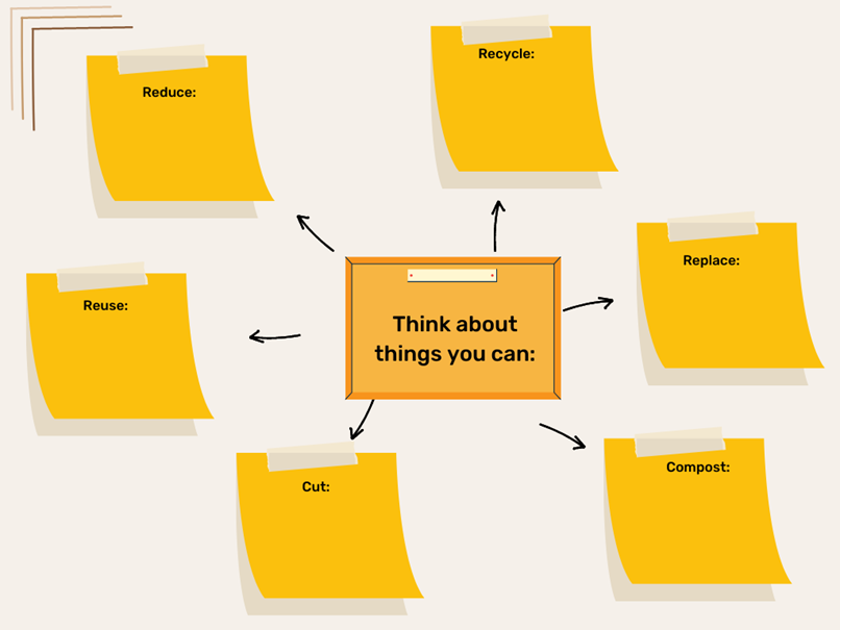
Activity. Choose six actions that fit an ecologically friendly lifestyle.


Activity . Brainstorm some ideas about sustainable and environmentally friendly way of life.

Description
The proposed topic is one of the "hottest" from the environmental problems the humanity faces. Especially in rural places where there are no separate bins for collecting trash. Students can propose a different ways for obtaining plastics like reusing, reducing or replacing. The main challenges are realising the problem and facing the solutions.ac
Students work on activities, displayed on the interactive screen:
Activity. Choose six actions that fit an ecologically friendly lifestyle.


Activity . Brainstorm some ideas about sustainable and environmentally friendly way of life.
Φαντάζομαι
Guidelines
Students perform a real experiment to prove that plastics can be extracted from water under the form of magnetic solution:
Activity 1. Experiment
for the experiment: 1 g of polyethylene microplastic in a 100 mL solution, beaker, glass rod, 0.1 g of hydrophobic magnetic powder, permanent magnet was inserted into the solution.
1. Add 1 g of polyethylene microplastic to a 100 mL solution in a beaker and stir it with a glass rod.
2. Add 0.1 g of hydrophobic magnetic powder to the solution.
3. Mix the polyethylene microplastics and magnetic powder with a glass rod.
4. A permanent magnet was inserted into the solution.
5. The microplastics adhere to the magnetic powder in a magnetic field provided by the permanent magnet.
6. The microplastics are separated using a permanent magnet.
Link to the video with the experiment students made:
Extraction of Polyethylene microplastics using a permanent magnet. https://drive.google.com/file/d/1BYqajr81CGPvTij6oyGpAni7S25qZ2pT/view?usp=share_link
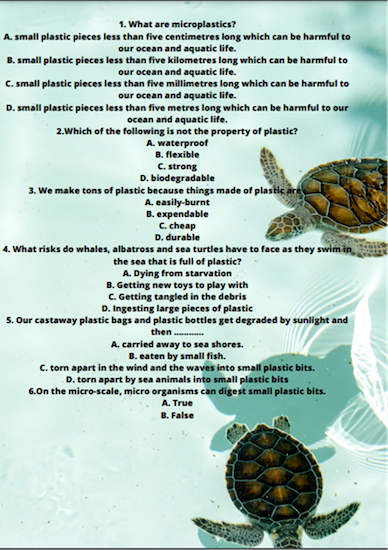
Students solve a digital quiz:

Description
Students perform a real experiment to prove that plastics can be extracted from water under the form of magnetic solution:
Activity 1. Experiment
for the experiment: 1 g of polyethylene microplastic in a 100 mL solution, beaker, glass rod, 0.1 g of hydrophobic magnetic powder, permanent magnet was inserted into the solution.
1. Add 1 g of polyethylene microplastic to a 100 mL solution in a beaker and stir it with a glass rod.
2. Add 0.1 g of hydrophobic magnetic powder to the solution.
3. Mix the polyethylene microplastics and magnetic powder with a glass rod.
4. A permanent magnet was inserted into the solution.
5. The microplastics adhere to the magnetic powder in a magnetic field provided by the permanent magnet.
6. The microplastics are separated using a permanent magnet.
Link to the video with the experiment students made:
Extraction of Polyethylene microplastics using a permanent magnet. https://drive.google.com/file/d/1BYqajr81CGPvTij6oyGpAni7S25qZ2pT/view?usp=share_link
Students solve a digital quiz:
Δημιουργώ
Guidelines
Students will create flayers and will implement their studies on local and social media. They will create a comics using tablets Chromebook provided by the school.
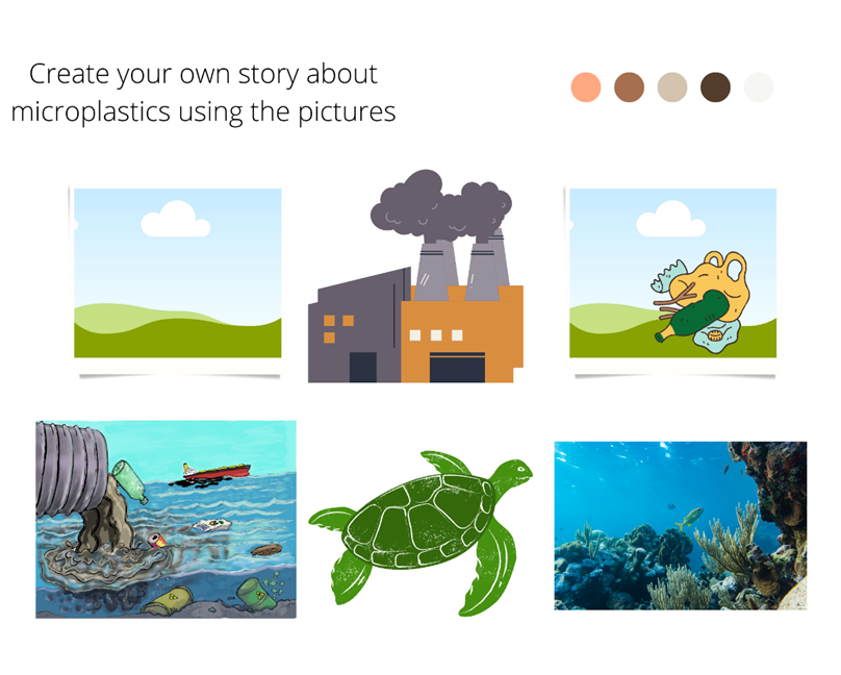
Activity. Create a short story using the given pictures. Work either by one or by pairs.

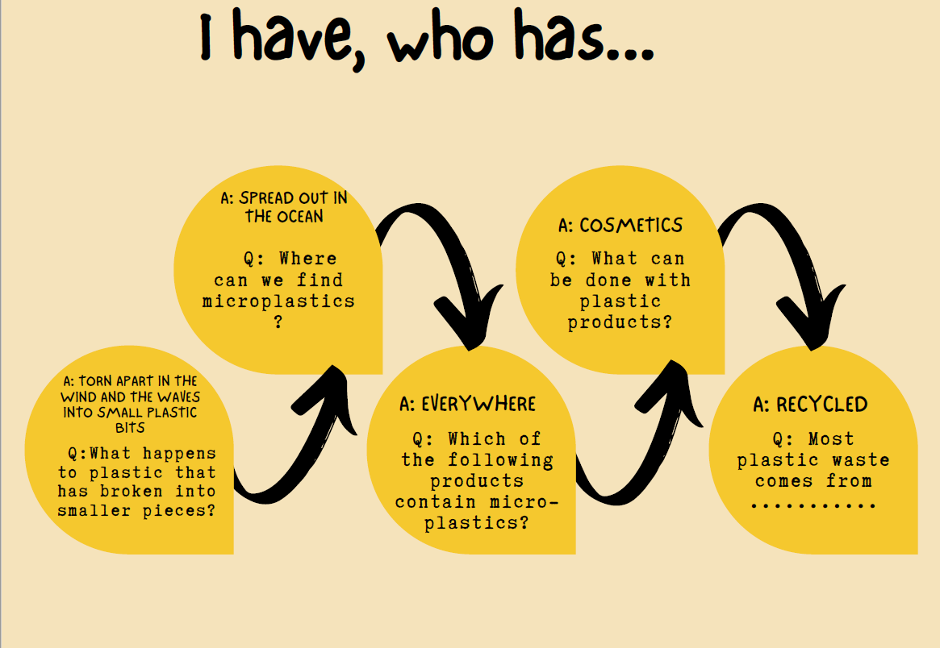
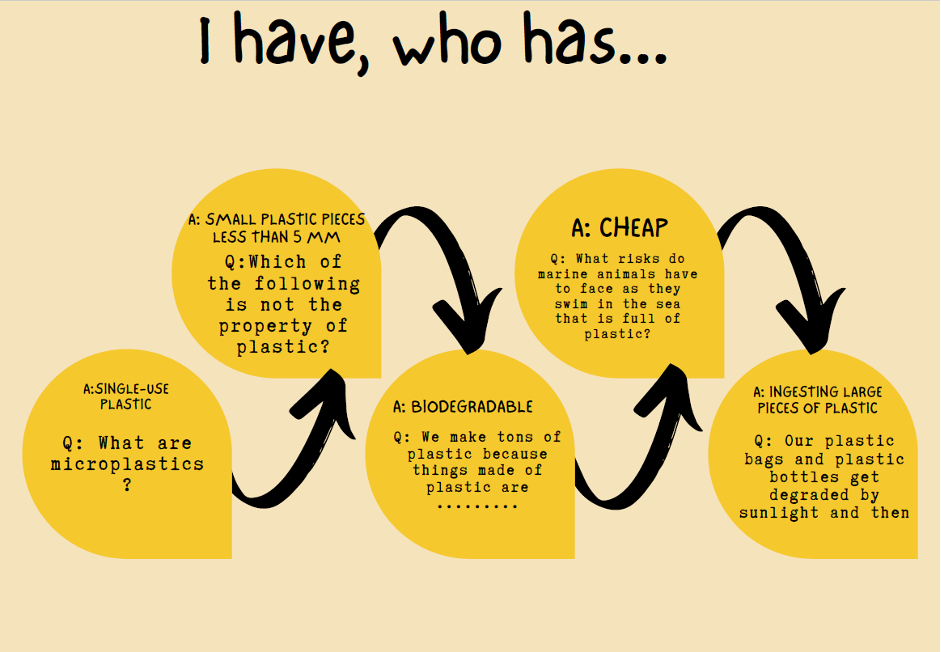
Also students will reflect on their work. They will play a game and discussion to assess their understanding of microplastics and their impact on the environment.


Description
Students will create flayers and will implement their studies on local and social media. They will create a comics using tablets Chromebook provided by the school.
Activity. Create a short story using the given pictures. Work either by one or by pairs.
Also students will reflect on their work. They will play a game and discussion to assess their understanding of microplastics and their impact on the environment.
Μοιράζομαι
Guidelines
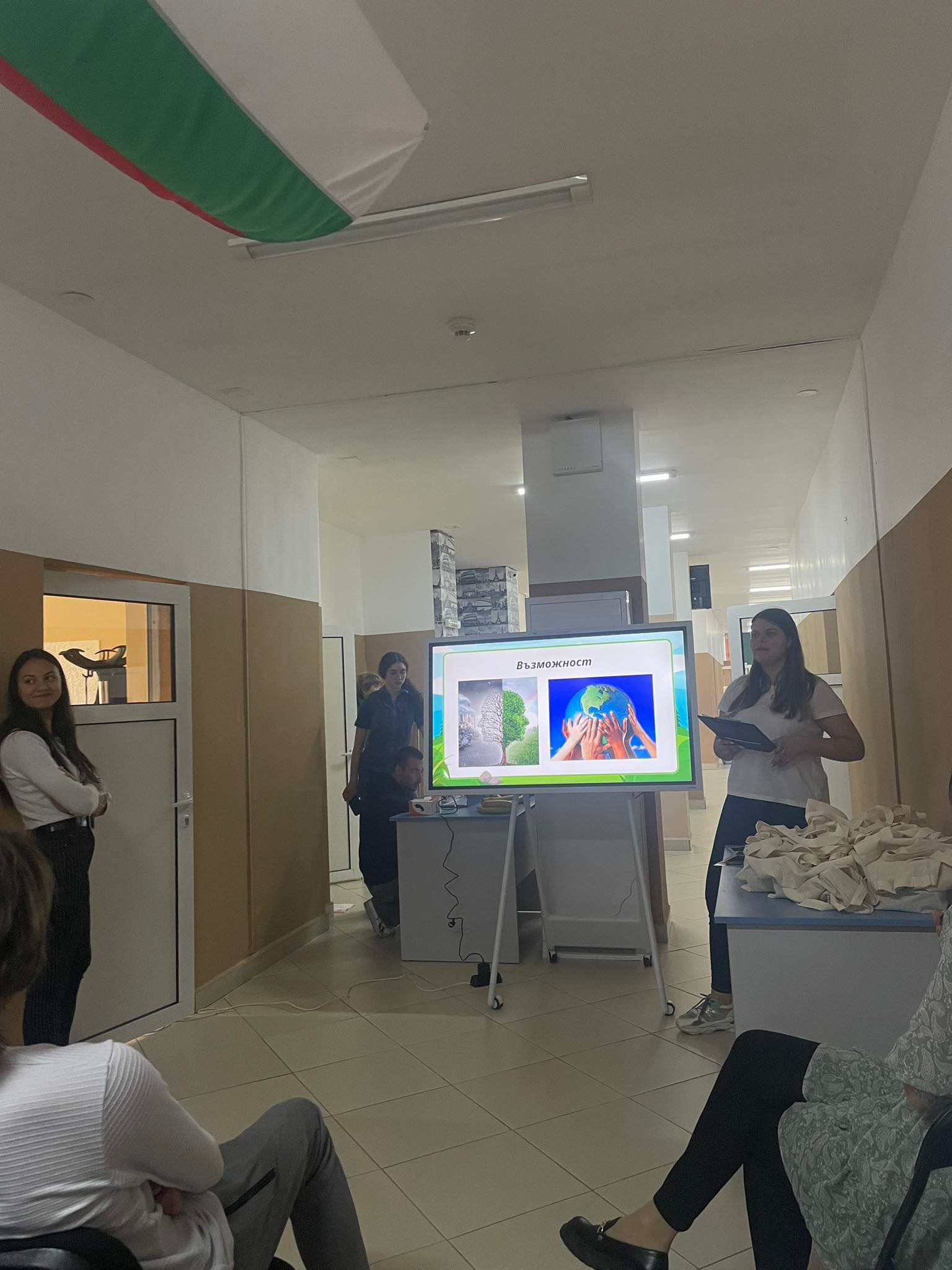
Except locally we will present the project at The National Contest for Science and Ecology 2023 in Bulgaria.
Description
Except locally, we will present the project at the National Contest for Science and Ecology 2023 in Bulgaria. There we will spread flyers and materials about our project.